 how-to
How to Tell If Pet Urine Is in Carpet Subfloor
Table of Contents
- Start Here: A Step-by-Step Diagnostic Process Before You Pull Up Carpet
- How to Detect Pet Urine with a Blacklight (And What It Can't Tell You)
- Signs of Urine in Carpet Padding: What to Look and Feel For
- How to Find Hidden Pet Urine When There's No Visible Stain
- Pet Urine Odor in Subfloor: Confirming Contamination Below the Pad
- When to Stop Inspecting and Call a Professional
- Frequently Asked Questions
Last Updated: October 13, 2026
Start Here: A Step-by-Step Diagnostic Process Before You Pull Up Carpet
Before you cut into carpet or rip up padding, run a simple three-step test. This process helps you learn how to tell if pet urine is in carpet subfloor without causing damage you cannot undo. This process helps homeowners avoid wasting money on unnecessary repairs.
The tools are cheap: a blacklight, a moisture meter, and your nose.
Step 1: Isolate the Odor Source Without Removing Anything
Start by closing the room and letting it sit for an hour. Odor that spikes when the air settles usually means the smell is trapped in the carpet or pad, not floating from elsewhere.
Walk the perimeter. Pay close attention to:
- Baseboards and wall splash zones
- Carpet seams and high-traffic paths
- Areas near litter boxes or doorways
Mark each spot with tape. Do not clean anything yet. Cleaning too early destroys the evidence you need.
Step 2: Test with a Blacklight and Mark the Spots
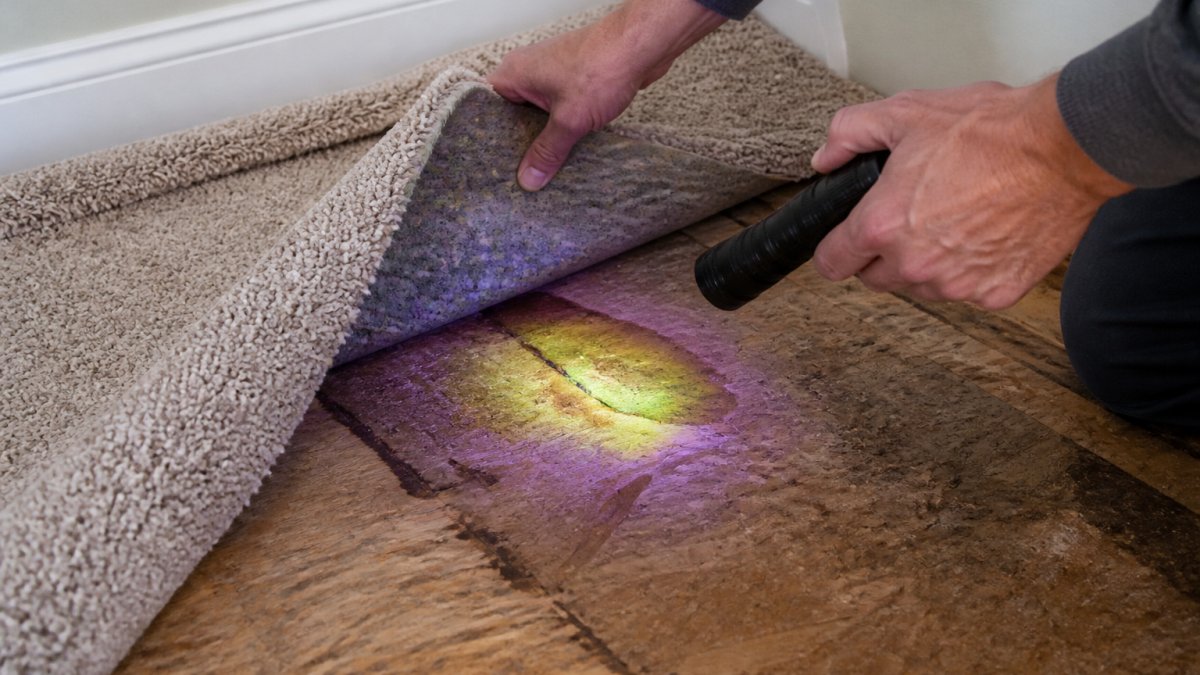
Turn off the lights and sweep the blacklight slowly across the carpet. Urine crystals glow a yellow-green under ultraviolet light. Circle every glowing spot with chalk or tape.
One caution: a blacklight shows where dried residue sits on carpet fibers. It cannot confirm which layer holds the contamination. That takes more checking.
Step 3: Check Moisture and Probe the Padding
Press a moisture meter against the carpet. High readings near a glowing spot suggest liquid reached deeper than the surface.
Then lift a corner of carpet at the worst spot. Feel the backing and pad. A stiff, crusty pad or a dark ring on the backing points to contamination below.
How to Detect Pet Urine with a Blacklight (And What It Can't Tell You)
A blacklight is the fastest first check, but it is also the most misunderstood tool in this process. It reveals dried residue on carpet fibers, yet it cannot tell you whether the pad or subfloor underneath is affected.
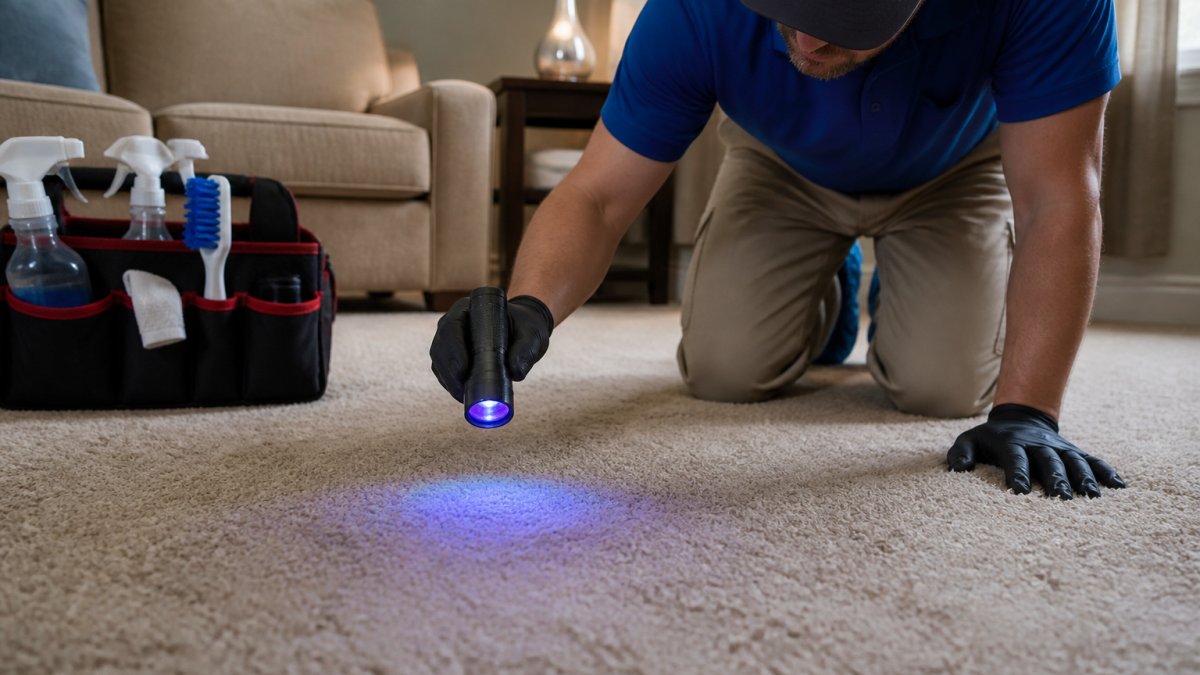
How to Scan a Room Systematically
Random sweeping misses spots and creates false confidence. Work in a grid:
- Wait until the room is fully dark. Late evening or a windowless room works best.
- Hold the light 6 to 12 inches above the carpet and move it slowly, about one foot per second.
- Scan in overlapping lanes, the way you would mow a lawn. Mark each glow with painter's tape or chalk.
- Check the same lane twice. Urine residue can be faint on dark or patterned carpet.
- Photograph each marked spot with the tape in frame so you have a record before anything is cleaned or lifted.
A common pattern is clusters of small glows rather than one large spot. That usually means repeated accidents in the same area, which is more likely to have soaked through the backing.
Reading the Glow: Urine vs. Other Stains Under UV Light
Not every glow is urine. Common false positives include:
- Laundry detergent residue tracked in on socks
- Some carpet cleaning solutions and spot treatments
- Certain foods, vomit, and pet saliva
- Optical brighteners in some detergents and fabric softeners
Urine tends to glow a distinct yellow-green and often appears in clusters from repeated accidents. If a spot glows white, blue, or bright orange, it is probably something else. A faint, diffuse glow across a whole traffic lane is more likely residue from cleaning products than urine.
What a Blacklight Cannot Establish
This is the part most guides skip. A positive glow tells you residue is present on the surface. It does not tell you:
- Which layer holds the contamination (carpet face, backing, pad, or subfloor)
- How deep the liquid traveled
- Whether the subfloor is stained, swollen, or still structurally sound
- Whether the odor you smell is coming from that spot at all
That is why the blacklight is step one, not the answer. Use it to build a map of suspect areas, then confirm with odor, moisture, and a physical inspection of the backing and pad. The EPA guide on indoor air quality and odor sources notes that persistent odors often signal a hidden source rather than a surface problem. That is your cue to keep digging past the glow.
Signs of Urine in Carpet Padding: What to Look and Feel For
The clearest signs of urine in carpet padding show up when you lift the carpet.
Padding acts like a sponge. It soaks up liquid the carpet backing lets through, then holds it against the subfloor.
Check these signals:
- Crusty or brittle pad texture
- Brown or black staining on the pad
- Ammonia odor that intensifies when disturbed
- Delamination where the pad separates from the backing
If the pad smells strongly but the subfloor looks clean, replacing the pad may solve it. If the subfloor is stained too, you have a deeper job.
How to Find Hidden Pet Urine When There's No Visible Stain
Hidden pet urine usually hides in the same places every time: under furniture, along baseboards, and in carpet seams. Finding it means trusting your nose and a moisture meter more than your eyes.
Using Smell and Humidity to Track Down Invisible Spots
Odor and moisture are your best clues when nothing shows on the surface.
- Sniff low to the floor, near seams and walls
- Run a moisture meter across suspect areas
- Watch for warm, humid patches after rain or cleaning
- Note spots that smell worse on damp days
Heat and humidity pull urine proteins to the surface, which is why the smell gets stronger in summer. If one area always smells worse, that is your target.
Pet Urine Odor in Subfloor: Confirming Contamination Below the Pad
Pet urine odor in subfloor is confirmed when the smell and staining survive pad removal and a proper dry-down. The key word is survive. A wet subfloor can smell like urine simply because moisture is holding odor compounds at the surface. Once it dries, that smell may fade. If it lingers, the material has absorbed the contamination.
The Confirm-by-Drying Sequence
Do not judge the subfloor while it is still damp. Follow this order:
- Remove the pad from the suspect area and bag it immediately. Pad holds most of the odor load.
- Wipe the exposed subfloor with a damp cloth to remove surface residue. Do not soak it.
- Let the subfloor dry completely. Plywood and hardwood may need 24 to 48 hours in a ventilated room; concrete can take longer.
- Smell the dry subfloor at close range. Odor that returns after drying is absorbed, not surface-level.
- Recheck with the blacklight. A glow that remains after cleaning points to contamination inside the material.
If the odor fades after drying, the pad was the problem. If it lingers, the subfloor absorbed the urine and needs treatment.
Wood, Plywood, and Concrete: How Each Subfloor Reacts to Urine
Each subfloor material behaves differently:
| Subfloor Type | How It Reacts | Best Next Step |
|---|---|---|
| Hardwood | Stains and warps, holds odor in grain | Sand and seal |
| Plywood | Soaks deep, swells at seams and edges | Seal or replace section |
| Concrete | Absorbs into pores, odor lingers | Clean and seal |
| OSB | Swells quickly, loses strength when wet | Replace affected section |
Urine is roughly 95 percent water, plus urea, uric acid, and salts. The water carries those compounds into the material; when it evaporates, the uric acid crystals remain. That is why the smell returns on humid days and why surface cleaning alone rarely fixes it. Uric acid is not very water-soluble once it has dried, which is why ordinary soap and water underperform on old stains.
What to Look and Feel For at the Subfloor
- Dark rings or tide lines where liquid pooled
- Soft, spongy, or crumbling areas underfoot
- Swollen seams or lifted edges on plywood and OSB
- A sharp ammonia smell that intensifies when the surface is scratched
Sealing works only after the surface is fully dry. Trapping moisture under sealant locks the odor in and can cause more damage later. The CDC guidance on safe indoor cleaning and ventilation recommends ventilating the space during any odor treatment. Urine releases ammonia, and enclosed rooms concentrate it fast.
When to Stop Inspecting and Call a Professional
Stop and call a pro when the odor returns after cleaning, when the subfloor is soft or stained across a large area, or when you cannot find the source after a full inspection.
Warning signs that mean it is time to hand it off:
- Soft, spongy, or crumbling subfloor
- Odor in multiple rooms
- Staining that spreads under walls
- Repeated accidents in the same spot
At that point, a professional cleaning and odor treatment may be a more effective solution than attempting extensive DIY repairs.
Frequently Asked Questions
Can you smell dog pee but not find where it is?
Yes, this is common because urine can soak through carpet fibers and padding into the subfloor, leaving little visible evidence on the surface. Start by closing windows and doors to concentrate the odor, then walk slowly across the room at different times of day. High humidity often makes pet urine odor in subfloor stronger, so an odor that seems worse on rainy days is a clue the contamination is deeper than the carpet. A blacklight can help narrow the search, but it may not reveal which layer is actually contaminated.
How do you tell if pet urine has soaked through carpet to the subfloor?
Pull back a corner of the carpet and padding in the suspected area. If the padding feels stiff, discolored, or smells strongly of ammonia, the urine has likely reached the subfloor. Press a moisture meter or probe against the wood or concrete beneath. Elevated readings compared to a dry area of the same room suggest saturation. Visible dark staining or warped plywood edges confirm it. If the subfloor is wood and the stain is dark and widespread, the damage may require sealing or replacement rather than surface cleaning.
Can a blacklight detect pet urine in carpet?
A blacklight (UV light) makes dried urine salts fluoresce, usually as a yellow or greenish glow. It is useful for locating possible spots, but treat the result as a starting point, not proof. Some cleaning product residues, detergents, and other proteins also fluoresce under UV light, so a glow does not always mean urine. Use the blacklight alongside your nose and a moisture meter. If the glow appears in an area with no odor and normal moisture, it may be a false positive from an old cleaning product.
Does pet urine odor get worse in humid conditions?
Yes. Urine salts and proteins in carpet padding and subfloor absorb moisture from humid air, which reactivates the odor. This is why a room can smell fine in dry weather and overpowering after rain or in summer. If odor spikes with humidity, the contamination is likely in the padding or subfloor layer rather than just the carpet surface. Running a dehumidifier can temporarily reduce the smell, but it will return until the source layer is cleaned, sealed, or replaced.
Most homeowners can trace the smell to a general area, but confirming whether urine reached the subfloor takes the right tools and a trained eye. If the odor keeps coming back, or you would rather skip the guesswork, Sanctified Carpet & Upholstery Cleaning can help. We offer professional carpet cleaning, expert upholstery detailing, and bundle deals built for tight budgets in Toms River and Ocean County. Send a message to schedule an inspection and get the smell out for good.