 how-to
How to Get Dog Urine Smell Out of Carpet Padding
Table of Contents
- Why Urine Odor Persists in Carpet Padding
- How to Tell If Urine Reached the Carpet Pad
- What You'll Need Before You Start
- Step-by-Step: How to Get Dog Urine Smell Out of Carpet Padding
- Step 1: Find Every Source with a Blacklight
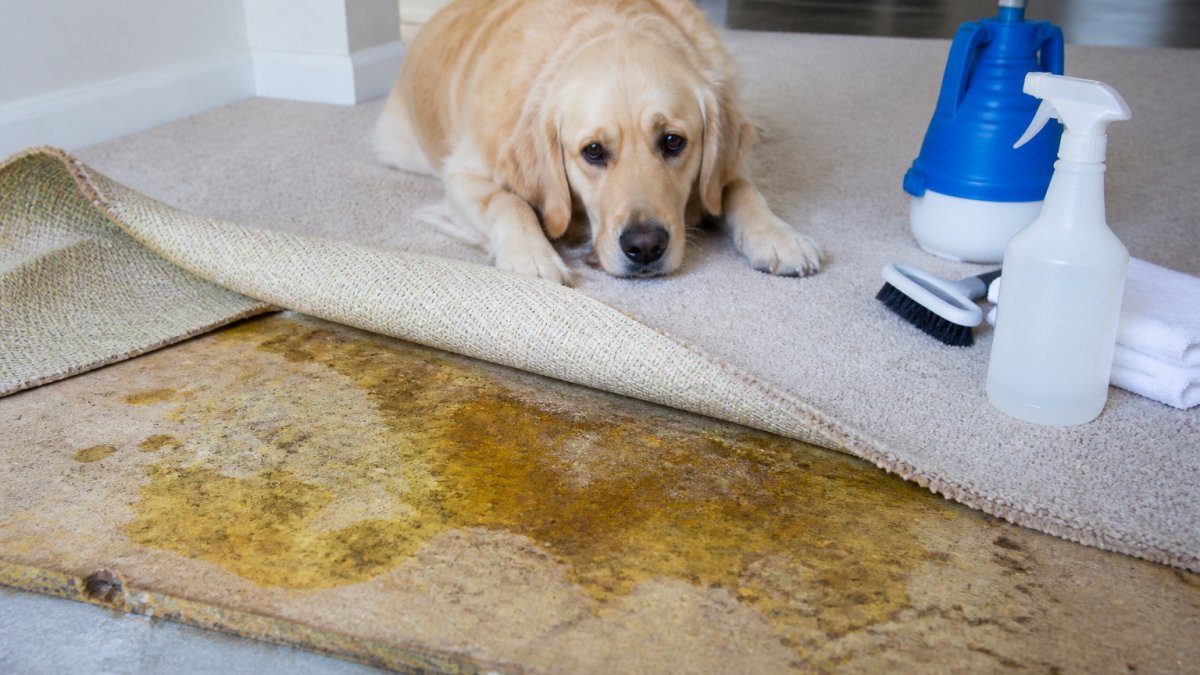
- Step 2: Pull Back the Carpet to Expose the Pad
- Step 3: Assess the Pad and the Sub-Floor
- Step 4: Flush and Neutralize the Pad with an Enzymatic Cleaner
- Step 5: Treat the Sub-Floor Before You Put Anything Back
- Step 6: Extract and Dry Completely
- Step 7: Re-seat the Carpet and Re-check with the Blacklight
- Choosing the Best Enzymatic Cleaner for Pet Urine
- When DIY Fails: Professional Carpet Cleaning for Pet Odors
- When to Replace Carpet Padding Instead of Cleaning It
- Common Mistakes That Make the Smell Worse
- Frequently Asked Questions
Last Updated: September 30, 2026
Why Urine Odor Persists in Carpet Padding
Dog urine smell lingers in carpet padding because the pad soaks up liquid that never fully dries, trapping odor-causing compounds inside.
How to Tell If Urine Reached the Carpet Pad
If you can smell ammonia close to the carpet, the urine has reached the pad.
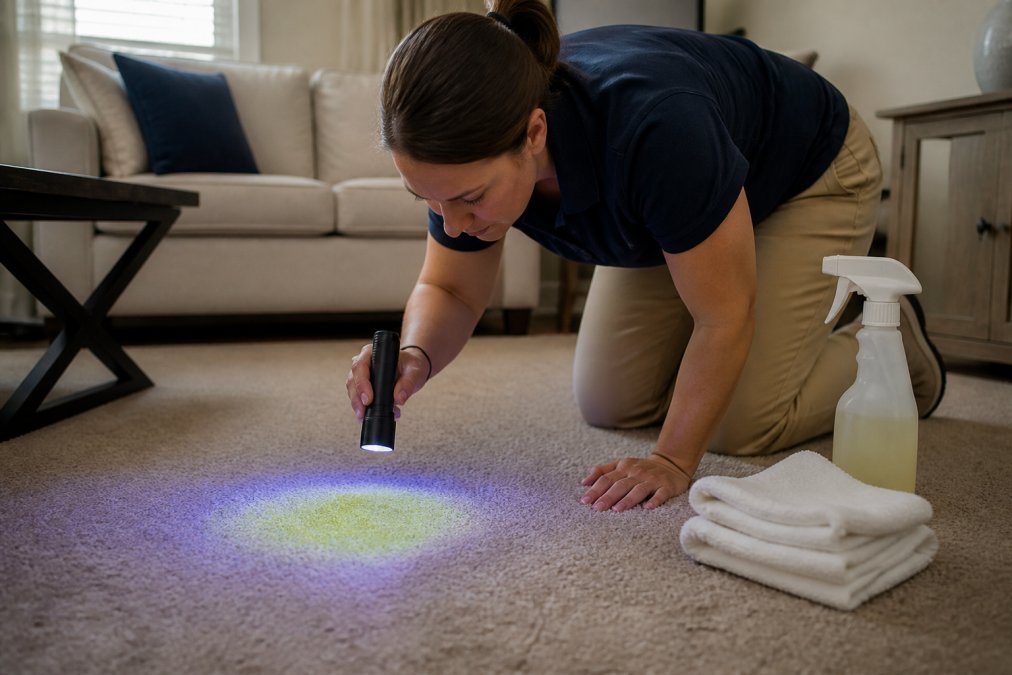
Here's how to confirm it:
- The sniff test: Press a clean white towel into the spot and smell it.
- The blacklight test: Urine glows yellow-green under UV light, even old, dried spots.
- The dampness check: A cool, damp feel in one area points to deep saturation.
- The wicking test: New brown rings appearing on top mean moisture is rising from below.
What You'll Need Before You Start
Gather your supplies first, the right tools matter more than effort here.
- Blacklight (UV flashlight) to find every hidden spot
- Enzymatic cleaner made for pet urine (not a general carpet shampoo)
- Baking soda for odor absorption and drying
- White vinegar for a mild pre-rinse on fresh spots
- Clean white towels or microfiber cloths
- A wet/dry vacuum or water extractor
- Plastic sheeting to protect nearby furniture
- Gloves and a mask for safety
Step-by-Step: How to Get Dog Urine Smell Out of Carpet Padding
Treating the pad takes patience, and the order matters more than the effort, rushing any step usually means the odor returns within a week. This sequence targets the uric acid crystals in the pad first, then the sub-floor, the layer most guides skip.
Step 1: Find Every Source with a Blacklight
Darken the room and sweep the blacklight slowly a few inches above the pile, marking every glowing spot with painter's tape. Urine wicks outward through the backing, so the contaminated area is usually wider than the visible stain, check at least a foot beyond the edges.
Step 2: Pull Back the Carpet to Expose the Pad
This is the step most DIY guides skip, and it's why their fixes fail, you cannot fully treat padding through the carpet backing. In a corner or along a wall seam, use pliers or a carpet knee kicker to lift the carpet off the tack strip, peeling it back just far enough to expose the contaminated pad.
Step 3: Assess the Pad and the Sub-Floor
Once the pad is exposed, look at three things:
- The pad's underside. A dark ring or a stiff, crusty patch means urine soaked all the way through.
- The sub-floor. Wood sub-floor will show dark staining and may feel soft or swollen. Concrete will show a chalky white residue or a salt-like crust where urine salts have dried.
- The smell. If ammonia hits you when you kneel down, the contamination is in the sub-floor, not just the pad.
If the pad is crumbled, delaminated, or soaked through, skip to the replacement section below, cleaning it is a waste of enzyme solution.
Step 4: Flush and Neutralize the Pad with an Enzymatic Cleaner
Pour the enzymatic cleaner directly onto the pad, not the carpet, so it reaches the contamination. You want the pad saturated but not dripping. Let it dwell for 20 to 30 minutes, as recommended in Truckmount Forums professional cleaning discussions. That dwell time is what lets the enzymes break down the uric acid crystals into gases that off-gas and rinse away.
Step 5: Treat the Sub-Floor Before You Put Anything Back
This is the step top-ranking articles leave out, and it's why so many people clean the pad, replace the carpet, and still smell urine a month later, uric acid crystals bond to wood and concrete as readily as to foam.
- Sealed concrete: Scrub with an enzymatic cleaner, let it dwell, then wipe dry. Once fully dry, seal the concrete with a solvent-based concrete sealer to lock in any residue the enzyme missed.
- Unsealed concrete: The urine has likely soaked into the pores. Enzyme, dwell, extract, then seal. Without the sealer, humidity will pull the odor back up.
- Wood sub-floor: If the wood is stained but structurally sound, treat with enzyme and let it dry thoroughly. If the wood is soft, swollen, or crumbly, it needs to be cut out and replaced, no cleaner will fix rotted wood, and the smell will persist.
Step 6: Extract and Dry Completely
Blot with white towels, then extract with a wet/dry vacuum in slow overlapping passes. Repeat the flush-and-extract cycle until no foam pulls up and towels come away clean, then dry fully with box fans, a dehumidifier, and open windows. Padding damp for more than 24 hours grows mold, adding a musty odor on top of the urine smell.
Step 7: Re-seat the Carpet and Re-check with the Blacklight
Once the pad and sub-floor are bone dry, stretch the carpet back over the tack strip and press it down along the seam. Wait 24 hours, then run the blacklight again, if anything glows, treat it before the odor re-establishes.
Choosing the Best Enzymatic Cleaner for Pet Urine
The best enzymatic cleaner for pet urine is labeled for dogs and cats, not a general-purpose carpet shampoo, with live enzymes and a neutral pH balance.
What to check on the label:
- Enzyme type: Protease and urease target urine proteins and uric acid.
- pH balance: Neutral pH is safe for carpet fibers and backing.
- Dwell time: Products needing 10 to 30 minutes of contact work better.
- Residue: Low-residue formulas won't attract new dirt.
When DIY Fails: Professional Carpet Cleaning for Pet Odors
Sometimes the pad is too saturated for home treatment. Professional carpet cleaning for pet odors uses stronger extraction and neutralization tools than most rentals offer.
Signs it's time to call a pro:
- The smell returns within days of cleaning
- Multiple spots have soaked through to the sub-floor
- The carpet feels damp long after treatment
- Odor spreads to the whole room
When to Replace Carpet Padding Instead of Cleaning It
For a soaked pad, replacement is usually cheaper than restoration once you count your own time.
The Replacement Decision Rule
Replace the pad if any of these are true:
- The pad is soaked through to the sub-floor (visible stain on the underside)
- The pad has crumbled, delaminated, or lost its rebound
- The odor returns within 7 days of a proper enzyme treatment
- The affected area is larger than roughly 2 square feet
- The pad is more than 10 years old, old foam has lost the density that lets enzyme solution penetrate evenly
Clean and keep the pad only if the contamination is fresh (under 48 hours), small, and the pad still feels firm and springs back when you press it.
The Real Cost Comparison
Most homeowners underestimate the DIY side:
- Enzymatic cleaner: A quart of quality pet-urine enzyme runs roughly $15-$25 and treats one or two small spots. A soaked 3-foot section can eat a full bottle per treatment, and you may need three treatments.
- Your time: Each flush-dwell-extract-dry cycle takes 2-4 hours of active work plus 24 hours of drying. Three cycles is most of a weekend.
- Wet/dry vacuum rental: Around $30-$50 per day at most hardware stores if you don't own one.
- Pad replacement: Carpet pad itself is one of the cheapest flooring materials, commonly $0.50-$1.50 per square foot for standard rebond foam, plus labor if you hire it out. A 10x10 room is often under $200 in materials.
Past two treatment cycles, the math favors replacement: $60-$100 in cleaner and a full weekend to restore a pad that costs less to replace.
Material-Specific Advice
Not all pads hold odor the same way:
- Rebond foam (the most common): Open-cell structure soaks urine deep and holds it. Hard to fully flush. Replace if soaked.
- Memory foam: Dense and slow to release liquid. Enzyme dwell times need to be longer, and extraction is less effective. Often a replace.
- Felt or fiber pad: Wicks urine laterally, so the contaminated area is usually larger than the stain. Can sometimes be saved if caught fast.
- Rubber or waffle pad: Non-porous, so urine sits on top rather than soaking in. These are the easiest to clean and rarely need replacement.
Carpet fiber matters too. Synthetic fibers (nylon, polyester, olefin) are non-absorbent and release urine readily, while wool and other natural fibers hold odor and are more sensitive to alkaline cleaners, stick to neutral-pH enzyme products on wool.
What Replacement Actually Involves
You don't always have to replace the whole room. If the stain is isolated, an installer can cut out the damaged section, replace the pad underneath, and re-seam the carpet, a "patch and pad" repair that's far cheaper than re-carpeting. Ask specifically for it, since many shops default to quoting a full-room replacement.
When to Stop DIY and Call a Pro
Call a professional if:
- The sub-floor is wood and feels soft or swollen (possible rot)
- Urine has reached multiple rooms or a large area
- You've treated the same spot three times and the smell persists
- Anyone in the home has asthma, allergies, or a compromised immune system, mold and bacteria in soaked padding affect indoor air quality
A pro with a thermal camera and moisture meter can tell in minutes whether the sub-floor is contaminated, the deciding factor between a $150 patch job and a $1,500 sub-floor repair.
Common Mistakes That Make the Smell Worse
A few wrong moves can spread the problem instead of fixing it.
- Over-wetting the pad: Too much water pushes urine deeper and feeds mold.
- Using steam before enzymes: Heat can set the uric acid crystals.
- Skipping the blacklight: Missed spots keep releasing odor.
- Covering with air freshener: It masks the smell without removing the source.
- Cleaning only the surface: The pad stays contaminated underneath.
Frequently Asked Questions
What kills dog pee smell on carpet?
Enzymatic cleaners are the most effective option because they break down uric acid crystals that cause the odor. Unlike vinegar or baking soda, enzymes digest the proteins and bacteria in urine. For padding, you need to saturate the affected area, let it dwell for 20-30 minutes, then extract thoroughly. If the smell returns after drying, the urine likely reached the subfloor and professional treatment or pad replacement is needed.
Does urine smell in carpet eventually go away?
No. Uric acid crystals in carpet padding do not break down on their own. They reactivate with humidity, which is why the smell returns on damp days. Without enzymatic treatment or removal of the contaminated padding, the odor persists indefinitely. Surface cleaning only masks it temporarily.
Can urine soaked carpet be saved?
Sometimes, but it depends on saturation depth. If urine only reached the carpet fibers and top layer of padding, enzymatic cleaning with proper extraction can work. If the padding is soaked through or the subfloor is contaminated, replacement is often the only way to eliminate the odor. A blacklight inspection helps determine the extent.
When is it necessary to replace carpet padding due to pet urine?
Replace padding when urine has soaked through to the subfloor, when repeated cleanings fail to remove the smell, or when the padding is crumbly or stained dark. Padding acts like a sponge, and once saturated, it becomes a permanent odor reservoir. In severe cases, professional carpet cleaning for pet odors can confirm whether replacement is needed.
Dog urine smell in carpet padding is stubborn because the source sits below the surface, and DIY fixes often miss it. If repeated enzyme treatments and drying haven't cleared the odor, it's time for professional help. Sanctified Carpet & Upholstery Cleaning offers expert upholstery detailing and full carpet cleaning with very reasonable prices and bundle deals. Get started with Sanctified Carpet & Upholstery Cleaning and send a message to refresh your home's air and flooring.