 how-to
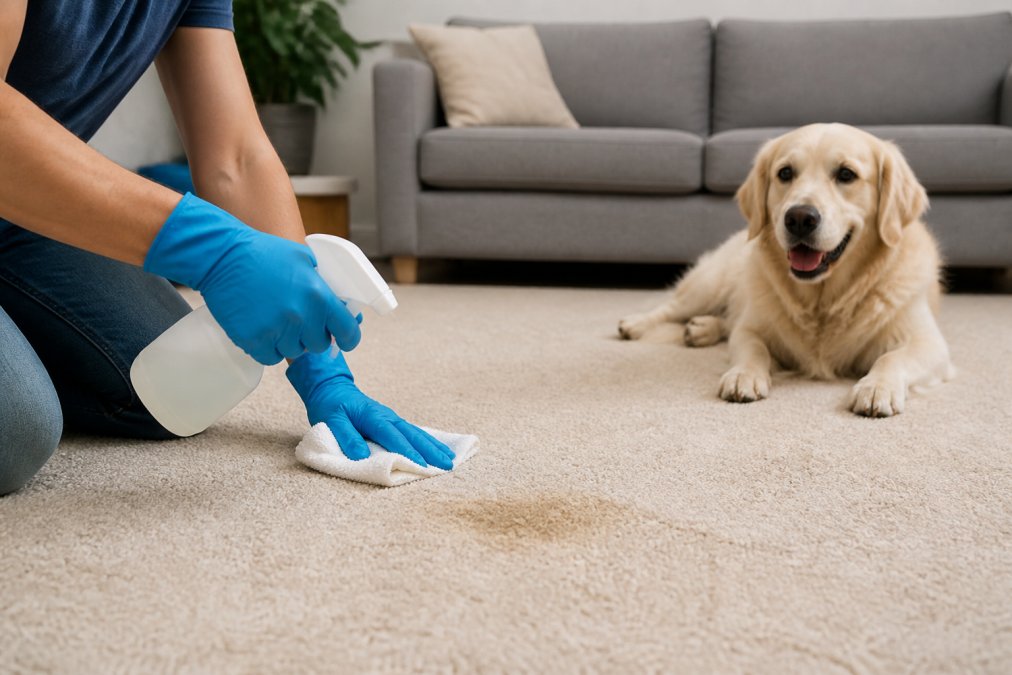
How to Remove Pet Urine Smell: A Complete Guide
Table of Contents
- Why Pet Urine Odor Persists and Returns
- Immediate Cleanup: Blotting and Saturation Control
- How to Remove Pet Urine Smell from Carpet
- Best Enzymatic Cleaner for Pet Urine
- Cleaning Urine from Hardwood Floors and Upholstery
- When to Call Professional Pet Stain Removal Services
- Post-Cleaning Odor Management and Prevention
- Frequently Asked Questions
Last Updated: September 3, 2026
Why Pet Urine Odor Persists and Returns
Pet urine odor lingers because urine contains uric acid crystals that embed deep into carpet fibers, padding, and subflooring. These crystals are hygroscopic, they absorb moisture from humid air and release ammonia, the pungent smell that returns after you thought you'd solved the problem.
According to research from Texas A&M University's College of Veterinary Medicine, enzymatic products designed to eliminate urine odor performed significantly better than older methods at preventing the return of urine smells in carpet. Enzymatic cleaners break down uric acid at the molecular level, while surface-level treatments only mask the smell temporarily.
As of 2024, 66% of U.S. households owned a pet, and pet owners spend 832 hours per year cleaning their homes, often because of repeat accidents. The problem isn't poor cleaning technique, it's that most people don't understand why the smell returns. When you simply blot up urine and apply a deodorizer, you're treating the symptom, not the source. The crystals remain embedded, waiting for humidity to activate them again.
Immediate Cleanup: Blotting and Saturation Control
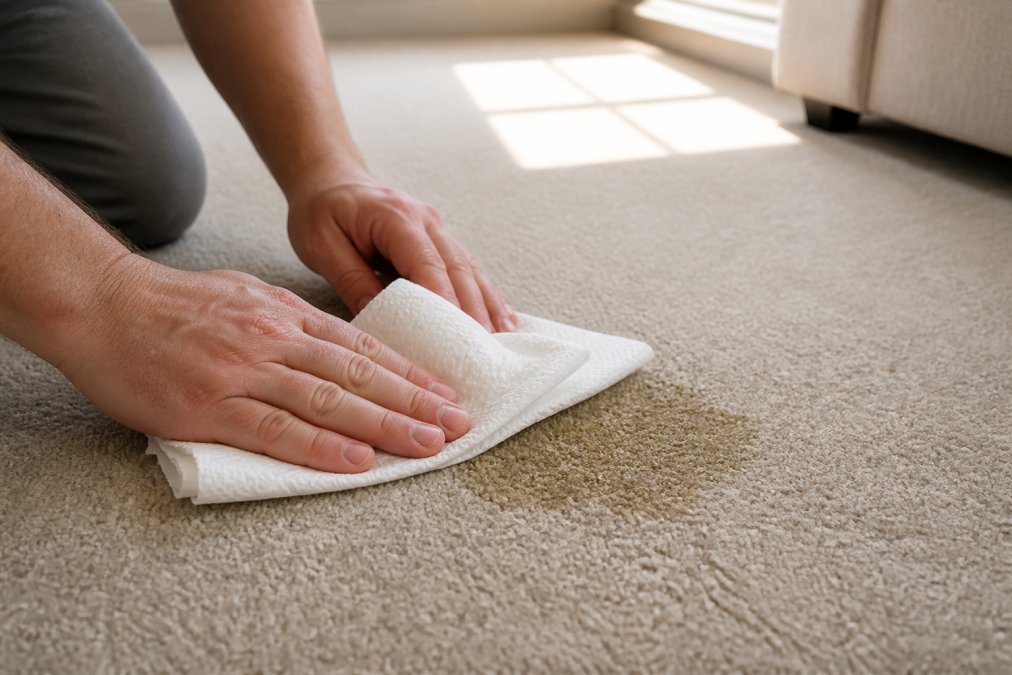
The moment your pet has an accident, speed and technique determine whether the urine stays surface-level or soaks into the padding and subflooring.
Start by blotting, not rubbing. Press a clean, damp cloth or paper towels directly onto the wet spot and hold pressure for 10-15 seconds. Repeat with fresh cloth sections until the area feels only slightly damp. Rubbing pushes urine deeper into fibers and spreads contamination across a wider area.
For large accidents, layer several paper towels over the spot and place a weight on top, a book, plywood, or your body weight, to increase absorption. Leave this in place for 5-10 minutes to extract urine that would otherwise soak through to the padding below.
After blotting, let the area air dry for about 30 minutes before applying cleaning solutions. This allows the carpet fibers to release moisture while you prepare your treatment. Immediate blotting prevents deep saturation, which means enzymatic cleaners can work more effectively later.
How to Remove Pet Urine Smell from Carpet
Removing pet urine smell requires a three-step approach: identify the contaminated area, treat it with the right product, and manage residual odor through proper drying and ventilation.
Testing for Colorfastness
Before applying any cleaning solution, test it on a hidden area to ensure it won't damage the fibers or dyes. Apply a small amount of your chosen enzymatic cleaner to a white cloth and press it onto an inconspicuous area, inside a closet, under furniture, or along a room edge. Wait 10 minutes, then check for discoloration or fiber damage.
For synthetic fibers like polyester or polypropylene, most commercial enzymatic cleaners are safe. Natural fiber carpets like wool or sisal require more caution. Always check the carpet manufacturer's cleaning recommendations if available.
Enzymatic Cleaner Application
Enzymatic cleaners are the most effective solution for pet urine odor because they break down uric acid crystals at the molecular level. These products contain live bacteria or enzymes that consume the organic compounds responsible for the smell, rather than simply masking it.
According to a 2025 Future Market Report, enzyme-based urine removers dominate the pet urine removers market segment with 55% of global revenue. They work better than alternatives because they address the root cause.
Apply the enzymatic cleaner according to product instructions, saturating the carpet thoroughly so enzymes contact the uric acid crystals. Allow the cleaner to sit for the time specified on the product label, typically 10-24 hours. During this time, enzymes actively break down odor-causing compounds. Resist the urge to rinse or dry the area during this period.
After the recommended time, blot up excess moisture with clean towels. For carpet, use a wet vacuum or carpet cleaner to extract remaining liquid. This step is crucial: residual cleaner left in the carpet can attract dirt and create a sticky surface.
Hydrogen Peroxide for Stubborn Stains
When enzymatic cleaners alone don't fully eliminate odor, hydrogen peroxide offers a complementary approach through oxidation rather than enzymatic digestion.
Hydrogen peroxide works best on light-colored carpets. Mix a solution of 3% hydrogen peroxide (standard drugstore strength) with a small amount of dish soap. Apply it to the stained area and let it sit for 5-10 minutes. You'll see fizzing as it reacts with organic matter, helping lift stains and break down odor compounds.
Blot thoroughly with clean towels, then rinse with clean water and blot again to remove all residue. Use hydrogen peroxide as a secondary treatment after enzymatic cleaning, not as your primary method.
Best Enzymatic Cleaner for Pet Urine
The most effective enzymatic cleaners contain multiple enzyme types, remain active for extended periods, and penetrate deep into carpet fibers and padding.
When selecting an enzymatic cleaner, look for:
- Multiple enzyme types (protease, amylase, and lipase work together to break down different compounds)
- Formulation designed specifically for pet urine
- Long dwell time (12+ hours) to allow complete enzymatic action
- Non-toxic and pet-safe ingredients
- Ability to treat both fresh accidents and old, set-in stains
According to 2026 market analysis, the global pet urine removers market was valued at USD 550 million in 2025 and is projected to reach USD 890.50 million by 2033. This growth reflects increasing consumer demand for products that actually work. Ignore marketing claims about "instant" odor elimination, enzymes need time to work. A product requiring 24 hours of dwell time is likely more effective than one claiming instant results.
Cleaning Urine from Hardwood Floors and Upholstery
Hardwood floors and upholstered furniture present different challenges than carpet because these materials are more sensitive to moisture and chemical damage.
Hardwood Floor Protection
Hardwood floors are vulnerable to water damage, so speed and minimal moisture are critical. If urine has soaked into the wood, the damage may be permanent. Your goal is to prevent deep penetration and eliminate surface odor.
For fresh accidents, blot immediately with a dry cloth. Do not use water or liquid cleaners on initial blotting. Once the surface is dry, apply a small amount of enzymatic cleaner diluted with minimal water (1:3 ratio of cleaner to water). Wipe the area with a cloth, not a wet mop. Allow the diluted cleaner to sit for 2-4 hours, then wipe thoroughly with a dry cloth to remove all residue. If the wood appears wet, use a hair dryer on low heat to speed drying.
For set-in odors on hardwood, the urine has likely penetrated the finish and possibly the wood itself. A surface treatment may not fully eliminate the smell. Professional restoration or refinishing may be necessary.
Upholstery and Couch Treatment
Upholstered furniture absorbs urine quickly because fabric and padding provide ideal conditions for uric acid crystals to embed. The challenge is that you cannot extract moisture from upholstery the way you can from carpet.
Start with blotting to remove surface moisture, using a cloth rather than paper towels. Test the fabric for colorfastness by applying cleaner to a hidden area and checking for damage. Upholstery fabrics vary widely in their tolerance for moisture and chemicals.
Apply enzymatic cleaner lightly rather than pouring, and allow the cleaner to soak for 4-8 hours. Upholstery dries slowly, so extended dwell times improve results. After the dwell time, blot repeatedly with clean cloths to extract as much moisture as possible. Use a hair dryer on low heat to speed drying, and ensure the furniture is in a well-ventilated area.
For valuable or delicate upholstery, the risk of damage from DIY treatment is real. Professional cleaning services have equipment and expertise to handle sensitive fabrics without causing permanent damage.
When to Call Professional Pet Stain Removal Services
Call a professional pet stain removal service if:
- The odor returns within weeks after your treatment, indicating urine has contaminated the padding or subflooring
- Multiple accidents have occurred in the same area over months or years
- The stain is on valuable or delicate materials (antique rugs, silk upholstery, leather)
- The smell is so strong that household treatments have failed
- The affected area is large (more than 10% of a room's carpet)
- You have hardwood floors with suspected deep penetration
Professional services use equipment and products not available to homeowners. Extraction equipment removes moisture more thoroughly than towel blotting, allowing enzymatic cleaners to work more effectively. Some professionals use ultraviolet light to identify urine contamination invisible to the naked eye.
Sanctified Carpet & Upholstery Cleaning specializes in this situation. Our team uses professional-grade enzymatic treatments combined with hot water extraction to eliminate both the stain and the odor source. If you've already spent weeks treating a problem without success, professional service becomes cost-effective compared to replacing carpet or furniture.
Post-Cleaning Odor Management and Prevention
Eliminating existing odor is only half the battle. Preventing your pet from re-soiling the same spot is equally important, because repeat marking creates layers of contamination that become exponentially harder to treat.
After cleaning, keep the area completely dry for at least 48 hours. Use fans and open windows to promote air circulation. Dehumidifiers help in naturally humid climates.
Once the area is completely dry, apply an enzymatic product designed for odor prevention. These products neutralize any remaining odor compounds and create a barrier against future marking. Restrict your pet's access to the treated area for 3-5 days if possible. If your pet continues to have accidents in the same spot, consult your veterinarian, repeated accidents can indicate a medical issue, not a behavioral problem.
For ongoing odor management, vacuum regularly with good suction, wash pet bedding weekly, and consider enzymatic products designed for litter boxes or pet areas.
| Prevention Strategy | Frequency | Impact |
|---|---|---|
| Enzymatic odor neutralizer application | After cleaning and monthly | Prevents repeat marking and maintains freshness |
| Regular vacuuming | 2-3 times weekly | Removes dander and dust that trap odor |
| Washing pet bedding | Weekly | Reduces accumulated odor from sleeping areas |
| Air circulation and ventilation | Continuous | Prevents moisture buildup that reactivates odor |
| Enzymatic litter box treatment | Weekly | Neutralizes odor at the source |
Pet urine odor doesn't have to be permanent. The key is understanding that you're fighting uric acid crystals and nitrogen-based compounds, not just surface stains. Enzymatic cleaners work because they break down these compounds at the molecular level, a process that takes time and requires patience.
If DIY methods haven't solved your problem after two serious attempts, Sanctified Carpet & Upholstery Cleaning offers professional pet stain removal with expert upholstery detailing and comprehensive carpet cleaning. Our team uses professional-grade enzymatic treatments and extraction equipment to reach contamination that household products cannot. Contact us to discuss your specific situation and get a personalized treatment plan for your home.
=== FAQ ANSWERS (audit these too, same rules) ===
[1] Q: How do professionals remove pet urine smell? A: Professional pet stain removal services use multiple techniques to eliminate odor completely. First, they locate urine deposits with blacklight detection to identify all affected areas, including those invisible to the naked eye. Next, they apply enzymatic cleaners that break down uric acid crystals at the molecular level, the root cause of persistent odor. For carpets, professionals use hot water extraction to flush out contaminants from the fiber, backing, and padding. For hardwood and upholstery, they apply targeted treatments that penetrate without damaging the material. This multi-step approach addresses both the visible stain and the underlying chemical compounds, preventing odor from returning when humidity increases.
[2] Q: What is the most powerful urine odor eliminator? A: Enzymatic cleaners are the most effective odor eliminators because they break down uric acid crystals and nitrogen-based compounds responsible for pet urine smell. Products containing protease enzymes can disassemble malodors at their source. According to research from Texas A&M University's College of Veterinary Medicine, newer enzyme-based products outperformed traditional methods in eliminating urine odors and preventing their return. Hydrogen peroxide-based oxidizers offer fast visible results for stains, but enzymatic cleaners provide longer-lasting odor control. For best results, apply enzymatic cleaners to saturated areas and allow them to sit for 24-48 hours to fully break down odor compounds.
[3] Q: Can home remedies like vinegar and baking soda really eliminate pet urine smell? A: White vinegar and baking soda provide temporary relief but are not permanent solutions for pet urine odor. While these remedies can neutralize surface-level smells for a few days, they do not break down uric acid crystals deep in carpet padding and subflooring, the source of lasting odor. When humidity increases, these hygroscopic salt crystals absorb moisture from the air and release ammonia again, causing the smell to return. Home remedies work best for fresh accidents caught immediately, but for established urine deposits, enzymatic cleaners or professional treatment is necessary to achieve lasting odor removal.
[4] Q: How long does it take for carpet to dry after professional pet stain removal? A: Drying time depends on the cleaning method and conditions. Hot water extraction used by professional services typically requires 4-8 hours for carpets to air dry completely, though high-pile carpets may take longer. Proper ventilation, air circulation, and low humidity speed up drying. Some professional equipment includes moisture extraction features that reduce drying time significantly. Open windows, run ceiling fans, and keep pets away from treated areas during the drying period. Avoid walking on damp carpet until it's fully dry to prevent re-soiling and to allow enzymatic cleaners to work effectively on odor compounds.
Frequently Asked Questions
Q: How do professionals remove pet urine smell?
A: Professional pet stain removal services use multiple techniques to eliminate odor completely. First, they locate urine deposits with blacklight detection to identify all affected areas, including those invisible to the naked eye. Next, they apply enzymatic cleaners that break down uric acid crystals at the molecular level, the root cause of persistent odor. For carpets, professionals use hot water extraction to flush out contaminants from the fiber, backing, and padding. For hardwood and upholstery, they apply targeted treatments that penetrate without damaging the material. This multi-step approach addresses both the visible stain and the underlying chemical compounds, preventing odor from returning when humidity increases.
Q: What is the most powerful urine odor eliminator?
A: Enzymatic cleaners are the most effective odor eliminators because they break down uric acid crystals and nitrogen-based compounds responsible for pet urine smell. Products containing protease enzymes can disassemble malodors at their source. According to research from Texas A&M University's College of Veterinary Medicine, newer enzyme-based products outperformed traditional methods in eliminating urine odors and preventing their return. Hydrogen peroxide-based oxidizers offer fast visible results for stains, but enzymatic cleaners provide longer-lasting odor control. For best results, apply enzymatic cleaners to saturated areas and allow them to sit for 24-48 hours to fully break down odor compounds.
Q: Can home remedies like vinegar and baking soda really eliminate pet urine smell?
A: White vinegar and baking soda provide temporary relief but are not permanent solutions for pet urine odor. While these remedies can neutralize surface-level smells for a few days, they do not break down uric acid crystals deep in carpet padding and subflooring, the source of lasting odor. When humidity increases, these hygroscopic salt crystals absorb moisture from the air and release ammonia again, causing the smell to return. Home remedies work best for fresh accidents caught immediately, but for established urine deposits, enzymatic cleaners or professional treatment is necessary to achieve lasting odor removal.
Q: How long does it take for carpet to dry after professional pet stain removal?
A: Drying time depends on the cleaning method and conditions. Hot water extraction used by professional services typically requires 4-8 hours for carpets to air dry completely, though high-pile carpets may take longer. Proper ventilation, air circulation, and low humidity speed up drying. Some professional equipment includes moisture extraction features that reduce drying time significantly. Open windows, run ceiling fans, and keep pets away from treated areas during the drying period. Avoid walking on damp carpet until it's fully dry to prevent re-soiling and to allow enzymatic cleaners to work effectively on odor compounds.
This article was written using GrandRanker
Frequently Asked Questions
Q: How do professionals remove pet urine smell?
A: Professional pet stain removal services use multiple techniques to eliminate odor completely. First, they locate urine deposits with blacklight detection to identify all affected areas, including those invisible to the naked eye. Next, they apply enzymatic cleaners that break down uric acid crystals at the molecular level—the root cause of persistent odor. For carpets, professionals use hot water extraction to flush out contaminants from the fiber, backing, and padding. For hardwood and upholstery, they apply targeted treatments that penetrate without damaging the material. This multi-step approach addresses both the visible stain and the underlying chemical compounds, preventing odor from returning when humidity increases.
Q: What is the most powerful urine odor eliminator?
A: Enzymatic cleaners are the most effective odor eliminators because they break down uric acid crystals and nitrogen-based compounds responsible for pet urine smell. Products containing protease enzymes can disassemble malodors at their source. According to research from Texas A&M University's College of Veterinary Medicine, newer enzyme-based products outperformed traditional methods in eliminating urine odors and preventing their return. Hydrogen peroxide-based oxidizers offer fast visible results for stains, but enzymatic cleaners provide longer-lasting odor control. For best results, apply enzymatic cleaners to saturated areas and allow them to sit for 24-48 hours to fully break down odor compounds.
Q: Can home remedies like vinegar and baking soda really eliminate pet urine smell?
A: White vinegar and baking soda provide temporary relief but are not permanent solutions for pet urine odor. While these remedies can neutralize surface-level smells for a few days, they do not break down uric acid crystals deep in carpet padding and subflooring—the source of lasting odor. When humidity increases, these hygroscopic salt crystals absorb moisture from the air and release ammonia again, causing the smell to return. Home remedies work best for fresh accidents caught immediately, but for established urine deposits, enzymatic cleaners or professional treatment is necessary to achieve lasting odor removal.
Q: How long does it take for carpet to dry after professional pet stain removal?
A: Drying time depends on the cleaning method and conditions. Hot water extraction used by professional services typically requires 4-8 hours for carpets to air dry completely, though high-pile carpets may take longer. Proper ventilation, air circulation, and low humidity speed up drying. Some professional equipment includes moisture extraction features that reduce drying time significantly. Open windows, run ceiling fans, and keep pets away from treated areas during the drying period. Avoid walking on damp carpet until it's fully dry to prevent re-soiling and to allow enzymatic cleaners to work effectively on odor compounds.