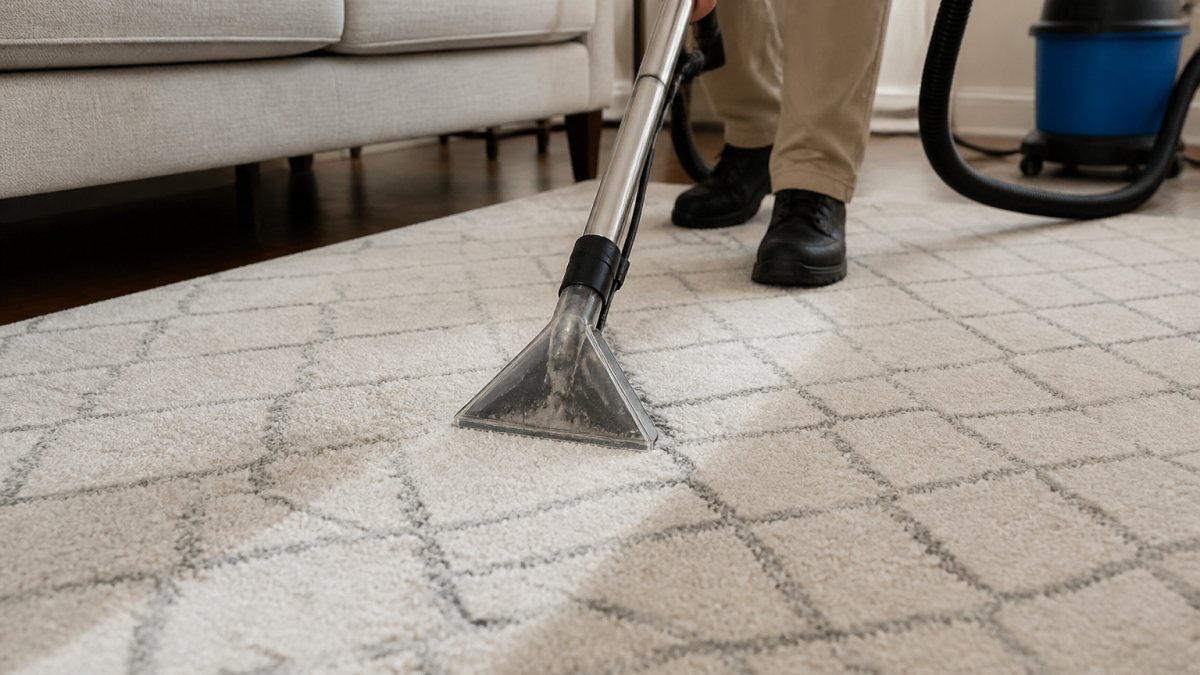
 blog
blog
Steam Cleaning Rugs: Complete Guide to Methods & Results
Table of Contents
- What Is Steam Cleaning and How Does It Work on Rugs?
- Can You Steam Clean a Rug Safely?
- How to Steam Clean a Rug: Step-by-Step Process
- How Long Does a Rug Take to Dry After Steam Cleaning?
- Professional Rug Cleaning vs. DIY Steam Cleaning
- Addressing Pet Stains, Odors, and Deep Soils
- Common Mistakes to Avoid When Steam Cleaning Rugs
- When to Choose Professional Steam Cleaning for Your Home
- Frequently Asked Questions
Last Updated: October 5, 2026
What Is Steam Cleaning and How Does It Work on Rugs?
Steam cleaning is a deep-cleaning method that uses heated water and pressure to lift soil, stains, and allergens from carpet and rug fibers. The process injects hot water mixed with cleaning solution into the carpet backing, then immediately extracts the moisture along with loosened dirt and debris. This extraction-based approach differs from surface-level cleaning because it reaches deep into the pile where dust, pet dander, and contaminants accumulate.
The carpet-cleaning industry has grown significantly. According to IBISWorld's 2026 industry analysis, there were 41,611 carpet-cleaning businesses operating in the United States in 2026, up 1.6% from the previous year. The market itself reflects strong demand: the carpet and upholstery cleaning services sector was valued at $67.3 billion in 2026 and is projected to reach $83.5 billion by 2030, growing at a 5.3% compound annual rate, according to Grand View Research's market forecast.
The combination of heat and pressure breaks down stubborn soils that dry cleaning leaves behind, offering a genuine reset for homeowners dealing with years of accumulated dirt, pet accidents, or heavy foot traffic.
Can You Steam Clean a Rug Safely?
Steam cleaning safety depends on fiber type, rug construction, dye stability, and backing material. Understanding these factors prevents costly mistakes.
Fiber Types and Heat/Moisture Tolerance
Synthetic fibers like polyester, polypropylene, and nylon are engineered to resist water damage and tolerate temperatures of 240°F+, making them ideal for steam cleaning.
Wool rugs can be steam cleaned only by professionals using pH-neutral solutions and controlled drying, as wool absorbs moisture heavily and risks shrinkage above 180°F.
Natural plant fibers like sisal, jute, and seagrass absorb water deeply and dry slowly, creating mold risk. Steam cleaning is not recommended unless you have commercial drying equipment and can ensure complete drying within 24 hours.
Cotton and linen rugs tolerate moisture better than jute or sisal but risk shrinkage and color bleeding above 140°F.
Rug Construction and Backing Vulnerabilities
Synthetic latex or acrylic backing withstands water extraction well, while jute and natural-fiber backing risk swelling, warping, and persistent odors.
Loop-pile rugs trap moisture longer than cut-pile, and high-pile or shag rugs require extra care due to extended drying time and mold risk.
Handknotted, hand-loomed, and antique rugs risk dye bleeding and knot loosening due to natural dyes and weakened fibers.
Dye Stability and Bleeding Risk
Natural dyes in antique and hand-knotted rugs bleed at 180°F+, causing permanent color migration, especially in reds, blues, and blacks.
Delicate silk rugs should almost never be steam cleaned. Silk fibers are fine and fragile, and hot water can cause permanent damage to the fiber structure. Silk dyes are also notoriously unstable. Professional silk rug cleaning uses specialized dry-cleaning methods, not steam extraction.
When Professional Assessment Is Essential
Before steam cleaning valuable, antique, or imported rugs, perform a hidden-corner test: apply 180°F water to an inconspicuous area and watch for dye bleeding, backing separation, or shrinkage.
Rugs with loose backing, visible damage, or previous water damage require professional assessment before steam cleaning.
Professional inspection ($0-50) is minimal compared to rug replacement cost and identifies fiber type, backing, and dye stability.
How to Steam Clean a Rug: Step-by-Step Process
Steam cleaning typically takes 2-4 hours for a standard room-sized rug.
Preparation and Pre-Treatment
Vacuum thoroughly in multiple directions to remove loose dirt and embedded particles, as dry soil interferes with water penetration.
Pre-treat stains with solution 10-15 minutes before cleaning to allow chemical breakdown. Move furniture away and clear the space.
Extraction and Hot Water Application
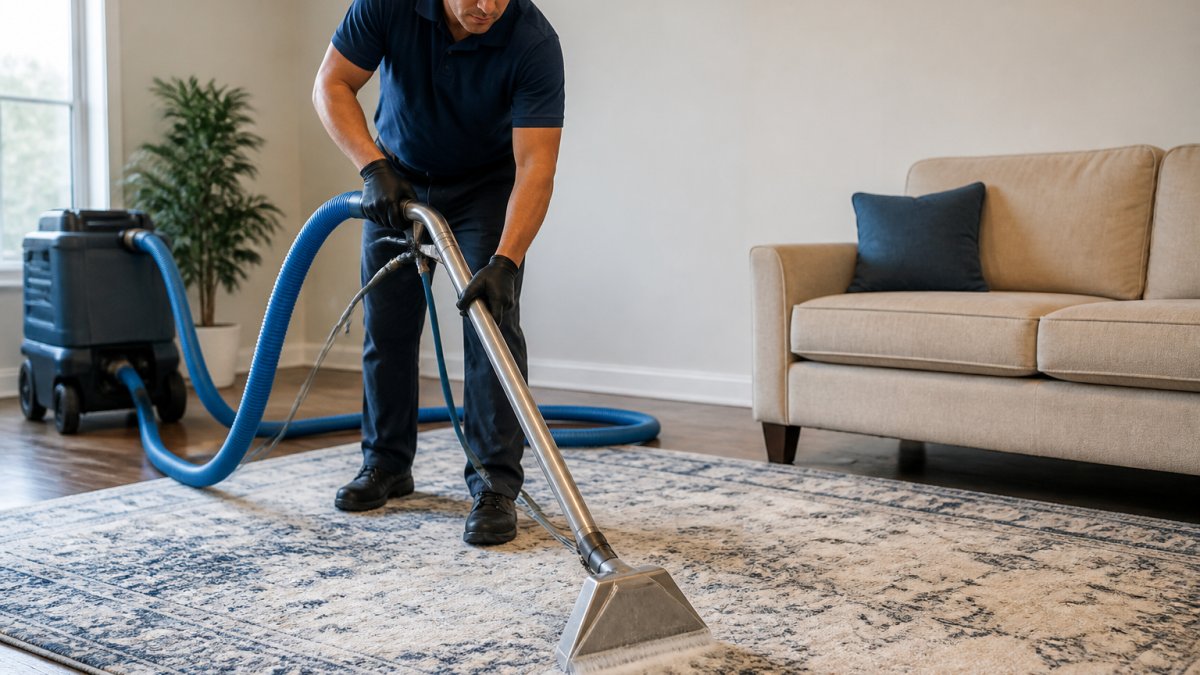
Fill the steam cleaner per manufacturer instructions. Begin in the farthest corner and work backward, spraying forward and extracting backward to ensure consistent cleaning and maximum moisture removal.
Make two passes over heavily soiled areas and work in overlapping rows.
Final Inspection and Spot Treatment
Once the main cleaning is complete, inspect the rug for remaining spots or problem areas. Address any stubborn marks with targeted spot cleaning using the same extraction method. Check the rug backing and edges to ensure no excessive moisture remains, as this can lead to mildew or backing damage.
How Long Does a Rug Take to Dry After Steam Cleaning?
Synthetic rugs dry in 6-12 hours; wool rugs need 12-24 hours. Humidity, temperature, and air circulation affect drying time.
Inadequate drying risks mold and returning odors. Professional equipment extracts far more water, reducing drying to 4-6 hours versus 12-24+ hours with rental machines.
To speed drying after cleaning, open windows for cross-ventilation, run ceiling fans, or use portable fans directed across the rug. Avoid walking on the rug until it's completely dry.
Professional Rug Cleaning vs. DIY Steam Cleaning
This decision hinges on equipment quality, results, risk tolerance, total cost of ownership, and the consequences of failure.
Equipment Capability and Performance Differences
Rental equipment delivers 1-2 PSI at 200-220°F; professional equipment operates at 3-4 PSI at 240-260°F, extracting significantly more water and soil.
Professional steam cleaning removes 40-60% more soil than rental equipment, with faster drying and less residual moisture.
Professional equipment includes adjustable pressure, heated solution tanks, dual-motor extraction, and access to enzymatic pre-treatments unavailable in rental packages.
| Comparison | Professional Service | DIY Rental Equipment |
|---|---|---|
| Water temperature | 240-260°F | 200-220°F |
| Extraction pressure | 3-4 PSI | 1-2 PSI |
| Drying time | 4-6 hours | 12-24+ hours |
| Soil removal effectiveness | 40-60% more | Baseline |
| Solution options | Enzymatic, specialized, pH-neutral | Generic consumer formulas |
| Risk of damage | Minimal (trained operators) | Higher (learning curve) |
Cost Breakdown: Rental vs. Professional Service
Rental equipment costs $50-75 per day plus solution ($15-30 per bottle). Multiple rugs or repeat cleaning escalates costs quickly.
Hidden DIY costs include your time, learning curve errors (over-wetting, residue), failure recovery ($200-500+ for mold remediation), and equipment damage charges ($50-150).
Professional steam cleaning for a standard 8×10 rug ranges from $150-300; heavily soiled or pet-stained rugs may cost $300-500.
Total DIY cost (rental + solution + time + failure risk) often equals or exceeds professional service while delivering inferior results.
Risk Factors and Failure Consequences
DIY risks include over-wetting (mold at $300-800 to fix), permanent fiber/backing damage, dye bleeding, residue attracting dirt, and liability for rental equipment or others' rugs.
Professionals carry liability insurance and guarantee their work.
When DIY Makes Sense
DIY makes sense for small, inexpensive synthetic rugs in good condition with minimal staining and light maintenance needs.
When Professional Service Delivers Clear Value
Professional steam cleaning makes sense in these situations:
- Valuable, antique, or delicate rugs: The cost of professional cleaning ($200-500) is minimal compared to rug replacement ($1,000-10,000+). Professional expertise prevents damage that would be catastrophic.
- Multiple rugs or large areas: Professional service saves time and delivers consistent results across your entire home. The hourly value of your time often exceeds the service cost.
- Pet stains and odors: Enzymatic pre-treatment and commercial-grade extraction that professionals apply are worth the investment. DIY attempts frequently fail to eliminate odor permanently.
- Heavily soiled rugs: Professional equipment and solutions remove soil that rental equipment cannot touch. The visible difference in results justifies the cost.
- Previous DIY failures: If your last attempt left the rug damp for days, didn't remove stains, or created odors, professional service will deliver noticeably better results and correct the damage.
- Time constraints: If you cannot dedicate a full day to cleaning and drying management, professional service is more convenient and cost-effective when you factor in your time value.
The decision ultimately depends on rug value, your available time, and your risk tolerance. For most homeowners with area rugs of moderate to high value, professional steam cleaning delivers better results, faster drying, lower total cost, and peace of mind.
Addressing Pet Stains, Odors, and Deep Soils
Pet accidents present unique challenges because urine soaks into backing and padding, not just surface fibers. Steam cleaning alone won't eliminate deep odors or prevent re-soiling.
Professional treatment for pet stains involves three steps. First, identify the affected area using ultraviolet light to reveal all contaminated spots, some are invisible to the naked eye. Second, apply an enzymatic pre-treatment that breaks down uric acid crystals, the source of persistent odor. Third, perform steam cleaning extraction to remove both the treatment and the broken-down urine residue.
This sequence works because enzymes target the chemical cause of odor, not just the smell itself. Without enzymatic treatment, odor returns as the rug dries and humidity reactivates remaining uric acid.
Deep soil accumulation from heavy foot traffic or years of neglect requires aggressive pre-treatment and multiple extraction passes. The difference in results is visible and immediate.
Common Mistakes to Avoid When Steam Cleaning Rugs
Most DIY failures stem from a handful of preventable errors.
Over-wetting is the most common mistake. Applying too much water or making too many passes saturates the backing and padding, extending drying time and creating mold risk.
Skipping pre-treatment for stains wastes the cleaning process. Stains set through chemical bonding, not just surface dirt. Water alone won't break that bond. Always pre-treat problem areas and allow dwell time before extraction.
Using the wrong cleaning solution reduces effectiveness. Consumer-grade solutions often leave residue that attracts dirt, causing the rug to soil faster after cleaning.
Inadequate drying creates the perception that steam cleaning doesn't work. If the rug stays damp for 24+ hours, mold develops, odors return, and the rug smells worse than before. Proper drying is non-negotiable for success.
Cleaning delicate fibers without testing causes irreversible damage. Always test hidden areas first. Silk, antique, and natural fiber rugs need expert handling.
When to Choose Professional Steam Cleaning for Your Home
Professional steam cleaning makes sense in specific situations.
Choose professional service if your rug is valuable, antique, or made from delicate fibers. The cost of professional cleaning is minimal compared to rug replacement.
Pet owners dealing with stubborn odors or multiple accidents benefit significantly from professional treatment. The enzymatic pre-treatment and commercial-grade extraction that professionals apply are worth the investment when pets are involved.
If your last DIY attempt left the rug damp for days or didn't remove stains satisfactorily, professional service will deliver noticeably better results. Sanctified Carpet & Upholstery Cleaning specializes in expert upholstery detailing and comprehensive carpet cleaning with personable service.
Professional steam cleaning rugs transforms your home environment by removing years of accumulated soil, pet odors, and allergens that surface cleaning can't reach. Our team provides professional steam cleaning with personable service and pricing designed for families and homeowners managing tight budgets.
Frequently Asked Questions
Can you steam clean all types of rugs?
Not all rugs are suitable for steam cleaning. Synthetic fibers like polyester and nylon tolerate hot water extraction well. Natural fibers such as wool, silk, and jute are more delicate and risk shrinkage, dye bleeding, or backing damage. Antique and hand-knotted rugs require professional assessment before steam cleaning. Always check the manufacturer's care label and test an inconspicuous area first, or consult a professional to determine if your specific rug is safe for steam cleaning.
How long does a rug take to dry after steam cleaning?
Drying time typically ranges from 4 to 24 hours, depending on humidity, air circulation, rug thickness, and the amount of moisture extracted. Professional-grade equipment removes more water than rental machines, reducing drying time significantly. You can accelerate drying by opening windows, using fans, or running air conditioning. Avoid walking on the rug until it is completely dry to prevent re-soiling and to allow the fibers to set properly.
What's the difference between professional steam cleaning and renting a DIY machine?
Professional equipment uses higher water temperature, stronger suction, and industrial-grade cleaning solutions to extract deeper soil and moisture than rental machines. Professionals are trained to assess fiber type, adjust technique, and prevent damage. DIY rentals cost less upfront but require your labor, often take longer to dry, and risk over-wetting or fiber damage if misused. For valuable, delicate, or heavily soiled rugs, professional cleaning delivers superior results and protects your investment.
Can steam cleaning remove pet urine odors permanently?
Steam cleaning can remove fresh pet stains and reduce odors, but old urine that has soaked into the rug backing and padding may require specialized enzymatic treatments or padding replacement. Professional cleaners can apply targeted pre-treatments and use extraction methods designed for pet contamination. However, if urine has penetrated deeply, steam cleaning alone may not eliminate the smell completely. A professional assessment can determine whether cleaning will succeed or if additional remediation is needed.