 blog
blog
7 Ways to Remove Pet Stains From Upholstery
Table of Contents
- Act Fast: Immediate Blotting and Moisture Removal
- Test for Colorfastness Before Treating
- DIY Cleaning Solutions: Vinegar, Baking Soda, and Dish Soap
- Best Enzyme Cleaner for Upholstery and Odor Neutralization
- How to Remove Pet Urine Smell From Couch
- Fabric-Specific Protocols and Pet-Safe Considerations
- Proper Drying Techniques to Prevent Water Rings
- When to Call Professional Upholstery Cleaning Services
- Frequently Asked Questions
Last Updated: September 23, 2026
Act Fast: Immediate Blotting and Moisture Removal
When learning 7 ways to remove pet stains from upholstery, the first 30 seconds matter most. Blot immediately, don't rub or scrub.
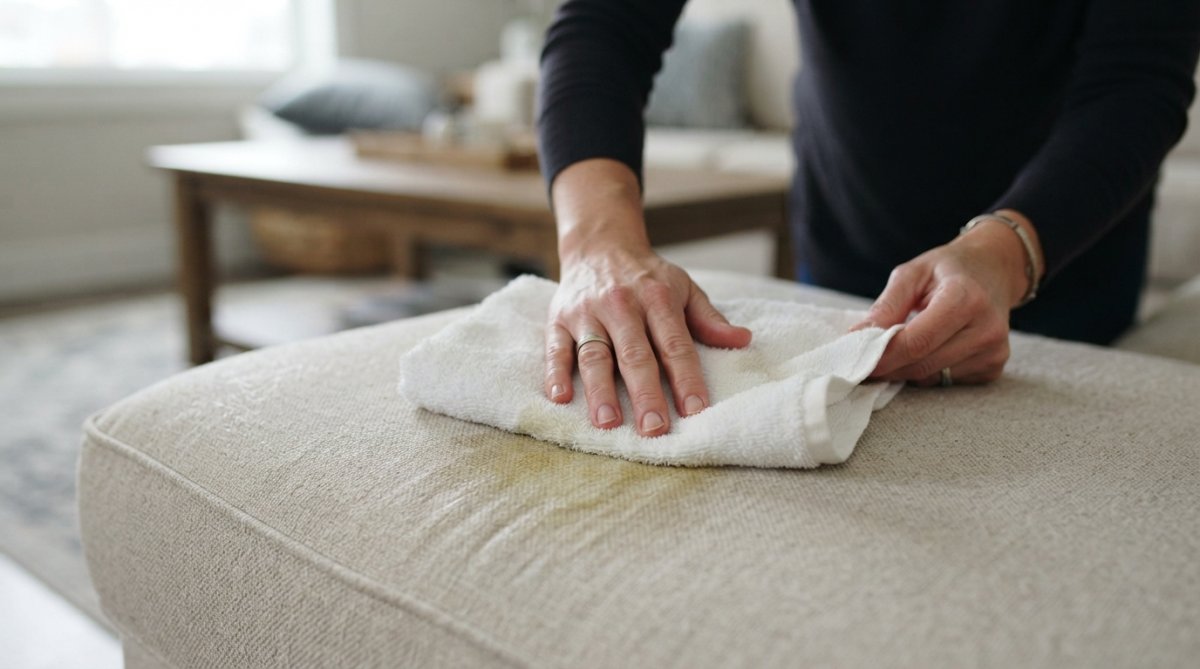
Urine soaks into fibers quickly. Pull moisture out before it sets:
- Use white cloths or paper towels (colored ones can transfer dye)
- Press down firmly for 5-10 seconds per spot
- Move to a fresh section of cloth each time
- Repeat until the cloth comes away nearly dry
- Work from the outside of the stain toward the center
This prevents the liquid from spreading deeper. Bacteria breaks down uric acid crystals and creates odor, so speed matters.
Test for Colorfastness Before Treating
Test any cleaning solution on a hidden area first. Apply it, wait 5 minutes, then blot with a white cloth. If color transfers, stop, use a gentler approach or call a professional. This is especially important for natural fabrics like cotton and wool.
DIY Cleaning Solutions: Vinegar, Baking Soda, and Dish Soap
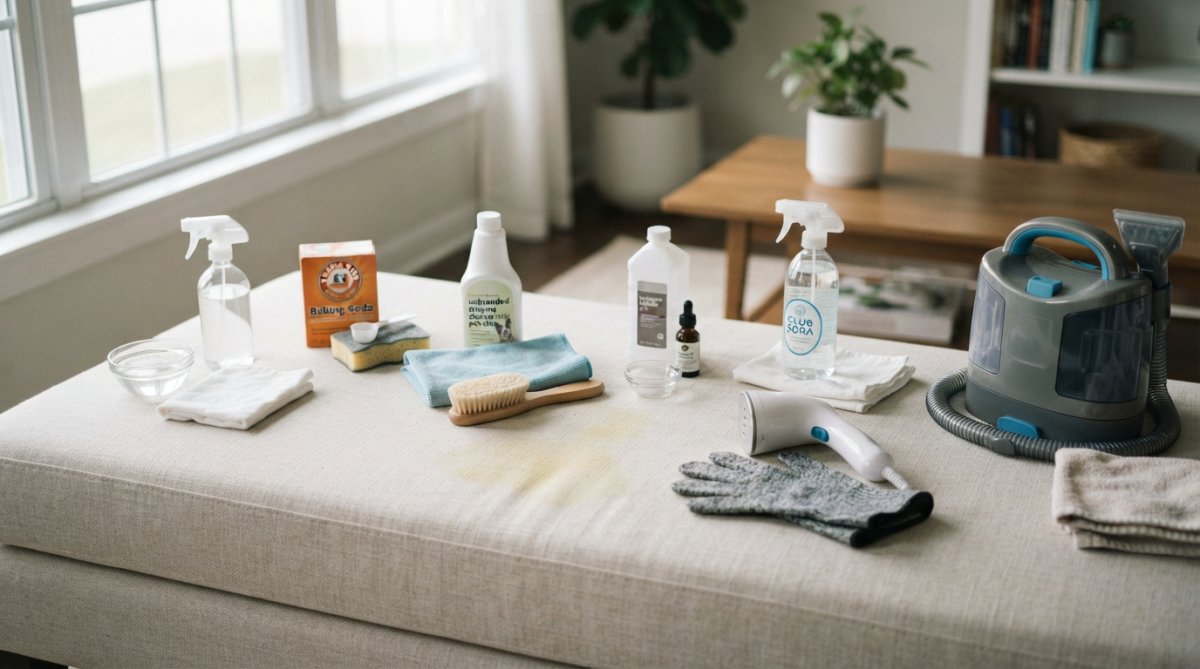
Most households already have what you need for 7 ways to remove pet stains from upholstery. These solutions break down the organic matter that causes odors.
White Vinegar and Water Method
Mix equal parts white vinegar and water. Spray lightly (don't soak), wait 5-10 minutes, then blot dry. The vinegar smell fades as it dries, but if odor returns within days, the urine penetrated deeper than this method can reach.
Baking Soda for Odor Absorption
Sprinkle baking soda generously over the damp stain and let it sit 12-24 hours, then vacuum thoroughly. This works best on surface odors; deep smells in cushion padding require stronger methods.
Dish Soap Solution for Protein-Based Stains
Mix 1 tablespoon dish soap with 2 cups warm water. Apply, let sit 10 minutes, then blot repeatedly with damp cloths until all residue is gone, soap residue attracts dirt and darkens stains.
Best Enzyme Cleaner for Upholstery and Odor Neutralization
Enzymatic cleaners are identified as the primary method for breaking down proteins and uric acid in upholstery fibers, according to Pouffe Love's 2024 upholstery care guide. They work where vinegar and baking soda fall short.
Enzymes digest the organic compounds that cause pet odors. They're the only method that truly eliminates the smell at the source, not just masks it.
When you choose an enzymatic cleaner, look for products labeled for pet urine specifically. Apply according to the product instructions. Most require you to saturate the stain, then let the enzymes work for 24-48 hours.
The waiting period is crucial. Enzymes need time to break down the uric acid crystals embedded in the fabric. Rush the process and you'll get partial results.
How to Remove Pet Urine Smell From Couch
The smell lingers because urine seeps past surface fibers into the cushion padding and frame. Surface treatments rarely reach it.
If your couch smells like pet urine despite multiple cleaning attempts, the odor is in the stuffing. This is where professional-grade spot removers come in. Professional-grade spot removers are increasingly formulated to break down bacteria at the source to prevent permanent discoloration, according to Stanley Steemer's 2024 pet stain analysis.
For deep cleaning, saturate the area with enzymatic cleaner and cover with plastic wrap to slow evaporation. Leave for 24-48 hours, then blot and use a wet-dry vacuum if available. If odor returns, the urine has reached the frame, professional upholstery detailing is your best option.
Fabric-Specific Protocols and Pet-Safe Considerations
Different fabrics require different approaches. Using the wrong method can damage fibers, set stains, or create water rings.
Fabric-Specific Cleaning Protocols
Microfiber Upholstery
Microfiber is resistant to staining but prone to water spotting. Blot immediately with dry cloths. Use minimal moisture if treating with liquid cleaner, spray lightly rather than saturate. Avoid high heat, which can melt or shine the fabric. If water rings appear, dampen the entire cushion with distilled water, then dry completely with towels and fans.
Velvet and Crushed Velvet
Velvet is delicate; avoid downward pressure when blotting. Use gentle dabbing motions and test solutions on hidden areas first. Apply enzymatic cleaners sparingly and allow 48+ hours drying with air circulation, not heat. If the nap flattens, gently brush it in the direction of the pile once dry.
Linen and Cotton Upholstery
Linen and cotton absorb moisture quickly and hold odors longer. Use less water than on synthetics and test for colorfastness first. Avoid soaking; apply solutions with a damp cloth and blot frequently. Air dry slowly at room temperature, avoid direct sunlight and heat sources, which can fade, set stains, or cause shrinkage.
Leather Upholstery
For fresh accidents on leather, blot immediately with a dry cloth. Do not use water-based solutions, water damages the finish. Use a leather-specific cleaner or minimal white vinegar on a cloth, then dry immediately. For old or stubborn stains, professional cleaning is strongly recommended.
Check Your Cleaning Code
Your upholstery tag includes a cleaning code that indicates which methods are safe:
- W = Water-safe (water-based cleaners are safe)
- S = Solvent-safe (dry-cleaning solvents only; avoid water)
- WS = Both water and solvent methods are safe
- X = Dry cleaning only; do not use water or solvents at home
If your upholstery is marked "X" or "S," do not attempt DIY cleaning with water-based solutions. Call a professional.
Pet-Safe Ingredient Warnings
Many common household cleaners are toxic to pets. Some are absorbed through the skin; others cause poisoning when pets lick treated surfaces or inhale fumes. Understanding which ingredients are dangerous is essential for your pet's safety.
Toxic Ingredients to Avoid
Bleach and Ammonia, Never mix these; they create toxic chloramine gas. Bleach burns mouths and digestive tracts; ammonia irritates respiratory systems. Avoid cleaners listing either as an active ingredient.
Phenol and Cresol, Highly toxic to pets, causing liver damage, respiratory distress, and neurological problems. Cats are especially sensitive. Avoid products listing phenol, cresol, or "coal tar derivatives."
Glycol Ethers, Solvents that damage kidneys, liver, and nervous system.
Pet-Safe Cleaning Ingredients
Proper Drying Techniques to Prevent Water Rings
Water rings form when minerals crystallize as moisture evaporates. After treating, blot thoroughly and use fans to speed drying, avoid direct heat, which can set stains. If rings appear, dampen the entire cushion with distilled water and dry completely to equalize water content.
When to Call Professional Upholstery Cleaning Services
Some pet stains and odors are beyond the reach of DIY methods. Professional upholstery cleaners have equipment, training, and access to commercial-grade products that can eliminate stains and odors that home treatments cannot.
Why Professional Cleaning Works Better for Deep Stains
Professional cleaners use hot-water extraction equipment that injects heated water and solution deep into fibers and padding, then immediately extracts using powerful suction. This removes deep moisture that DIY blotting cannot reach. Commercial extraction equipment produces 300+ CFM versus 100-150 CFM for household wet-dry vacuums, pulling moisture from depths homeowners cannot access.
When DIY Methods Fall Short: Clear Triggers for Professional Help
If odor reappears within a week, the urine penetrated deeper than your treatment reached, professional extraction is needed.
The Fabric Is Delicate, Expensive, or Unfamiliar
The Cleaning Code Is "X" or "S"
Multiple Pets or Repeat Accidents
What to Expect from Professional Upholstery Cleaning
Pre-Treatment Inspection
A professional cleaner will inspect the stain, identify the fabric type, check the cleaning code, and assess how deep the stain has penetrated. This determines the best cleaning method and products to use.
Pre-Spotting
Hot-Water Extraction
Drying
Cost and Timeline
Prevention: Reducing Future Accidents
After professional cleaning, ask your cleaner about protective treatments. Some professionals apply enzymatic barriers or fabric protectants that discourage pets from re-marking the same spot and make future stains easier to remove. These treatments are especially valuable if your pet has a history of repeated accidents on the same furniture.
Frequently Asked Questions
Will hydrogen peroxide remove old pet stains from upholstery?
Hydrogen peroxide can help break down protein-based pet stains and discoloration, but old stains may have set into the fabric fibers permanently. For stains that have been present for weeks or months, an enzymatic cleaner is more effective because it breaks down the bacteria and uric acid crystals at the source. If the stain persists after enzymatic treatment, professional upholstery cleaning services have stronger extraction methods and equipment that can reach deeper into the fabric.
Does dish soap effectively remove pet urine stains?
Dish soap can remove the initial stain residue and some surface odor, but it often fails to neutralize uric acid crystals completely. These crystals are what cause pet urine to smell and can trigger pets to mark the same spot again. An enzymatic cleaner is more reliable because it's specifically formulated to break down the organic compounds in urine. If you use dish soap, follow up with an enzymatic treatment or consider professional cleaning for lasting odor neutralization.
What's the difference between DIY cleaning and professional upholstery cleaning services?
DIY methods work for fresh, surface-level stains but have limits. Household cleaners like vinegar and baking soda may not fully penetrate synthetic fabrics or natural fibers to eliminate bacteria deep within the padding. Professional cleaners use industrial-grade enzymatic solutions, specialized extraction equipment, and techniques that remove moisture completely, preventing water rings and mildew. They also understand fabric-specific protocols and can handle delicate materials safely. For stubborn odors or large stained areas, professional service delivers more reliable, lasting results.
How long does it take upholstery to dry after cleaning?
DIY spot cleaning typically dries in 4-8 hours depending on humidity and air circulation. Professional cleaning with extraction equipment removes more moisture, so drying time is often 2-4 hours. To speed drying, open windows, use fans, or run air conditioning. Avoid sitting on treated upholstery until it's completely dry to prevent water rings and new stains. If moisture remains longer than 24 hours, mildew can develop, a sign that residual moisture is trapped deep in the padding.