 ultimate-guide
Professional Carpet Cleaning for Allergies: A Complete Guide
Table of Contents
- How Professional Carpet Cleaning Reduces Indoor Allergens
- Common Household Allergens Trapped in Carpet Fibers
- Professional Carpet Cleaning vs. DIY for Allergen Removal
- How Often to Clean Carpets for Allergies: A Maintenance Schedule
- The Connection Between Clean Carpets and Respiratory Health
- Cost of Whole House Carpet Cleaning and Budget Considerations
- What to Know About Post-Cleaning Drying and Chemical Safety
- Frequently Asked Questions
Last Updated: October 2, 2026
How Professional Carpet Cleaning Reduces Indoor Allergens
Professional carpet cleaning allergies management removes trapped allergens far more effectively than standard vacuuming. According to Stain Kings' 2024 report on carpet cleaning efficacy, professional extraction reduces dust mite allergens by up to 91%, cat allergens by 95%, and dog allergens by 97%. These results matter because regular vacuuming captures larger particles but misses the microscopic particles that trigger allergic reactions.
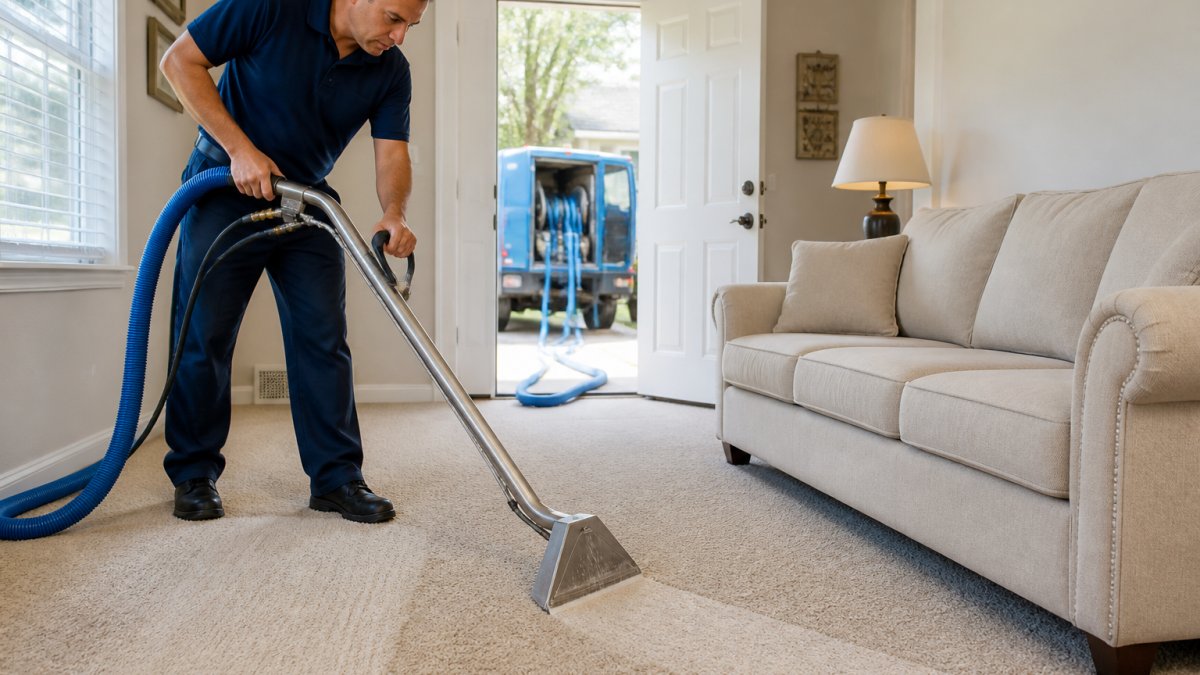
The difference lies in equipment and method. Professional-grade extraction systems apply heated water and powerful suction simultaneously, penetrating carpet fibers and the padding beneath. This reaches allergens that have settled deep within the carpet structure, areas a household vacuum cannot access. Research from the National Center for Biotechnology Information confirms that standard vacuuming removes larger particles but is often ineffective at removing smaller, allergen-associated particles, necessitating professional intervention.
Professional carpet cleaning addresses the root cause by removing the allergen sources themselves rather than masking symptoms. The extraction method works because it doesn't just clean the surface; it flushes out accumulated dust mites, pet dander, and other microscopic irritants trapped in fibers.
Common Household Allergens Trapped in Carpet Fibers
Your carpet acts as a collection point for multiple allergens. Dust mites thrive in warm, humid carpet environments and leave behind fecal matter that triggers allergic reactions. Pet dander, tiny skin flakes from dogs and cats, becomes embedded in fibers and accumulates over months. Pollen tracked indoors settles into carpet, and mold spores grow in damp areas or poorly dried carpets after cleaning.
Professional carpet cleaning reduces pet dander by 97%, according to Stain Kings' allergen reduction data. This is significant because pet owners often struggle with odors and allergen buildup even with frequent vacuuming. The professional extraction method pulls dander from deep within fibers where household vacuums cannot reach.
Beyond visible allergens, carpets trap volatile organic compounds and other surface contaminants that degrade indoor air quality. These microscopic particles remain suspended in the air after vacuuming, which is why families with respiratory sensitivities often see continued symptoms despite regular home cleaning. Professional extraction removes these trapped pollutants, reducing the allergen load in your entire indoor environment.
Professional Carpet Cleaning vs. DIY for Allergen Removal
Renting equipment from hardware stores costs far less upfront than hiring professionals. A rental unit might cost $50-75 for a day, making it tempting for budget-conscious homeowners. However, rental equipment lacks the power, heating capacity, and filtration systems that professional-grade machines provide.
The filtration difference is the critical safety factor most homeowners overlook. Professional-grade extraction equipment uses HEPA (High-Efficiency Particulate Air) filtration systems that capture 99.97% of particles 0.3 microns or larger during the extraction process. This means allergens removed from carpet fibers are trapped in the machine's filter, not released back into your breathing air. Standard rental machines lack HEPA filtration entirely.
DIY cleaning also requires proper technique that most homeowners lack. Oversaturation causes extended drying times, which promotes mold and dust mite growth, the opposite of your goal. Professional technicians understand fiber saturation rates and apply the right water-to-suction ratio for your specific carpet type.
Chemical residue is another hidden risk of rental equipment. Rental machines often leave behind cleaning agent residue in carpet fibers because their rinse cycles are less thorough than professional systems. This residue can trigger respiratory irritation, especially in people with chemical sensitivities, and it causes carpets to resoil faster because dirt clings to sticky residue.
How Often to Clean Carpets for Allergies: A Maintenance Schedule
Industry recommendations suggest professional cleaning every 6-12 months to manage allergen accumulation, according to Houzz's professional cleaning guidance. For allergy sufferers, the frequency depends on household factors: pet ownership, number of occupants, and severity of symptoms.
Recommended Schedule by Situation:
| Household Type | Professional Cleaning Frequency | Additional Actions |
|---|---|---|
| No pets, 1-2 people | Every 12 months | Monthly vacuuming with HEPA filter |
| Pets, 2-4 people | Every 6-9 months | Weekly vacuuming, spot cleaning as needed |
| Multiple pets or severe allergies | Every 3-6 months | Twice-weekly vacuuming, monthly spot treatment |
| High-traffic commercial spaces | Every 3-4 months | Daily vacuuming with commercial equipment |
Families with pets should prioritize more frequent professional cleaning because pet dander accumulates rapidly. If you notice odors returning or symptoms worsening within a few weeks of cleaning, that's a signal to increase frequency. Allergy flare-ups often spike when allergen levels exceed your personal threshold, professional cleaning resets that baseline.
Between professional visits, HEPA-filtered vacuuming removes surface allergens and prevents buildup. Vacuuming twice weekly in high-traffic areas and bedrooms reduces the allergen load your carpets carry between professional cleanings. This combination approach, frequent home maintenance plus professional extraction, delivers the best indoor air quality results.
The Connection Between Clean Carpets and Respiratory Health
Respiratory health depends partly on indoor air quality, and carpets significantly influence that quality. Dust mites, pet dander, mold spores, and pollen trigger asthma attacks and allergic reactions in sensitive individuals. Removing these allergens from carpet reduces airborne irritants, which means fewer respiratory symptoms and better sleep quality.
Children and elderly family members are particularly vulnerable to poor indoor air quality. Carpeted bedrooms where kids spend 8+ hours daily become allergen reservoirs if not professionally maintained. Professional cleaning removes these triggers, often resulting in fewer nighttime cough episodes and improved breathing during sleep.
The relationship between carpet cleanliness and asthma control is well-documented. Reducing household allergens through professional carpet cleaning is a recommended strategy for families managing asthma in children and adults. Clean carpets mean fewer airborne particles and lower inflammation in respiratory airways for many allergy and asthma sufferers.
Cost of Whole House Carpet Cleaning and Budget Considerations
Pricing for whole-house carpet cleaning depends on square footage, carpet condition, and the specific services you need. For accurate pricing tailored to your home, contact Sanctified Carpet & Upholstery Cleaning directly for a quote. We offer bundle deals that combine carpet and upholstery cleaning, which often provide better value than booking services separately.
Budget-conscious homeowners should consider the long-term value of professional cleaning. Regular professional maintenance extends carpet lifespan by 5-10 years compared to homes that rely only on vacuuming. Since carpet replacement costs thousands of dollars, investing in preventive professional cleaning pays for itself many times over.
Many families find that spreading professional cleanings across multiple visits throughout the year fits their budget better than one expensive whole-house service. Prioritizing high-traffic areas and bedrooms first, then adding other rooms as budget allows, is a practical approach. Sanctified Carpet & Upholstery Cleaning works with homeowners to create maintenance plans that fit reasonable budgets while addressing allergy concerns.
What to Know About Post-Cleaning Drying and Chemical Safety
Drying time directly affects allergen control and mold prevention. Carpets should dry completely within 24 hours. Professional equipment extracts most moisture, but air circulation accelerates the process. Open windows, use fans, and run air conditioning to promote airflow.
The mold risk is not theoretical. Mold spores germinate in moisture within 24-48 hours, and carpet padding, the layer beneath visible fibers, is particularly vulnerable because it retains moisture longer than surface fibers. Once mold establishes in padding, it becomes a persistent allergen source that vacuuming cannot reach.
Chemical safety matters for families with young children and pets, and it's a major gap most cleaning articles ignore. Professional cleaning products vary widely. Some contain harsh solvents like perchloroethylene or sodium lauryl sulfate that irritate respiratory systems, trigger asthma attacks, and leave residue in fibers.
Hypoallergenic cleaning solutions use plant-based surfactants, enzymes, and minimal synthetic chemicals. These products are effective at breaking down allergen-binding oils and dirt without triggering respiratory irritation. Some professional cleaners now offer fragrance-free, dye-free, and solvent-free options that are safer for chemically sensitive individuals.
Residue-free cleaning prevents resoiling and chemical buildup. After professional extraction, rinse water should remove all cleaning agents from fibers. If residue remains, carpets attract dirt faster and may trigger respiratory irritation.
Frequently Asked Questions
How much can professional carpet cleaning reduce allergens?
Professional extraction reduces dust mite allergens by up to 91%, cat allergen by 95%, and dog allergen and pet dander by 97%. These reductions occur because professional-grade equipment with HEPA filtration removes microscopic particles that standard vacuuming cannot reach. Homeowners with pets typically see the most dramatic improvement in indoor air quality and allergy symptom relief.
How often should allergy sufferers have their carpets professionally cleaned?
Industry recommendations suggest professional cleaning every 6 to 12 months to manage allergen accumulation effectively. Households with pets, multiple family members, or severe allergies may benefit from cleaning every 6 months. Regular professional cleaning prevents dust mites, pet dander, and pollen from building up to levels that trigger allergic reactions and respiratory issues.
What is the difference between professional extraction and DIY cleaning for allergies?
Professional extraction uses high-powered equipment and HEPA-filtered systems that remove allergens from deep within carpet fibers and padding. DIY methods like rental machines or frequent vacuuming remove only surface particles; vacuuming alone is often ineffective at removing smaller allergen-associated particles. Professional-grade extraction reaches contamination that household equipment cannot, delivering superior indoor air quality improvement.
Is professional carpet cleaning safe for children and pets?
Professional cleaning is safe when providers use non-toxic, child- and pet-safe products and allow adequate drying time before allowing foot traffic. Proper drying (typically 4-24 hours depending on humidity and airflow) prevents mold growth and microbial contamination. Ask your cleaning provider about their product safety certifications and drying procedures to ensure your family's health and comfort during and after service.