 how-to
How to Remove Pet Urine Odor From Carpet
Table of Contents
- Why Pet Urine Odor Is So Hard to Remove From Carpet
- Step 1: Find Every Affected Area With a UV Blacklight
- Step 2: Clean Fresh Pet Urine Stains Before They Set
- Step 3: Apply the Best Enzyme Cleaner for Pet Urine
- Step 4: Tackle Old or Dried Pet Urine Stains
- Why Does Carpet Smell Worse After Cleaning Pet Urine
- When to Call Professional Carpet Cleaning for Pet Odors
- Conclusion
Last Updated: August 24, 2026
Pet urine odor is one of the most stubborn household cleaning challenges, and according to [Grand View Research's 2024 U.S. pet odor(https://ueniweb.com/sitemap/sanctified-carpet-upholstery-cleaning.xml/cost-of-whole-house-carpet-cleaning) control market report | grandviewresearch.com], the market for pet odor control and cleanup products hit $6.47 billion in 2023, driven largely by frustrated pet owners who keep buying products that don't fully work. The Sanctified Carpet & Upholstery Cleaning team works with pet owners regularly, and the same story comes up again and again: they've tried sprays, powders, and rental machines, but the smell keeps coming back. Below, we'll show you exactly why that happens and how to remove pet urine odor from carpet the right way, including the hidden sub-floor problem most guides completely ignore.
Why Pet Urine Odor Is So Hard to Remove From Carpet
Pet urine odor is notoriously difficult to eliminate because urine doesn't just sit on carpet fibers, it penetrates through them, soaking into the backing and padding beneath.
Most store-bought sprays address only the surface. Research from Earthworm's 2025 analysis of pet stain removers found that 97% of pet stain removers on store shelves don't actually eliminate odors, they only mask them. That statistic should change how you shop.
How Uric Acid Crystals Lock Odor Into Carpet Fibers
The real culprit is uric acid. When urine dries, it leaves behind uric acid crystals that bond tightly to carpet fibers. These crystals are nearly insoluble in water, which is why mopping up the wet spot and spraying a deodorizer does almost nothing for the long-term smell.
Humidity makes it worse. When moisture levels rise, from rain, steam cleaning, or even humid summer air, those uric acid crystals reactivate and release ammonia gas. That's why a carpet can smell "clean" in winter and reek again in July.
Sub-Padding and Sub-Floor Saturation: The Hidden Problem
Most guides stop at the carpet surface. Here's where they go wrong.
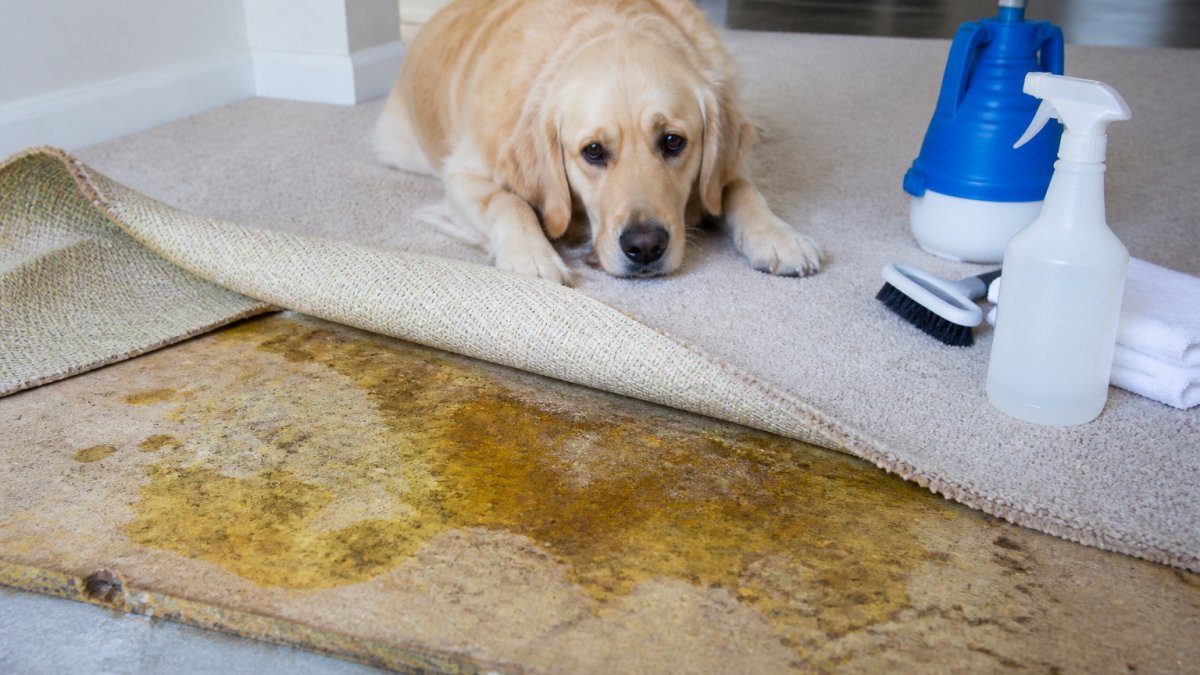
A significant urine event doesn't stay in the carpet pile. It wicks down through the carpet backing into the padding underneath, and in severe cases, it reaches the subfloor itself. Once uric acid crystals are embedded in the padding or absorbed into wood subfloor, surface treatments become almost useless, you're cleaning 10% of the problem.
A professional inspection using UV detection can reveal how far the contamination has actually spread.
Step 1: Find Every Affected Area With a UV Blacklight
The first step to removing pet urine odor from carpet is locating every stain, including the ones you can't see.
Dried urine is invisible under normal lighting. A UV blacklight (also called a blacklight flashlight) causes urine residue to fluoresce, showing up as a dull yellow-green glow against the carpet. Turn off all the lights and work slowly across the floor. Mark each affected area with a piece of painter's tape before you turn the lights back on.
This step matters more than most people realize. Treating only the visible stains while leaving invisible deposits untouched means the odor will persist. Older homes or homes where pets have had repeated accidents in the same rooms often reveal far more contamination than the owner expected.
Step 2: Clean Fresh Pet Urine Stains Before They Set
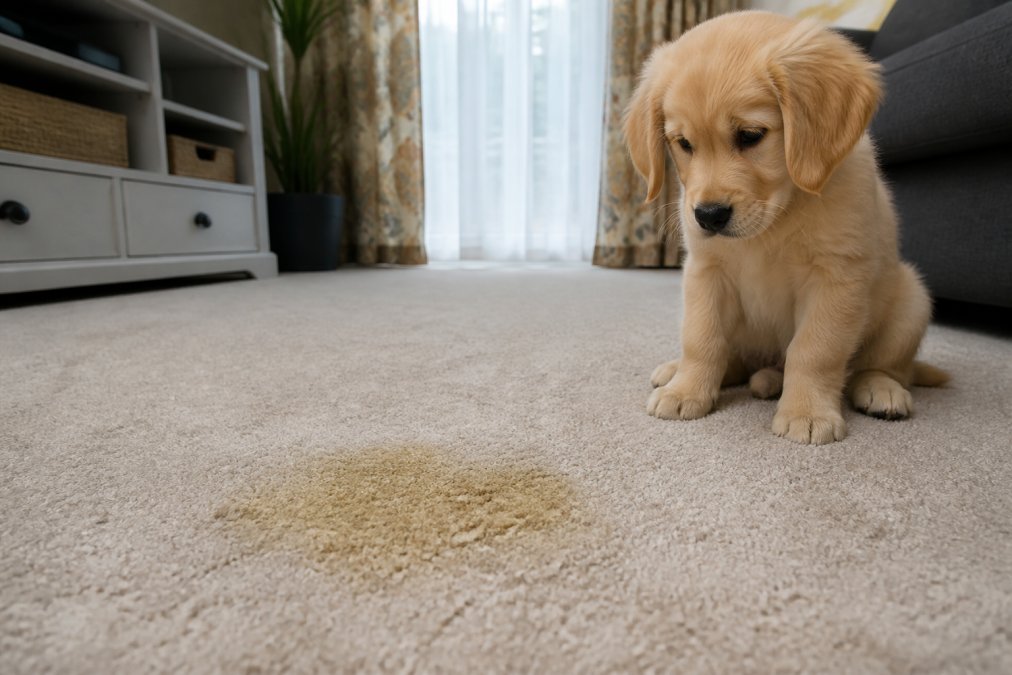
Fresh accidents are dramatically easier to treat than dried ones. Speed matters: the faster you act, the less urine penetrates into the carpet backing and padding.
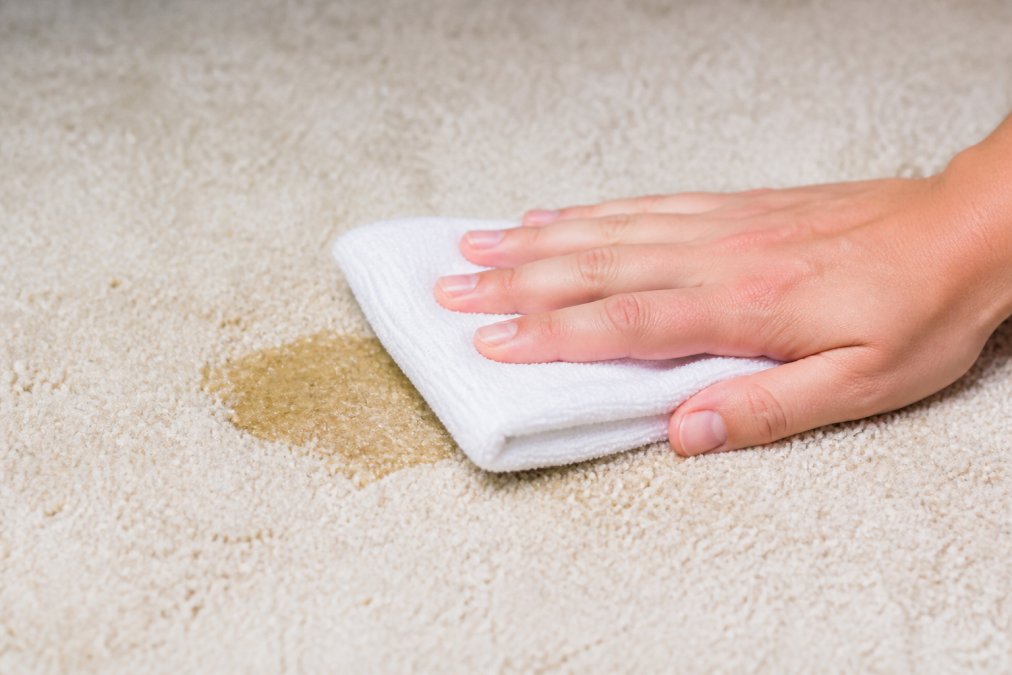
Blotting vs. Scrubbing: Why Technique Matters
Scrubbing is the single most common mistake. When you scrub a fresh urine stain, you're forcing liquid deeper into the carpet fibers and spreading the contamination outward. Blotting, pressing firmly straight down with a clean white cloth or paper towels, draws moisture up and out without spreading it.
Work from the outside edge of the stain inward. Apply firm, steady pressure and hold for several seconds before lifting. Repeat with a fresh section of cloth until no more moisture transfers. For large accidents, standing on the cloth briefly helps extract more liquid.
Distilled White Vinegar Solution for Immediate Treatment
Once you've blotted up as much urine as possible, a distilled white vinegar solution can help neutralize the pH of the remaining urine residue before it dries.
Mix one part distilled white vinegar with one part lukewarm water. Apply the solution generously to the stained area, let it sit for five minutes, then blot again thoroughly. The vinegar helps counteract the alkaline salts left by urine and reduces the immediate odor.
Important caveat: vinegar is a useful first-response tool, not a complete solution. It doesn't break down uric acid crystals, so it won't prevent the smell from returning. Follow up with an enzymatic cleaner as the next step.
| Step | What to Use | Why It Works |
|---|---|---|
| Immediate blot | White cloth or paper towels | Extracts liquid before it penetrates |
| First treatment | Distilled white vinegar + lukewarm water (1:1) | Neutralizes pH, reduces surface odor |
| Core treatment | Enzymatic cleaner | Breaks down uric acid crystals |
| Deodorizing finish | Baking soda | Absorbs residual moisture and odor |
| Stain follow-up | Hydrogen peroxide + liquid dishwashing detergent | Lifts remaining discoloration |
Step 3: Apply the Best Enzyme Cleaner for Pet Urine
The best enzyme cleaner for pet urine works by producing biological enzymes that break down the organic matter in urine, including the uric acid crystals that cause persistent odor, rather than just covering them up.
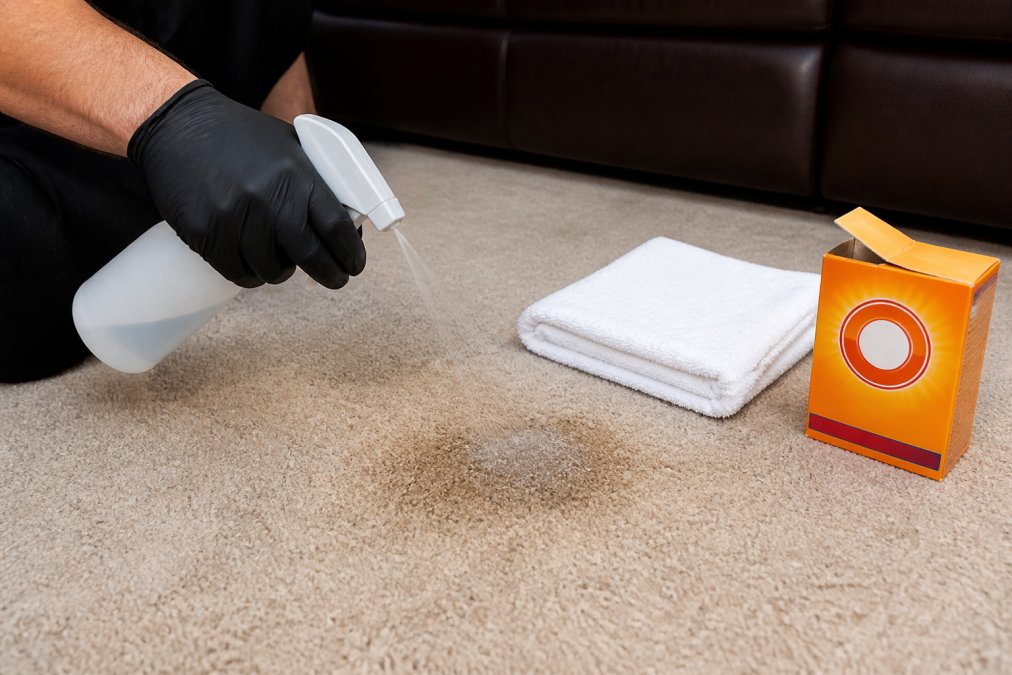
A survey of 127 veterinarians conducted by Earthworm's 2025 veterinarian survey on pet stain removal found that 89% recommend enzyme-based cleaners as their first choice for pet stain and odor removal, and 68% recommend having one on hand before getting a pet at all. That's a strong professional consensus.
How to Use Enzymatic Cleaners Correctly
The most common mistake with enzymatic cleaners is not using enough product. The cleaner needs to penetrate as deep as the urine did, which means saturating the carpet, not just dampening the surface.
- Apply the enzymatic cleaner generously to the entire affected area, extending a few inches beyond the stain boundary.
- Allow it to sit for the full dwell time listed on the product label, often 10 to 30 minutes, sometimes longer for set stains.
- Blot up the excess with a clean cloth; do not rinse with water immediately, as this dilutes the enzymes.
- Cover the area loosely with a damp cloth or plastic wrap to keep it moist while the enzymes work.
- Allow to dry completely before evaluating. For deep stains, a second application is often necessary.
Enzymatic cleaners can take anywhere from one hour to 24 hours to fully work, depending on the product and the severity of the contamination. Patience here is not optional.
Baking Soda and Hydrogen Peroxide as a Follow-Up
Once the enzymatic cleaner has dried completely, baking soda can absorb residual moisture and neutralize any remaining odor. Sprinkle it generously over the treated area, let it sit for several hours (overnight is better), then vacuum thoroughly.
For visible staining that remains after enzymatic treatment, a solution of hydrogen peroxide and a small amount of liquid dishwashing detergent can lift discoloration from synthetic carpet. Always test for colorfastness first: apply a small amount to a hidden area and wait 10 minutes before proceeding. Hydrogen peroxide can bleach some carpet dyes, so skipping this test is a risk not worth taking.
Step 4: Tackle Old or Dried Pet Urine Stains
Old or dried pet urine stains require a different approach. The uric acid crystals have fully bonded to the carpet fibers, and a single application of any product rarely resolves the problem completely.
Start by re-moistening the area with lukewarm water to partially reactivate the dried residue, then apply the enzymatic cleaner as described above. For severe or long-standing contamination, multiple treatment cycles over several days may be necessary. Between treatments, keep the area well-ventilated.
If the odor persists after two or three enzymatic treatments, the contamination has likely reached the padding or subfloor. At that point, surface treatments won't resolve the issue regardless of how many products you try.
Material-Specific Advice for Synthetic and Natural Carpets
Synthetic carpet (nylon, polyester, olefin) tolerates enzymatic cleaners and diluted hydrogen peroxide well. These fibers don't absorb liquids as readily as natural fibers, which means contamination is often shallower and responds faster to treatment.
Natural fiber carpet (wool, sisal, jute) is far more absorbent and sensitive to chemical treatments. Avoid hydrogen peroxide, vinegar in high concentrations, and any cleaner not specifically labeled safe for wool. Enzymatic cleaners formulated for natural fibers exist, use those. Overwetting natural fiber carpet can cause shrinkage and backing damage, so apply products sparingly and ensure thorough drying.
Pet and Child Safety During and After Cleaning
This is the question most guides skip, and it's the one parents and pet owners ask most often.
During treatment, keep pets and children out of the treated area entirely. Enzymatic cleaners are generally low-toxicity, but wet carpet with active cleaning chemistry isn't a surface anyone should be crawling on. Once the area is fully dry, enzymatic cleaners leave no harmful residue, they break down into inert byproducts.
For hydrogen peroxide treatments, ventilate the room well during application and allow complete drying before re-entry. Avoid non-bleach, non-lanolin formulations if you have latex sensitivities in the household.
Why Does Carpet Smell Worse After Cleaning Pet Urine
Carpet smells worse after cleaning pet urine because moisture reactivates dormant uric acid crystals that were previously dry and odorless.
This is the most common complaint after DIY carpet shampooing, and it has a specific cause. Steam cleaners and carpet shampooers introduce significant heat and moisture. Heat causes uric acid crystals to release ammonia gas at an accelerated rate, and moisture reactivates the biological compounds in dried urine. If the underlying contamination wasn't fully treated with an enzymatic cleaner before shampooing, the shampooer essentially wakes up the odor problem and spreads it.
The fix: always complete enzymatic treatment and allow full drying before any steam or hot-water extraction cleaning. Cleaning the carpet first and treating the odor second is the wrong sequence.
When to Call Professional Carpet Cleaning for Pet Odors
Professional carpet cleaning for pet odors is the right call when DIY methods have failed after two or three treatment cycles, when the affected area is large, or when contamination has reached the padding or subfloor.
According to Angi's 2026 data on professional pet odor removal costs, the average cost of a professional pet odor removal service is $350, with most services ranging from $100 to $700 depending on severity and area size. That range reflects a real difference in scope: surface odor treatment is far less involved than sub-pad extraction and subfloor sealing.
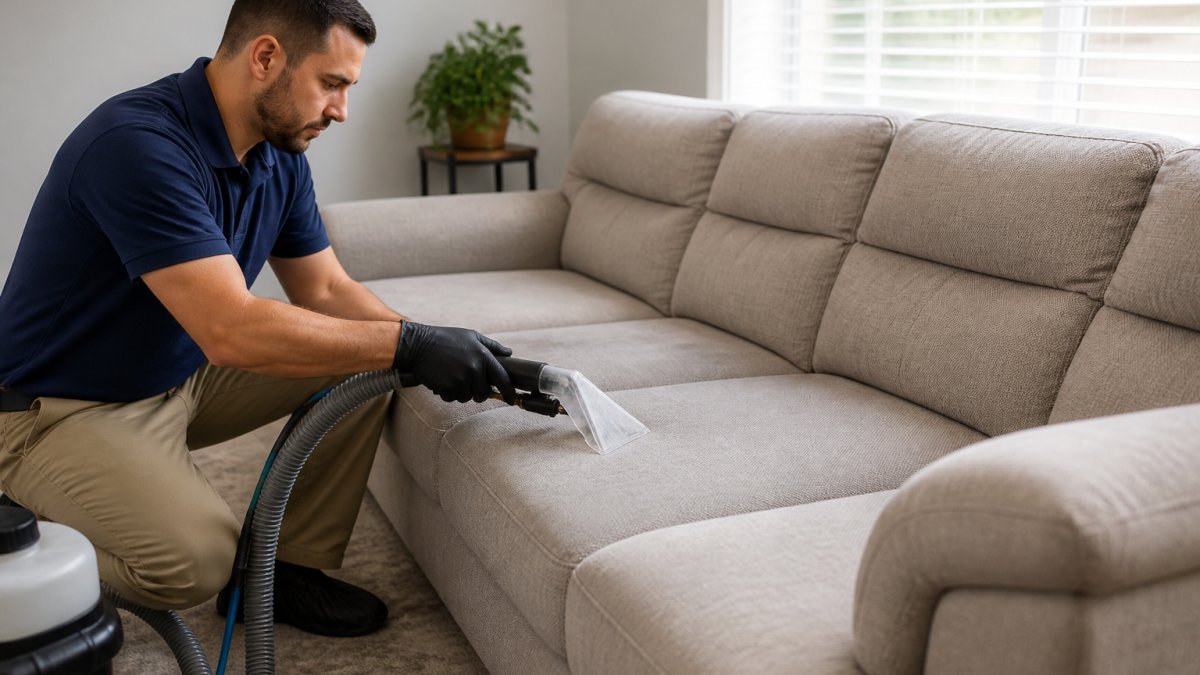
Professional equipment matters here. Truck-mounted extraction systems operate at significantly higher suction and heat than any consumer or rental machine, which means they can pull contaminated liquid out of the padding rather than just rinsing the surface. UV detection allows technicians to map the full extent of contamination before treatment begins, so nothing gets missed.
Sanctified Carpet & Upholstery Cleaning specializes in exactly this kind of situation, persistent pet odor that hasn't responded to store-bought products or rental equipment. If you've worked through the steps above and the smell is still there, the contamination is deeper than surface treatment can reach.
Persistent pet urine odor that survives multiple DIY treatments is almost always a sub-pad contamination problem, not a product problem. Sanctified Carpet & Upholstery Cleaning provides professional carpet cleaning with the equipment and expertise to address contamination at every layer, carpet, backing, and padding, at prices that work for real household budgets. Bundle deals are available for homes needing carpet and upholstery cleaning together. Send a message to get a straightforward quote and get the smell out for good.
=== FAQ ANSWERS (audit these too, same rules) ===
[1] Q: Will pet urine smell in carpet go away on its own? A: No. Pet urine odor does not disappear on its own. When urine dries, it leaves behind uric acid crystals that bond tightly to carpet fibers and backing. Those crystals reactivate every time humidity rises, releasing ammonia and organic compounds that cause the smell to return. Only an enzymatic cleaner that breaks down uric acid at the molecular level will permanently eliminate pet urine odor from carpet rather than temporarily masking it.
[2] Q: What is the best enzyme cleaner for pet urine? A: The best enzyme cleaner for pet urine is one specifically formulated to break down uric acid crystals, not just surface organic matter. A 2025 survey of 127 veterinarians found that 89% recommend enzyme-based cleaners as their first choice for pet stain and odor removal. Look for a non-bleach, non-lanolin formula safe for synthetic carpet. Apply it generously, keep the area damp for the full dwell time listed on the label, and allow it to air dry completely before vacuuming.
[3] Q: Is it possible to remove deep-set pet urine odors from carpet padding? A: Yes, but it is significantly harder than treating surface stains. Urine that soaks through carpet fibers and backing into the sub-padding, and sometimes the sub-floor underneath, cannot be reached by most store-bought spot treatments. A UV blacklight helps map the full extent of saturation. For deeply embedded odors, professional carpet cleaning equipment with truck-mounted extraction can reach contamination below the surface. In severe cases, the padding itself may need to be replaced.
[4] Q: Why does my carpet still smell like pet urine after I cleaned it? A: The most common reason is that the cleaner did not reach the full depth of contamination. Urine spreads outward and downward, often saturating the carpet backing and padding well beyond the visible stain. Steam cleaning and shampooing can also reactivate uric acid crystals by adding heat and moisture, temporarily intensifying the odor. Using the wrong product, one that masks rather than neutralizes, or rinsing before the enzymatic cleaner has fully worked are other frequent causes.
Frequently Asked Questions
Will pet urine smell in carpet go away on its own?
No. Pet urine odor does not disappear on its own. When urine dries, it leaves behind uric acid crystals that bond tightly to carpet fibers and backing. Those crystals reactivate every time humidity rises, releasing ammonia and organic compounds that cause the smell to return. Only an enzymatic cleaner that breaks down uric acid at the molecular level will permanently eliminate pet urine odor from carpet rather than temporarily masking it.
What is the best enzyme cleaner for pet urine?
The best enzyme cleaner for pet urine is one specifically formulated to break down uric acid crystals, not just surface organic matter. A 2025 survey of 127 veterinarians found that 89% recommend enzyme-based cleaners as their first choice for pet stain and odor removal. Look for a non-bleach, non-lanolin formula safe for synthetic carpet. Apply it generously, keep the area damp for the full dwell time listed on the label, and allow it to air dry completely before vacuuming.
Is it possible to remove deep-set pet urine odors from carpet padding?
Yes, but it is significantly harder than treating surface stains. Urine that soaks through carpet fibers and backing into the sub-padding, and sometimes the sub-floor underneath, cannot be reached by most store-bought spot treatments. A UV blacklight helps map the full extent of saturation. For deeply embedded odors, professional carpet cleaning equipment with truck-mounted extraction can reach contamination below the surface. In severe cases, the padding itself may need to be replaced.
Why does my carpet still smell like pet urine after I cleaned it?
The most common reason is that the cleaner did not reach the full depth of contamination. Urine spreads outward and downward, often saturating the carpet backing and padding well beyond the visible stain. Steam cleaning and shampooing can also reactivate uric acid crystals by adding heat and moisture, temporarily intensifying the odor. Using the wrong product, one that masks rather than neutralizes, or rinsing before the enzymatic cleaner has fully worked are other frequent causes.
This article was written using GrandRanker