 how-to
How to Remove Deep Odors From Sectional Sofas
Table of Contents
- Identify the Source of the Odor
- Removing Pet Urine From Sectional Sofas
- Natural DIY Solutions for Deep Odor Removal
- Steam Cleaning and Enzymatic Treatments
- Professional Upholstery Cleaning Services for Stubborn Odors
- Upholstery Cleaning for Sensitive Skin and Safe Deodorizing
- Preventing Odors and Maintaining Your Sectional
- Frequently Asked Questions
Last Updated: October 3, 2026
Identify the Source of the Odor
Learning how to remove deep odors from sectional sofas starts with pinpointing where the smell originates. Deep-seated odors don't just sit on the surface, they embed themselves into the fabric weave, cushion filling, and internal structure of your upholstery. Understanding what you're dealing with changes your entire approach.
Common odor sources include pet accidents, smoke damage, food spills, mildew from moisture absorption, and general bacterial buildup. Each requires a different treatment strategy. Pet urine, for example, penetrates deep into synthetic fibers and natural fibers alike, bonding with the fabric at a molecular level. Smoke odors cling to upholstery fabric and can linger for months without proper intervention.
Take time to smell different areas of your sectional. Is the odor strongest near the base? Along the seams? On specific cushions? This detective work matters. A localized smell suggests a specific incident you can target. A smell that's everywhere means the problem has spread through the internal cushion structure and requires more aggressive treatment.
Removing Pet Urine From Sectional Sofas
Pet urine is one of the most stubborn odors to eliminate from sectional sofas. It's not just an unpleasant smell, urine contains uric acid crystals that bond to fabric fibers and can reactivate when humidity increases. This is why pet odors often return after you think you've solved them.
The challenge with removing pet urine from sectional furniture is that it soaks deep into cushion filling and the frame structure. Surface cleaning alone won't work. You need to neutralize the uric acid, not just mask the smell with scented products. According to research on enzyme-based odor removal, enzymatic cleaners break down organic compounds at the molecular level, which is essential for addressing pet urine permanently.
Start by blotting fresh accidents immediately with paper towels or cloth. Don't rub, pressing down absorbs more liquid. For older, set-in urine stains, you'll need enzymatic treatment. Enzyme-based cleaners contain proteins that break down the uric acid crystals responsible for the persistent smell.
If you have multiple pets or repeated accidents, consider calling a professional upholstery cleaning service. At Sanctified Carpet & Upholstery Cleaning, we specialize in expert upholstery detailing and comprehensive carpet cleaning. Our team understands how pet urine embeds itself into sectional structures and knows exactly how to neutralize it.
Natural DIY Solutions for Deep Odor Removal
Before investing in professional help, many homeowners find success with natural deodorizing agents. Baking soda, white vinegar, rubbing alcohol, and activated charcoal are proven methods for neutralizing deep odors without harsh chemicals. These work by absorbing or neutralizing odor-causing compounds rather than simply masking them with fragrance.
Baking Soda Application Techniques
Baking soda is one of the most effective natural deodorizers for upholstery. It works by absorbing moisture and neutralizing acidic odors. The key is applying it correctly and giving it time to work through the fabric weave.
Sprinkle baking soda generously over the entire sectional surface, focusing on areas where odors are strongest. Use a soft-bristled upholstery brush to work the powder gently into the fabric. Don't scrub hard, you want the baking soda to penetrate the fibers without damaging them. Let it sit for at least 24 hours. The longer it sits, the more odor it absorbs. Some people leave it overnight or even for two days.
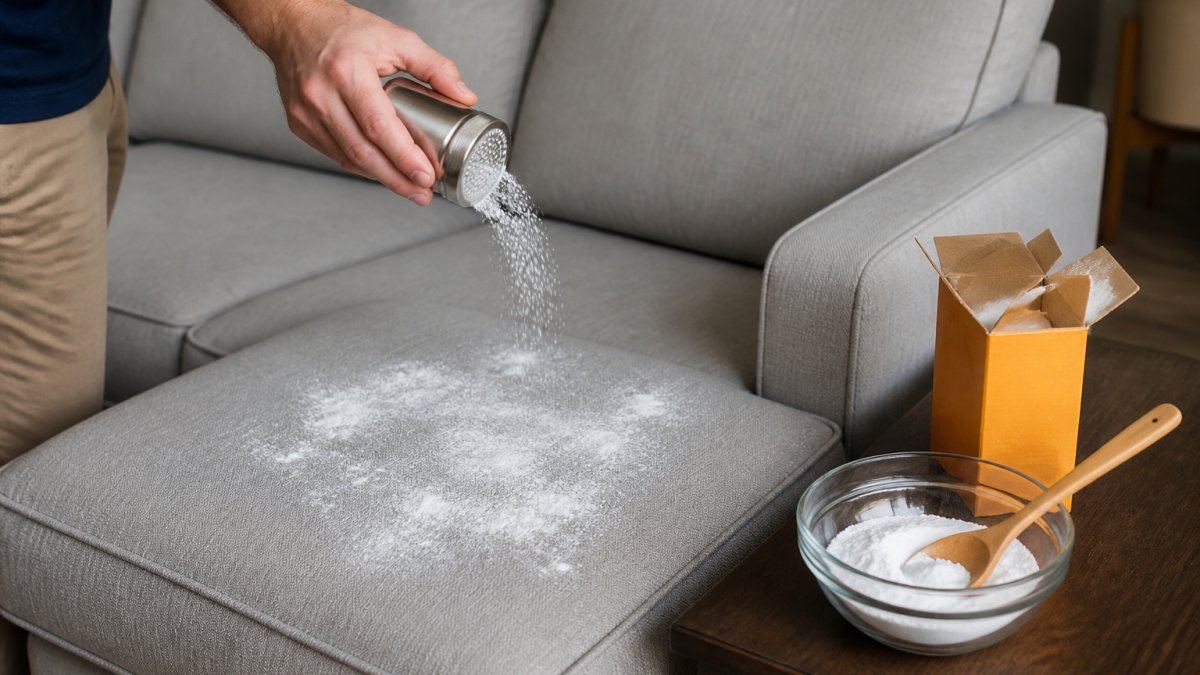
After the waiting period, vacuum thoroughly using an upholstery attachment. Make multiple passes to ensure you remove all the powder. A regular household vacuum works, but a wet vacuum with upholstery hose attachment gives better results. Pay special attention to seams and crevices where baking soda settles.
Vinegar and Rubbing Alcohol Sprays
White vinegar and rubbing alcohol are both effective for neutralizing odors, though they work differently. Vinegar contains acetic acid, which neutralizes alkaline odors. Rubbing alcohol evaporates quickly and helps dry the fabric while breaking down odor compounds.
Mix equal parts white vinegar and water in a spray bottle. Lightly mist the affected areas, don't soak the fabric. Spray too much and you risk creating moisture problems that lead to mildew. A light mist is enough to penetrate the surface fibers. Let it air dry completely, which typically takes 2-4 hours depending on humidity and air circulation.
For stubborn odors, use rubbing alcohol instead. Mix one part rubbing alcohol with two parts water. Spray lightly and allow to dry. Rubbing alcohol evaporates faster than vinegar, making it useful when you need quicker drying. Never mix vinegar and rubbing alcohol together, the combination doesn't improve results and can create unwanted reactions.
Test any spray solution on a hidden area of your sectional first. Some fabrics, particularly delicate synthetics, can be affected by acidic solutions. Check for color fading or texture changes before treating visible areas.
Activated Charcoal for Moisture Absorption
Activated charcoal works differently than baking soda. Instead of neutralizing odors chemically, it absorbs them through a process called adsorption. Charcoal is particularly effective for moisture-related odors and smoke damage.
Place activated charcoal in breathable bags or containers and set them on and around your sectional. Leave them there for 24-48 hours. The charcoal absorbs odor molecules from the air and the fabric surface. You can also sprinkle loose activated charcoal directly on the sectional the way you would baking soda, though cleanup requires more care since the particles are smaller.
According to Inside Weather's guide to natural deodorizing, activated charcoal combined with proper air circulation delivers the best results for deep-set odors. Open windows and run fans to increase air movement while the charcoal works.
Steam Cleaning and Enzymatic Treatments
Understanding how to remove deep odors from sectional sofas through steam cleaning uses heat and moisture to penetrate fabric weave and kill bacteria responsible for odors. When combined with enzymatic treatments, steam cleaning becomes a powerful tool for removing deep odors from sectional sofas.
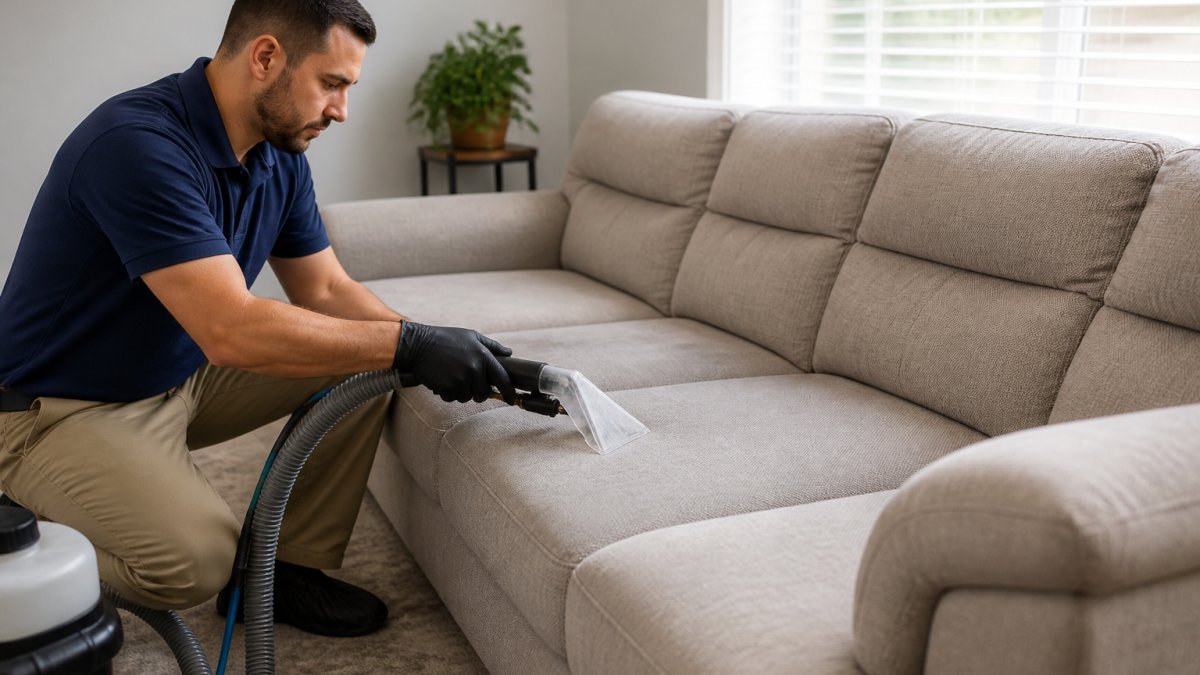
Rent or purchase a steam cleaner designed for upholstery. Fill it with hot water and a commercial enzymatic cleaner formulated for upholstery. The heat activates the enzymes, allowing them to break down organic matter more effectively than cold applications. Apply steam in slow, overlapping passes. Don't rush, give the heat and enzymes time to work into the fabric.
After steaming, extract as much moisture as possible using the machine's suction function. Residual moisture can lead to mildew and new odors, so this step matters. Open windows and run fans to ensure the sectional dries completely within 24 hours.
The challenge with steam cleaning is controlling moisture. Too much water left in the upholstery creates conditions for mildew growth. Too little and you don't fully activate the enzymatic cleaners. This balance is where professional equipment and experience make a difference.
Professional Upholstery Cleaning Services for Stubborn Odors
When DIY methods don't fully eliminate deep odors, professional upholstery cleaning becomes the practical choice. Professional services use industrial-grade equipment and specialized enzymatic cleaners that penetrate further than consumer products.
Professional cleaners apply enzymatic treatments designed to break down the exact compounds causing your specific odor. They use extraction equipment that removes moisture more completely than household vacuums, reducing drying time and preventing mildew. The process typically involves:
- Pre-treatment with enzymatic cleaner applied to problem areas
- Hot water extraction using professional equipment
- Final deodorizing treatment
- Controlled drying with industrial fans
At Sanctified Carpet & Upholstery Cleaning, our team handles stubborn odors that resist DIY approaches. We understand how to treat different fabric types without causing damage, and we know how to reach internal cushion structures where odors hide.
The advantage of professional service is expertise. Our team can identify whether you're dealing with pet urine, smoke damage, mildew, or bacterial growth, each requires a slightly different approach.
Upholstery Cleaning for Sensitive Skin and Safe Deodorizing
For households with sensitive skin, allergies, or young children, choosing safe deodorizing methods matters as much as effectiveness. Many commercial cleaning products contain chemicals that irritate skin or trigger allergies. Natural methods and professional services using hypoallergenic products offer safer alternatives.
Baking soda and activated charcoal are naturally safe for sensitive skin. They don't off-gas toxic fumes and leave no chemical residue. White vinegar is also safe, though the smell can be strong during application, ensure good ventilation.
When choosing commercial enzymatic cleaners, look for products labeled hypoallergenic or designed for sensitive fabrics. Read ingredient lists and avoid products containing heavy perfumes or volatile organic compounds (VOCs). Test any product on a hidden area first.
Professional cleaning services should use products safe for your household. At Sanctified Carpet & Upholstery Cleaning, we offer professional and personable cleaning services. Our personable approach means we listen to your specific concerns and tailor our service accordingly.
Air the sectional thoroughly after any cleaning. Open windows and run fans for several hours. This removes any remaining moisture and allows any mild chemical smell to dissipate before your family uses the furniture again.
Preventing Odors and Maintaining Your Sectional
Once you've eliminated deep odors, preventing their return requires consistent maintenance. Most odors develop gradually, so regular care stops problems before they start.
Vacuum your sectional weekly using an upholstery attachment. This removes dust, food particles, and debris that feed bacteria. Pay special attention to seams and crevices where material accumulates.
Manage moisture carefully. Spills should be blotted immediately, don't let liquid sit on fabric. Use coasters and placemats to prevent spills entirely.
For pet owners, address accidents immediately. Enzymatic cleaners work best when applied soon after an accident occurs. The longer urine sits, the deeper it penetrates and the harder it becomes to remove.
Use baking soda monthly as preventive maintenance. Sprinkle it lightly over the sectional, let it sit for a few hours, then vacuum. This ongoing treatment keeps odors from building up.
Rotate and flip cushions regularly to promote even wear and air circulation. Cushions that don't move trap moisture and dead skin cells, creating conditions for odor development.
Consider professional cleaning annually if you have pets or heavy use. Professional extraction removes moisture and debris that regular vacuuming misses. Annual maintenance prevents the deep odor problems that require intensive treatment.
Deep odors in sectional sofas respond best to a combination approach: identify the source, treat with appropriate methods, and maintain consistently afterward. Natural solutions like baking soda and enzymatic treatments work for many situations.
Frequently Asked Questions
How do I remove deep-set odors from my sectional sofa?
Start by identifying the odor source, then use baking soda, activated charcoal, or vinegar sprays to neutralize it. For pet urine or smoke damage, enzyme-based cleaners break down organic matter at the molecular level. If DIY methods don't work after 7-10 days, professional upholstery cleaning services can address deeply embedded odors.
Is it possible to remove pet urine odors from a sectional?
Yes. Pet urine odors require enzymatic cleaners that break down uric acid crystals causing the smell. First, locate and treat the affected area with an enzymatic cleaner, then neutralize residual odors with baking soda or activated charcoal. For severe or widespread pet urine damage, professional cleaning can address odors from deep within the cushion structure.
What's the difference between odor-neutralizing and masking agents?
Odor-neutralizing agents (like baking soda, vinegar, and enzymatic cleaners) break down odor-causing compounds or absorb them. Masking agents (like scented sprays) only cover the smell temporarily. Masking can actually worsen the problem by mixing scents. For deep odors in sectionals, always choose neutralizing methods to eliminate the source rather than hide it.
When should I hire professional upholstery cleaning services instead of DIY methods?
Hire professionals if DIY treatments don't eliminate odors after one week, if the smell is from pet accidents deep in cushions, or if your sectional has delicate fabrics where moisture could cause mildew. Professional services can address odors more effectively than home methods, preventing odor return and protecting your upholstery from damage.