 blog
blog
How to Steam Clean Upholstery: A Step-by-Step Guide
Table of Contents
- Why Steam Cleaning Works for Upholstery
- Pre-Cleaning Preparation and Vacuuming
- Testing Colorfastness Before You Start
- The Step-by-Step Steam Cleaning Process
- Upholstery Steam Cleaning Duration and Drying Time
- Upholstery Cleaning for Sensitive Skin and Safety
- Fabric-Specific Cleaning Codes and Compatibility
- Upholstery Cleaning Bundle Deals and Cost Considerations
- Frequently Asked Questions
Last Updated: October 1, 2026
Why Steam Cleaning Works for Upholstery
Learning how to steam clean upholstery is one of the most effective ways to refresh upholstered furniture. According to Airmid Health Group's 2026 study, professional steam cleaning measurably reduces allergen and microorganism levels on fabric surfaces and in the air. This matters because your couch, chairs, and cushions trap dust, pet dander, and bacteria that regular vacuuming can't reach.
The heat from steam penetrates fabric fibers. It breaks down dirt and odors at the source. When combined with proper extraction equipment, steam cleaning removes moisture quickly, leaving your upholstery cleaner and fresher than surface cleaning ever could.
Here's what makes steam cleaning different from other methods:
- Heat kills bacteria and allergens trapped deep in fabric
- Extraction removes 80% of moisture, speeding drying time
- No harsh chemicals needed for most stains
- Works on nearly all fabric types when done correctly
At Sanctified Carpet & Upholstery Cleaning, we use professional-grade steam equipment. The difference shows in the results and how quickly your furniture dries.
Pre-Cleaning Preparation and Vacuuming
Before you steam clean upholstery, proper preparation takes 10-15 minutes but saves hours of cleaning time. Start by removing cushions and loose items from your furniture.
Vacuum thoroughly with a crevice tool attachment. Pay special attention to seams, crevices, and under cushions where dirt and pet hair accumulate. This step is non-negotiable. Loose debris left behind can turn into mud when steam hits it.
Your pre-cleaning checklist:
- Remove all cushions and pillows
- Vacuum entire surface with upholstery brush attachment
- Use crevice tool on seams and tight spaces
- Vacuum underneath cushions and between cushion cracks
- Check for visible stains and note their location
- Clear the room of small furniture and obstacles
Test your vacuum's suction on a small area first. If your upholstery is delicate or antique, hand-brush instead of vacuuming to avoid damage.
Testing Colorfastness Before You Start
Colorfastness testing prevents disaster. Some fabrics bleed dye when exposed to heat and moisture. A simple spot test takes 60 seconds and protects your furniture.
Choose a hidden area on your upholstery. The underside of a cushion or back corner works perfectly. Apply a small amount of steam and use a white cloth to blot the area. If dye transfers to the cloth, your fabric isn't colorfast.
What to do if your fabric fails the colorfastness test:
- Stop immediately and do not proceed with steam cleaning
- Use dry-cleaning methods instead
- Consult a professional cleaner about alternative approaches
- Check your fabric's care tag for recommended cleaning codes
Most modern upholstery passes colorfastness testing. Natural fibers like wool and cotton are generally safe. Synthetic blends vary. Older furniture or hand-dyed fabrics carry higher risk.
The Step-by-Step Steam Cleaning Process
Professional upholstery steam cleaning follows a proven sequence. The process takes 2-4 hours depending on furniture size and soil level.
Filling and Heating Your Steam Cleaner
Start by filling your steam cleaner's water tank with distilled water. Tap water contains minerals that can clog nozzles and reduce cleaning power. Let the machine heat for 10-15 minutes before you begin.
Check the temperature gauge. Most upholstery requires steam between 200-250°F. Too hot risks fabric damage. Too cool reduces cleaning effectiveness.
Fill the cleaning solution tank according to manufacturer instructions. Use an upholstery-specific cleaning solution, not general-purpose cleaners. The wrong solution can leave residue or cause synthetic fibers to become sticky.
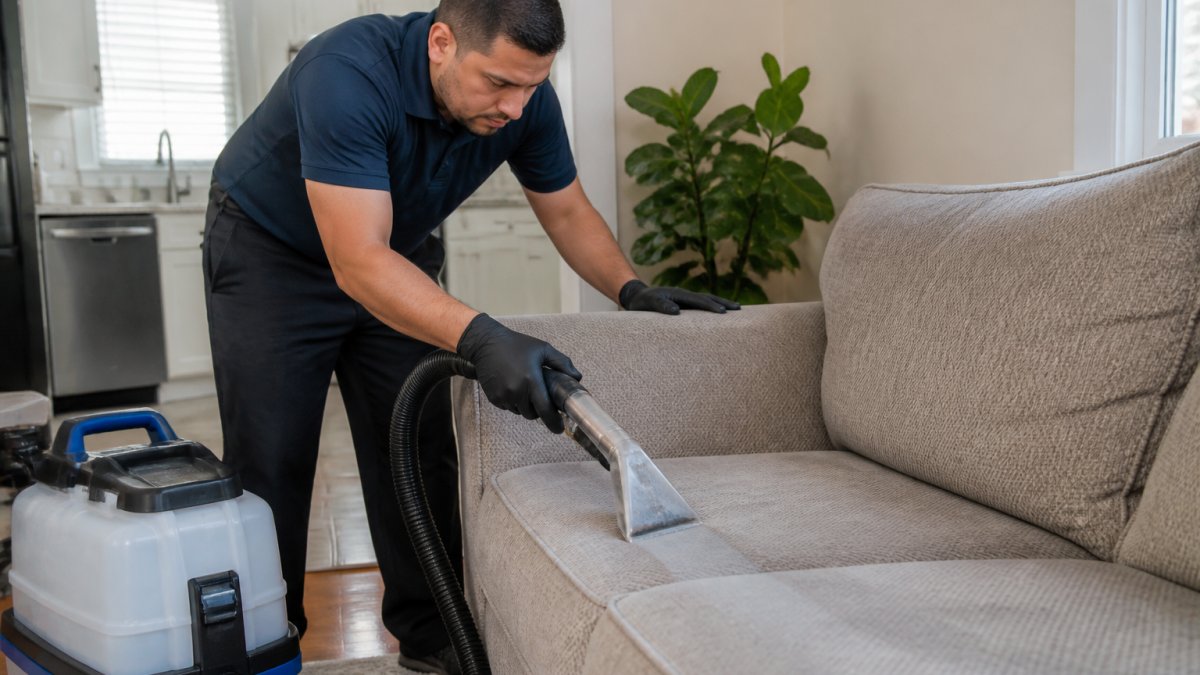
Applying Steam and Extraction
Apply steam slowly to a small section, about 12 inches square. Hold the upholstery attachment firmly against the fabric. Trigger the steam trigger for 3-5 seconds, allowing heat to penetrate the fibers.
Immediately follow with extraction.
Your steam and extraction rhythm:
- Apply steam for 3-5 seconds
- Extract immediately with full suction
- Move to adjacent section
- Repeat until entire surface is clean
Handling Tough Stains and Odors
Stubborn stains need pre-treatment. Apply your upholstery-specific cleaning solution directly to the stain. Let it sit for 5-10 minutes to break down the soil. Then steam and extract as normal.
Upholstery Steam Cleaning Duration and Drying Time
Total cleaning time depends on furniture size and condition. A single chair takes 30-45 minutes. A full sectional sofa takes 2-3 hours.
Factors affecting drying speed:
- Room temperature (warmer dries faster)
- Humidity level (lower humidity reduces drying time)
- Air circulation (fans speed the process significantly)
- Fabric type (synthetic dries faster than natural fibers)
- Extraction quality (professional equipment cuts drying time in half)
Upholstery Cleaning for Sensitive Skin and Safety
Families with children and pets need special attention to cleaning safety. Many commercial upholstery cleaning solutions contain harsh chemicals that irritate sensitive skin.
Safety steps for sensitive skin environments:
- Test cleaning solution on hidden fabric area first
- Rinse thoroughly after cleaning to remove any residual chemicals
- Allow complete drying before children or pets contact furniture
- Ventilate the room during and after cleaning
- Consider professional cleaning for households with medical sensitivities
Fabric-Specific Cleaning Codes and Compatibility
Every piece of upholstered furniture carries a care code. Look for a small tag underneath the cushion or on the back seam. This code tells you exactly which cleaning methods are safe. Ignoring it is the #1 cause of irreversible upholstery damage among DIY cleaners.
Understanding fabric care codes:
- W = Water-based cleaning is safe. Steam cleaning is appropriate. This code appears on most modern synthetic blends, microfiber, and performance fabrics.
- S = Solvent-based cleaning only (dry cleaning). Water and steam will cause shrinkage, dye bleeding, or permanent stiffening. Common on natural fibers like wool, silk, and linen blends.
- WS = Both water and solvent methods are acceptable. This is the most flexible code. Many high-end natural fiber upholstery carries this designation, giving you options.
- X = Vacuum or brush only; no liquid cleaning of any kind. These are typically antique, hand-dyed, or extremely delicate fabrics. Even distilled water can cause damage.
Real-world damage scenarios by code violation:
Decision tree for choosing your cleaning method:
- Locate your fabric care tag. If you cannot find it, contact the furniture manufacturer with the model number.
- Check the code. If it reads "W" or "WS," steam cleaning is safe. Proceed with confidence.
- If the code reads "S" or "X," do not use steam or water-based methods. Instead:
- Use a dry brush or soft vacuum with upholstery attachment only.
- For stains, consult a professional dry cleaner who specializes in upholstery.
- Ask the cleaner about solvent-based spot treatments if stains are significant.
- If the tag is missing or illegible, test on a hidden area first (underside of a cushion, back corner). Apply a small amount of steam and blot with a white cloth. If the fabric shrinks, dye transfers, or the texture changes, stop immediately.
Fabric type patterns:
Upholstery Cleaning Bundle Deals and Cost Considerations
Professional upholstery steam cleaning costs depend on furniture size, soil level, and fabric type. Bundles that combine carpet and upholstery cleaning typically offer better value than individual services.
When comparing cleaning services, ask about:
- What's included in the bundle (how many pieces of furniture)
- Whether pricing is per-room or per-piece
- If stain removal is extra or included
- Drying time guarantees
- Whether they offer satisfaction guarantees
| Cleaning Method | Equipment Cost | Drying Time | Best For |
|---|---|---|---|
| Professional steam cleaning | $0 (service provided) | 4-8 hours | Most fabric types, deep soil, fast results |
| Rental steam cleaner | $50-75/day | 24-48 hours | Budget-conscious, small areas only |
| Dry cleaning methods | Varies | 1-2 hours | Delicate or "S" coded fabrics |
| Spot cleaning only | $0-20 | 2-4 hours | Small stains, regular maintenance |
Frequently Asked Questions
Does steam cleaning remove pet odors from upholstery?
Yes, steam cleaning effectively eliminates pet odors when done correctly. The hot water extraction process removes urine, feces, and other organic compounds trapped in fabric fibers. However, if pet accidents have soaked deep into the cushion foam, you may need multiple passes or professional treatment. For stubborn odors, professional services with specialized enzymatic treatments often work better than DIY methods.
How long does upholstery steam cleaning take, and how long until it dries?
Most steam cleaning sessions take 1-3 hours depending on furniture size and soil level. Drying time varies: with proper suction power and ventilation, most upholstery dries within 4-8 hours. Without adequate extraction or air circulation, dampness can linger for 24-48 hours, risking mildew growth. Professional equipment significantly reduces drying time and helps prevent fabric damage.
Is upholstery steam cleaning safe for people with sensitive skin?
Steam cleaning itself is safe for sensitive skin since it uses hot water rather than harsh chemicals. However, residual cleaning solution left in fabric can irritate skin. Choose non-toxic, hypoallergenic cleaning products, and ensure thorough rinsing during the extraction phase. Allow furniture to dry completely before prolonged contact. If anyone in your household has severe chemical sensitivities, discuss this with your cleaner beforehand to ensure appropriate product selection.
What is the difference between DIY steam cleaning and professional upholstery steam cleaning?
Professionals understand fabric-specific cleaning codes, can spot-treat delicate materials safely, and remove significantly more moisture, reducing drying time. They also know how to troubleshoot common mistakes like over-wetting or applying too much heat. Professional results prevent costly fabric damage and deliver deeper sanitization.