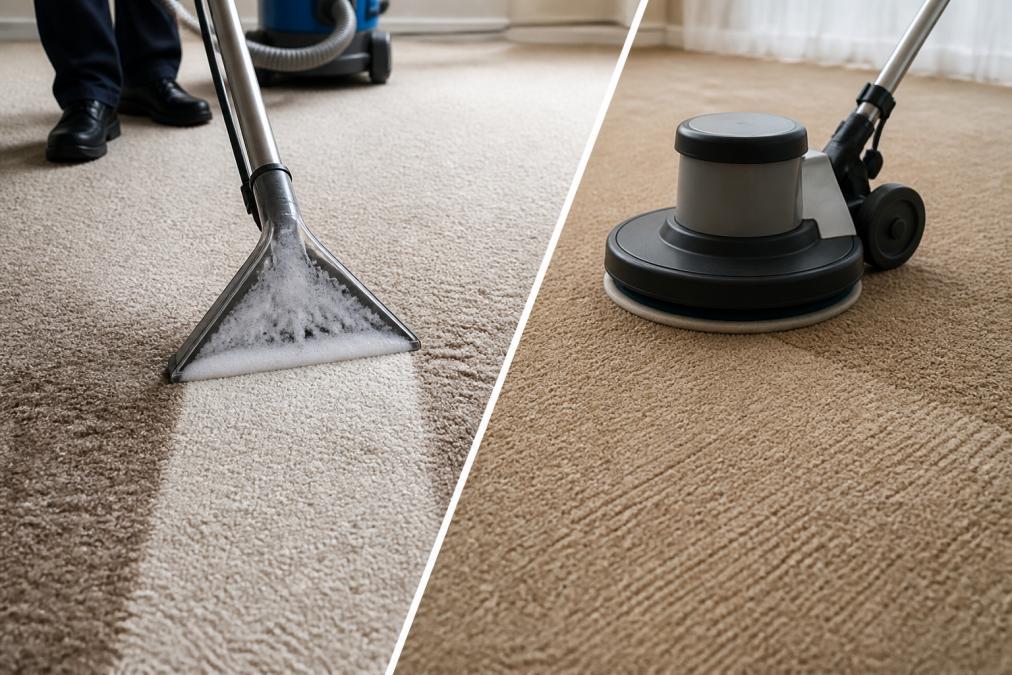
 comparison
Steam vs Dry Carpet Cleaning: Key Benefits Compared
Table of Contents
- How Steam Cleaning and Dry Carpet Cleaning Work
- Deep Cleaning Power: Which Method Removes More?
- Water Use, Chemicals, and Indoor Air Quality
- Carpet Cleaning Drying Time: What to Expect
- The Cost of Whole House Carpet Cleaning
- How Often Should You Professionally Clean Carpets?
- Material Compatibility, Pets, and Warranty Rules
- Frequently Asked Questions
Last Updated: September 16, 2026
How Steam Cleaning and Dry Carpet Cleaning Work
The steam vs dry carpet cleaning comparison comes down to one fundamental difference: water volume. Steam cleaning, formally called hot water extraction, injects heated water and cleaning solution deep into carpet fibers under pressure, then immediately extracts the suspended soil. Dry methods rely on minimal moisture and chemical reactions at the surface.
Hot Water Extraction: The Steam Method
Hot water extraction heats water to temperatures that break down oils, proteins, and sticky residues bonded to carpet fibers. The machine forces this solution into the carpet backing under pressure, holds it briefly, then vacuums it out along with dissolved dirt. What remains is a deep-flushed carpet with minimal chemical residue. The tradeoff is moisture retention: carpets typically stay damp for 4 to 12 hours depending on humidity and airflow.
Low-Moisture Systems: The Dry Method
Dry cleaning systems use encapsulation compounds or solvent-based powders that crystallize around soil particles. A machine then agitates the carpet and extracts the crystallized residue. According to Oxi Fresh's comparison of water consumption across cleaning methods, these systems can use 95% less water than typical steam cleaners. The result is a surface-level clean that dries in under an hour, which matters when you need a room back in service fast.
Deep Cleaning Power: Which Method Removes More?
Steam cleaning wins on deep cleaning effectiveness, and it is not particularly close. The pressurized water reaches contaminants trapped at the base of carpet fibers, below the level where dry methods operate. Dust mites, mold spores, and bacteria live in that lower zone.
Water Use, Chemicals, and Indoor Air Quality
Water consumption and chemical exposure are the two concerns homeowners ask about most, especially those with young children. Dry cleaning uses dramatically less water, which is a real advantage in drought-prone areas or homes with humidity problems. But lower moisture does not automatically mean fewer chemicals. Encapsulation solutions and solvents still leave residue if applied incorrectly.
Carpet Cleaning Drying Time: What to Expect
In the steam vs dry carpet cleaning debate, drying time is the single biggest practical difference, but the honest answer depends on three variables most articles ignore: the equipment used, the carpet material, and the ambient conditions in the room.
| Method | Typical Drying Time | Moisture Retention | Best For |
|---|---|---|---|
| Steam cleaning (professional truck-mounted) | 4-8 hours | High | Deep sanitation, allergens, set-in stains |
| Steam cleaning (rental or portable unit) | 12-24+ hours | Very high | Light soil only; not recommended for deep cleaning |
| Dry cleaning (encapsulation) | 30-60 minutes | Low | Quick refresh, spot treatment, delicate fibers |
| Dry cleaning (solvent powder) | Under 30 minutes | Minimal | Commercial spaces, immediate reoccupancy |
Why the Equipment Matters More Than the Method
A rental extractor from a grocery or hardware store typically pulls far less vacuum lift than a truck-mounted system. Most practitioners find that rental units leave two to three times more residual moisture in the pad, which is why DIY steam cleaning often stretches into the next day. Professional truck-mounted units generate enough suction to recover the majority of injected water in the same pass, which is the real reason a professionally steam-cleaned carpet can be dry in 4-8 hours instead of 24.
Material-Specific Drying Behavior
- Wool and wool blends: Absorbs and holds moisture longer than synthetics. Expect the upper end of the range, and never steam clean wool without a technician who understands fiber-specific drying.
- Nylon and polyester (the majority of residential carpet): Dries predictably in the 4-8 hour window with proper airflow.
- Olefin (polypropylene): Naturally hydrophobic, dries fast, but is prone to crushing if walked on while damp.
- High-pile and shag: The pile traps air and moisture at the base. These carpets routinely need 12+ hours even after professional extraction.
How to Actually Speed Up Drying
Running ceiling fans, opening windows, and using a dehumidifier all help. Running your HVAC system on fan-only mode circulates air without adding heat, which is the safer choice for wool. A common pattern is that homeowners who schedule a morning cleaning with windows open and fans running find the carpet dry by evening; the same cleaning in a closed-up house on a humid day can take twice as long.
The Cost of Whole House Carpet Cleaning
The cost of whole house carpet cleaning depends on square footage, carpet condition, number of rooms, and whether upholstery is included. Pricing from any provider varies based on these factors, so the best approach is to request a quote specific to your home. That said, understanding the typical ranges and what drives them helps you evaluate whether a quote is reasonable.
Typical Price Ranges
Most residential carpet cleaning falls into these bands:
- Per room (standard bedroom or living room): roughly $30-$75 per room for basic steam cleaning, higher in high-cost metro areas.
- Per square foot: commonly $0.20-$0.40 per square foot for hot water extraction, with dry cleaning often priced similarly or slightly lower.
- Whole house (3 bedrooms, 1,200-1,500 sq ft of carpet): typically $150-$400 depending on method, condition, and add-ons.
- Minimum service call: many providers set a $99-$150 minimum, which matters if you only have one or two rooms.
These are general market ranges, not quotes. Your actual price will land somewhere in or outside these bands based on the factors below.
What Actually Drives the Price Up
- Soil level and pre-treatment: Heavily soiled carpet, high-traffic lanes, and pet stains usually require pre-spray and agitation, which add labor and time.
- Stain protection reapplication: Carpet manufacturers apply stain protection at the factory, and cleaning wears it down. Reapplying it is typically an add-on.
- Pet odor and enzyme treatment: Sub-surface urine treatment is a separate service from standard cleaning and is priced accordingly.
- Furniture moving: Some providers include light furniture moving; others charge per item.
- Stairs and landings: Usually priced per step, not per room.
- Access and parking: Walk-up buildings and tight parking can add a trip or equipment fee.
DIY vs. Professional: The Real Cost Comparison
A rental extractor typically runs $30-$50 per day, plus cleaning solution, plus your time. On paper that looks cheaper than a $200 professional job. In practice, rental units recover less water, which means longer drying times, higher risk of wicking stains returning, and often a second pass with another rental. Once you factor in a second rental day and solution, the gap narrows considerably, and you still do not get the pre-treatment, agitation, or moisture recovery a truck-mounted system provides.
Bundle Deals and What to Ask
Bundle deals that combine carpet and upholstery cleaning often reduce the per-item rate compared to booking services separately. A common pattern is a per-room carpet price plus a discounted sofa or sectional add-on.
How Often Should You Professionally Clean Carpets?
How often you should professionally clean carpets depends on household conditions. The general recommendation is every 12 to 18 months for average homes. Households with pets, young children, or allergy sufferers should aim for every 6 to 12 months.
Material Compatibility, Pets, and Warranty Rules
Not all carpets respond the same way to each method. Wool and other natural fibers can be damaged by excessive moisture and high heat, making dry cleaning or low-moisture encapsulation safer for those materials. Synthetic carpets like nylon and polyester handle steam cleaning well and benefit from the deep extraction.
Frequently Asked Questions
Should I steam clean or dry clean my carpet?
It depends on your carpet material and how quickly you need it back in use. Steam cleaning, or hot water extraction, is recommended by most carpet manufacturers for synthetic fibers and removes about 98% of bacteria and allergens. Dry cleaning suits delicate natural fibers like wool and lets you walk on the carpet in under an hour. For heavily soiled carpets or homes with pets and kids, steam cleaning usually delivers a deeper clean.
What are the disadvantages of steam carpet cleaning?
The main drawback is moisture. Carpets can take several hours to a full day to dry, and poor ventilation can slow that further or create a mold growth risk. Steam cleaning also uses more water than dry methods, and the high-temperature steam can damage certain natural fibers if the technician isn't careful. Scheduling around drying time matters, especially in humid months.
How long does it take for carpets to dry after steam cleaning?
Most professionally steam-cleaned carpets dry within 6 to 12 hours, though thick pile or high humidity can stretch that to 24 hours. Dry cleaning methods leave carpets walk-on ready in under an hour. Running fans, turning on the air conditioning, and opening windows speeds up carpet cleaning drying time considerably. Avoid walking on damp carpet with street shoes to prevent re-soiling.
Is dry cleaning as good as steam cleaning for stains and odors?
Dry cleaning excels at quick spot treatment and surface stains, and it uses up to 95% less water than steam systems. However, it may not flush out deeply embedded dirt, pet urine, or allergens the way steam cleaning does. For set-in stains, pet accidents, or allergy concerns, hot water extraction reaches deeper into carpet backing and fibers. Many homes benefit from combining both methods over time.