 how-to
How to Maintain Clean Upholstery Furniture
Table of Contents
- Understanding Upholstery Cleaning Codes Explained
- Best Tools for Cleaning Furniture Fabric
- Daily and Weekly Habits to Keep Upholstery Clean
- Spot Cleaning and Stain Removal Techniques
- Deep Cleaning Methods for Upholstery
- Upholstery Cleaning for Sensitive Skin
- When to Call a Professional Upholstery Cleaner
- Frequently Asked Questions
Last Updated: September 14, 2026
Understanding Upholstery Cleaning Codes Explained
The fastest way to ruin a sofa is to clean upholstery with the wrong product. Before any liquid touches fabric, find the care tag, usually under a cushion, stapled to the deck, or sewn into the back panel, and read the letter code. Those codes tell you which method is safe and which will set a stain permanently.
Upholstery cleaning codes are standardized letters (W, S, WS, X) that tell you which cleaning agents and methods a specific fabric can tolerate. Here's what each one means, plus what it actually changes about how you clean:
| Code | Safe Method | Avoid | Typical Fabrics | What It Means in Practice |
|---|---|---|---|---|
| W | Water-based cleaner | Solvents | Cotton, linen, polyester blends | You can use a water-based shampoo, a damp microfiber cloth, and most home extractors. This is the most forgiving code. |
| S | Solvent-based cleaner only | Water, steam | Silk, some rayons, velvet, some wool blends | Water is the enemy. Use a dry-cleaning solvent or a professional solvent process. No steamers, no spray bottles of water, no wet-vac. |
| WS | Water or solvent | Nothing major, both work | Most synthetics, durable blends, microfiber | The most flexible code. Match the cleaner to the stain, water-based for food and drink, solvent for oil and grease. |
| X | Vacuum only | All liquids and steam | Some silks, certain vintage fabrics, some linen blends | No liquid cleaner of any kind. Vacuum, brush, and call a professional for anything set in. |
How to Find the Code When There's No Tag
Tags fall off, get cut out, or hide under the decking. If you can't find one:
- Check under every cushion, along the back panel, and beneath the frame skirt.
- Look for a paper or fabric tag stapled to the underside of the seat deck.
- If nothing turns up, treat the fabric as S-code until you prove otherwise, solvent-only is the conservative default because water damage is usually permanent.
- Test any cleaner on a hidden area first: apply a small amount to the back or underside of a cushion, wait ten minutes, and check for color change, ring marks, or fiber distortion before touching the visible surface.
Why Water Ruins S-Code Fabric
Water on an S-code fabric can shrink the weave, leave permanent water rings, and push a stain deeper into the cushion core. Silk and many rayons swell and distort when wet, and the damage often doesn't show until the fabric dries. Steam is worse, the heat sets the distortion. If your tag says S, keep every liquid except a solvent-based cleaner away.
How Codes Interact With Your Tools
- Rental carpet extractors are water-based machines. They are safe on W and WS only. Never run one on S or X.
- Handheld steamers are safe on W and WS, and never on S or X. Even on W, keep the head moving so no single spot gets soaked.
- pH-neutral shampoos are formulated for W and WS fabrics. On S-code, use a solvent-based spot cleaner instead.
- Enzyme cleaners for pet accidents are water-based. They work on W and WS. On S-code, blot with a solvent cleaner and call a professional for odor that has soaked into the cushion.
That hidden-area test prevents most costly upholstery mistakes and takes under fifteen minutes.
Best Tools for Cleaning Furniture Fabric
A handful of inexpensive tools handle nearly every upholstery cleaning job at home, just the right attachments and a couple of proven cleaners.
The essentials:
- Upholstery attachment for your vacuum, with a soft-bristled brush to lift dust without abrading fibers
- Crevice tool to reach crumbs and debris trapped in seams and folds
- Lint roller for quick touch-ups on pet hair between cleanings
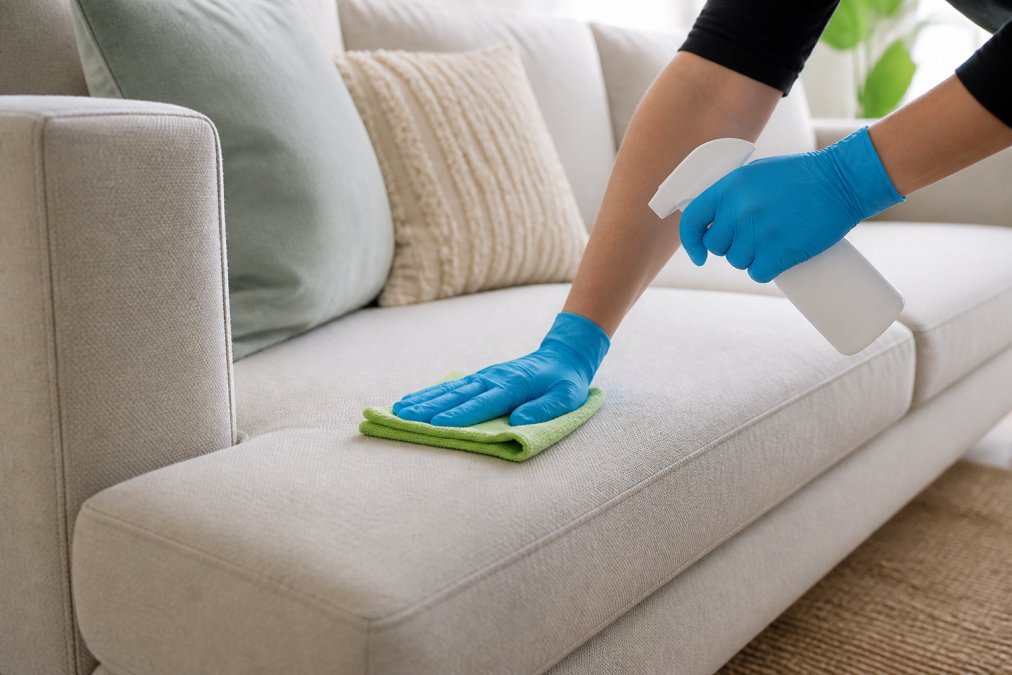
- Microfiber cloths for blotting, never rubbing, spills
- pH-neutral upholstery shampoo or a water-based cleaner matched to your fabric code
- Handheld steamer only for W and WS fabrics, and never on silk
A common mistake is reaching for a generic all-purpose spray. Harsh chemicals strip color and leave residue that attracts more dirt, which is why the industry has shifted toward pH-neutral agents that clean without damaging fibers or driving stains deeper.
Daily and Weekly Habits to Keep Upholstery Clean
Consistency beats intensity. A 2026 report found that dedicating just 10 to 15 minutes once a week to vacuuming upholstery with the correct attachment significantly extends furniture life, according to OCNJ Daily's upholstery cleaning survey. Weekly vacuuming removes the surface dust and debris that otherwise abrades fabric fibers over time, which is why D.A. Burns & Sons' furniture care guidance treats it as the foundation of any maintenance routine.
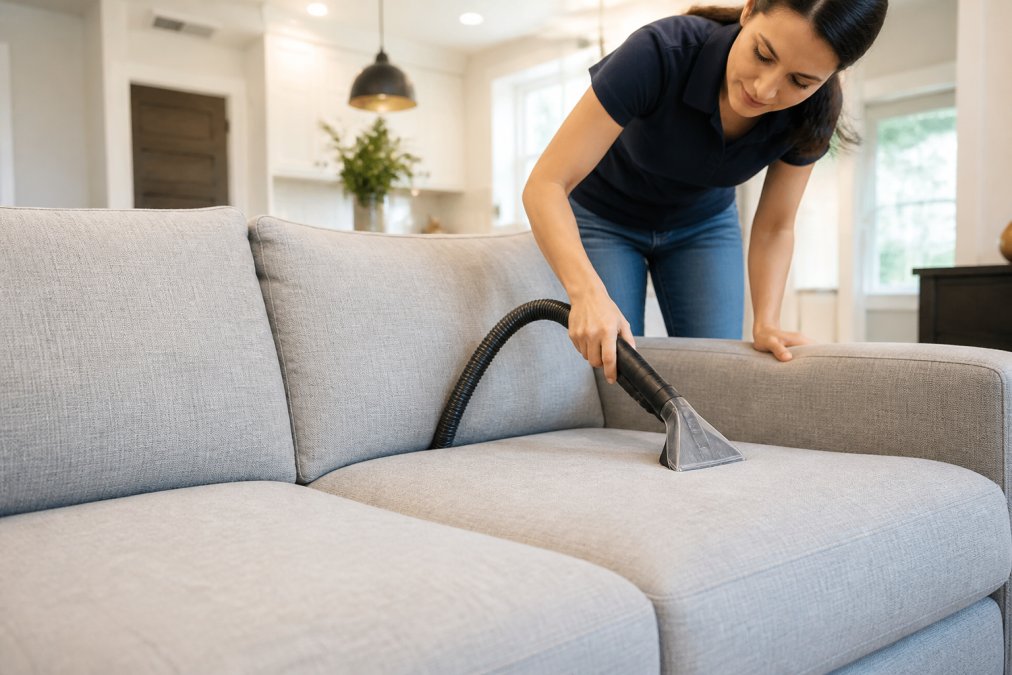
Rotate and fluff cushions weekly so wear is distributed evenly. Flip reversible cushions and vacuum both sides. Keep furniture out of direct sunlight, since UV exposure fades fabric faster than foot traffic ever will.
For households with pets or kids, run a lint roller over high-contact areas every few days. It takes a minute and removes the hair before it works its way into the weave.
Spot Cleaning and Stain Removal Techniques
Speed matters more than technique in the first minute. Blot, don't rub, rubbing pushes the spill deeper and spreads it sideways, the most common reason a small accident becomes permanent.
The blotting technique, step by step:
- Press a clean, dry microfiber cloth onto the spill to absorb as much liquid as possible.
- Mix a small amount of pH-neutral cleaner with water if your fabric code allows water.
- Dab, don't scrub, working from the outside of the stain toward the center.
- Rinse with a cloth dampened with plain water, then blot dry.
- Let the area air dry completely before sitting on it.
For grease, sprinkle baking soda or cornstarch on the spot, let it sit 15 minutes, then vacuum. For pet accidents, blot first, then use an enzyme cleaner, which breaks down odor compounds rather than masking them. Skip DIY rubbing-alcohol mixtures on delicate fabrics unless you've tested them on a hidden area first.
Deep Cleaning Methods for Upholstery
To clean upholstery deeply removes the grime that weekly vacuuming can't reach, and it belongs on a schedule, not a whim. For high-traffic pieces, Bissell's upholstery care guidance recommends deep cleaning roughly every two months, while most furniture does fine with a full deep clean every 6 to 12 months depending on use.
Match the Method to the Fabric Code
- Water-based extraction works for W and WS codes. A machine injects cleaning solution and immediately vacuums it back out, lifting embedded dirt from the cushion core. Work in slow, overlapping passes, going over each section twice, once to clean, once to extract.
- Solvent-based cleaning is the only safe option for S-code fabrics. This is typically a professional process because the solvents require ventilation and proper disposal. Home solvent kits exist but are messy and easy to over-apply.
- Steam cleaning suits durable W and WS fabrics but never silk or S-code materials. Steam sanitizes and relaxes fibers but doesn't extract dirt, so it works best as a follow-up rather than a standalone deep clean.
- Dry cleaning powders are a low-moisture option: sprinkle, work into the fibers with a brush, let sit, then vacuum. They lift light soil but won't touch set-in stains.
The Drying Step Most People Get Wrong
Trapped moisture is the top cause of musty odors and mildew. After any wet method:
- Run a fan pointed at the furniture, or open windows if the weather allows.
- Keep cushions propped up and separated so air moves around all sides.
- Plan on 4 to 6 hours of drying time for a light extraction pass, and up to 24 hours for a heavily soaked cushion.
- Don't sit on the furniture until it's fully dry, body weight compresses wet filling and slows drying dramatically.
A Maintenance Calendar Based on Your Household
Most guides give one schedule for everyone. That's the wrong approach. Traffic, pets, and kids change how often upholstery actually needs deep cleaning:
| Household Type | Vacuum | Spot Clean | Deep Clean |
|---|---|---|---|
| Single adult, no pets | Every 2 weeks | As needed | Every 12 months |
| Couple, no pets | Weekly | As needed | Every 9 to 12 months |
| Family with kids | Weekly | As needed | Every 6 months |
| Household with pets | 2 to 3 times per week | As needed | Every 3 to 4 months |
| Allergy or asthma sufferer | Weekly with HEPA filter | As needed | Every 3 to 6 months |
Mark deep-clean months on your calendar and treat them like any recurring home task. Furniture cleaned on schedule lasts years longer than furniture cleaned only when it looks dirty.
Neutralizing Odors Instead of Masking Them
Odors are the hardest part of upholstery care because most sprays only cover the smell for a few hours. Remove the source instead of perfuming it:
- Pet urine and other biological odors: blot the area, then apply an enzyme cleaner. Enzymes break down the uric acid crystals that cause the smell. If the odor returns on a humid day, the urine has soaked into the cushion filling and needs professional extraction.
- Food and smoke odors: sprinkle baking soda over the surface, let it sit for several hours or overnight, then vacuum thoroughly. Baking soda adsorbs odor molecules rather than covering them.
- Musty or mildew smells: these almost always mean trapped moisture. Dry the furniture completely with fans before treating anything else, then clean with a pH-neutral product and dry again.
- General stale smells: a bowl of activated charcoal or a small dish of white vinegar set near the furniture will absorb ambient odors over a few days. Replace every couple of weeks.
Avoid fabric freshening sprays as a long-term fix, they add residue that attracts dirt and builds into a sticky film that traps odors.
Upholstery Cleaning for Sensitive Skin
Households dealing with allergies or sensitive skin need a different priority: removing allergens, not just visible dirt. Upholstered furniture traps dust mites, pet dander, and pollen, and every time someone sits down, those particles go airborne again. Cleaning every six months is a widely recommended baseline for eliminating allergens, bacteria, and toxins from upholstered surfaces.
For sensitive-skin households, choose fragrance-free, pH-neutral cleaners and rinse thoroughly, since residue can irritate skin. Vacuum weekly with a HEPA-filter machine to capture fine particles rather than recirculating them. Steam can help on W-code fabrics because heat neutralizes many allergens, but confirm the code first. If someone reacts to dust or pet dander consistently, a professional deep clean reaches cushion interiors and padding that home equipment can't.
When to Call a Professional Upholstery Cleaner
Some jobs are worth handing off, and knowing the line saves you money in the long run. Professional upholstery cleaning is generally recommended at least once a year, and the global carpet and upholstery cleaning services market is projected to reach USD 69.98 billion in 2026, according to Market Data Forecast's industry report, a sign of how many households now rely on professional care.
Call a professional when:
- The stain is set, old, or covers a large area
- The fabric is S-code or delicate and you're unsure about solvents
- Odors persist after home treatment, especially pet urine
- Someone in the home has allergies or asthma
- The furniture hasn't been deep cleaned in over a year
At Sanctified Carpet & Upholstery Cleaning, we handle expert upholstery detailing and comprehensive carpet cleaning for homes that need a deeper result. Our team works with very reasonable prices and bundle deals, so refreshing a living room doesn't have to wreck the budget. If you've been putting off that deep clean, our professional and personable team is ready to help.
Frequently Asked Questions
What is the best way to clean fabric upholstery furniture?
Start by identifying the cleaning code on the furniture tag. For W or WS codes, use a water-based cleaner or a mix of mild dish soap and water. For S codes, use a solvent-based cleaner. Always test on a hidden area first. Vacuum regularly and blot spills immediately. For deep cleaning, consider professional services to avoid damaging the fabric.
How often should you professionally clean upholstered furniture?
Most upholstered furniture should be professionally cleaned every 12 to 24 months, according to 2026 industry guidance. High-traffic pieces or homes with pets and kids may need cleaning every 6 to 12 months. Regular vacuuming once a week removes surface dust and extends the time between professional cleanings.
What are common upholstery cleaning mistakes to avoid?
Common mistakes include using too much water, which can damage fabrics and cause mold; rubbing stains instead of blotting, which pushes them deeper; ignoring the cleaning code; and using harsh chemicals that may void warranties. Also, avoid steam cleaning on silk or delicate fabrics. Always test any cleaner on a hidden spot first.
Can I use Dawn dish soap to clean my fabric couch?
Dawn dish soap can be used on some fabrics, but it's not suitable for all upholstery. It's a mild degreaser, so it works well on water-safe fabrics (code W or WS). However, it may leave residue or cause discoloration on sensitive fabrics. Always check the cleaning code and test a small area first. For best results, use a pH-neutral upholstery cleaner.
Pet accidents, set-in stains, and stubborn odors are the problems home methods struggle with most, and they rarely improve with another round of DIY cleaner. Sanctified Carpet & Upholstery Cleaning offers expert upholstery detailing, professional carpet cleaning, and bundle deals that make a full refresh affordable. Get started with Sanctified Carpet & Upholstery Cleaning and send us a message to schedule your upholstery cleaning.