 how-to
How to Clean Delicate Upholstery Furniture Safely
Table of Contents
- Why Delicate Upholstery Needs a Different Cleaning Approach
- Upholstery Cleaning Codes Explained: Read the Tag First
- Step 1: Vacuum and Remove Surface Debris
- Step 2: Spot Test Before You Clean Delicate Upholstery
- Step 3: Choose the Best Tools for Cleaning Delicate Fabric
- Step 4: Clean Velvet, Linen, and Microfiber Safely
- When to Hire Professional Upholstery Cleaning Services
- Conclusion: Protect Your Investment With the Right Method
- Frequently Asked Questions
Last Updated: September 9, 2026
Professional upholstery cleaning costs between $120 and $232 per piece, according to Angi's 2026 cost guide, which makes learning how to clean delicate upholstery furniture at home an attractive option for budget-conscious homeowners. The challenge is that delicate fabrics punish mistakes harshly: the wrong cleaner or technique can cause permanent discoloration, shrinkage, or fiber damage. This guide is built around a safety-first approach that protects your furniture while still delivering real results. Below, we'll walk through a step-by-step method for cleaning delicate upholstery that prioritizes fabric safety above speed.
Why Delicate Upholstery Needs a Different Cleaning Approach
Delicate upholstery refers to fabrics like velvet, linen, silk blends, and antique textiles that require specialized care because their fibers are easily damaged by water, heat, or aggressive scrubbing. Unlike durable synthetic blends, these materials can shrink, bleed color, or develop water rings when exposed to standard cleaning solutions. For certain delicate materials, the only safe cleaning method is vacuuming or light brushing.
Most guides treat all upholstery the same, which is exactly why so many furniture pieces get ruined. Understanding your fabric's specific vulnerabilities is the foundation of safe cleaning.
Upholstery Cleaning Codes Explained: Read the Tag First
The manufacturer's tag is the single most important tool you have, and upholstery cleaning codes explained correctly will save you from costly mistakes. Look for a label beneath the cushions or on the frame that displays one of four letters.
- W (Water-Based Cleaning Only): You may use water-based foam, detergent, or a diluted dish soap solution. The key is to apply it sparingly and avoid saturation. A common pattern is that 'W' fabrics are synthetic or tightly woven, but that is not a guarantee. Use a spray bottle to mist, then blot immediately.
- S (Solvent-Based or Dry Cleaning Only): This is the code that trips up most DIYers. Water will cause the fibers to swell, leading to shrinkage, browning, or the backing material to bleed through. You must use a dry cleaning solvent specifically labeled for upholstery. These solvents are volatile; you must work in a well-ventilated area and keep them away from open flames or pilot lights. Apply the solvent to a white cloth, not directly to the fabric, and blot the stain. Never pour solvent onto the cushion.
- WS (Water or Solvent Based): This code gives you the widest latitude, but it does not mean you should use both at the same time. Choose one method, preferably the gentlest water-based foam, and stick with it. Mixing a water-based cleaner with a solvent can cause chemical reactions that yellow the fabric or degrade the finish.
- X (Vacuum Only): This code means the fabric is inherently unstable, often due to a delicate weave, a non-colorfast dye, or a backing that dissolves in any liquid. The only safe action is vacuuming with a soft brush attachment. For spots, you may use a dry, absorbent powder designed for upholstery, but even that carries risk. If an 'X' fabric has a set-in stain, professional intervention is the only safe route.
Industry guidance mandates checking tags for 'S' codes, which require dry or low-moisture cleaning methods to prevent damage HelloVelvo's upholstery cleaning guide.
What to Do When the Tag Is Missing or Illegible
If the tag is missing or unreadable, do not default to water. Treat the piece as an 'S' code until a professional can assess it. Before you buy any product, check the label for the words 'upholstery solvent cleaner', do not use general-purpose spot removers, which often contain water or bleach.
The Hidden Risk of 'S' Code Solvents
Most guides fail to warn you that 'S' code solvents are not all the same. Some contain harsh chemicals like perchloroethylene, which can strip the finish from the fabric and leave a lingering odor. Look for solvents that are labeled 'safe for home use' and avoid anything that requires a respirator. A safer alternative for 'S' codes is a dry cleaning sponge (often called a soot sponge), it lifts surface soil without any liquid.
Step 1: Vacuum and Remove Surface Debris
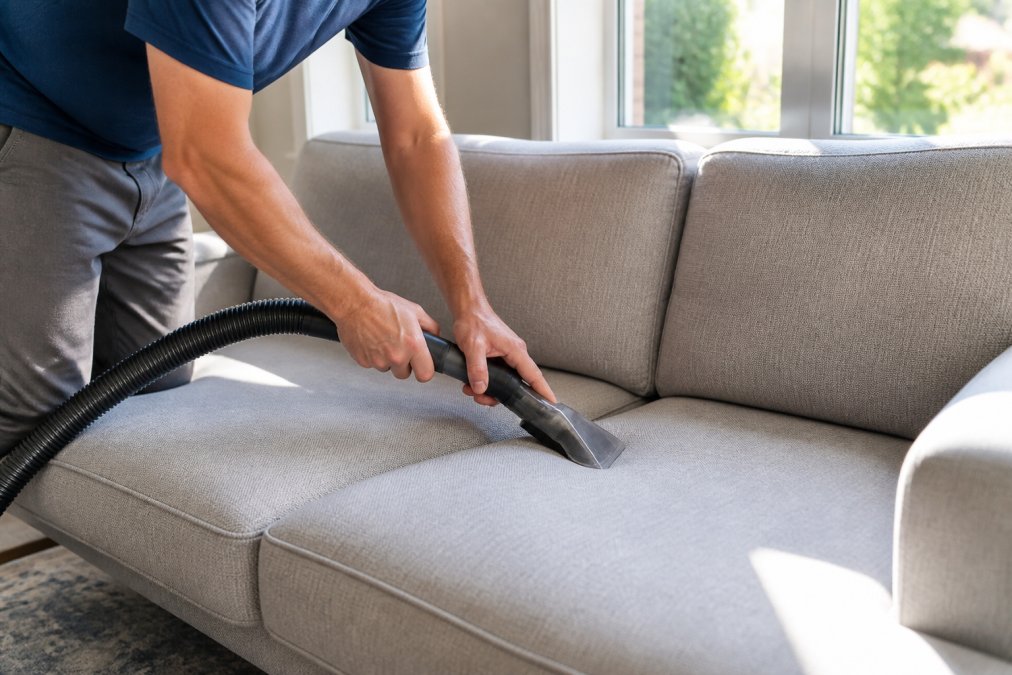
Start every cleaning session with a thorough vacuuming to remove dust, crumbs, pet hair, and loose soil before they work deeper into the fibers. Experts recommend vacuuming upholstered furniture at least once every two weeks to prevent the buildup of dirt and fur Bissell's maintenance guidance.
Use the upholstery attachment with a soft brush head and work in overlapping strokes, paying extra attention to crevices where debris collects. For delicate fabrics, keep the suction on a low to medium setting to avoid pulling at loose threads or distorting the pile.
Step 2: Spot Test Before You Clean Delicate Upholstery
A colorfastness test is non-negotiable when you're learning how to clean delicate upholstery furniture, even if you're using a product labeled as safe for your fabric type. Apply your chosen cleaning solution to a small, hidden area, such as the underside of a cushion or behind a leg, then blot with a white cloth.
Wait at least 10 minutes and check for color transfer onto the cloth or any change in the fabric's texture. If the white cloth shows any dye or the fabric looks altered, do not proceed with that cleaner. When testing upholstery cleaners, professional labs emphasize using soft brushes for gentle scrubbing and vacuuming away dirty water to avoid over-saturation Good Housekeeping's upholstery cleaner testing.
Step 3: Choose the Best Tools for Cleaning Delicate Fabric
The best tools for cleaning delicate fabric are gentle, absorbent, and designed to minimize moisture exposure. A handheld steamer can lift dirt effectively, but as cleaning expert Cohoon advises, "Do not use a steamer on any fabric that contains silk" Martha Stewart's cleaning guidance.
Build a kit with these essentials:
- Soft-bristled upholstery brush for gentle agitation
- White microfiber cloths for blotting, never rubbing
- A handheld steamer for heat-safe fabrics only
- Mild dish soap and white vinegar for DIY solutions
- A spray bottle for controlled application
Avoid stiff brushes, harsh detergents, and any tool that requires vigorous scrubbing. The goal is to lift soil without forcing it deeper into the weave.
Step 4: Clean Velvet, Linen, and Microfiber Safely
Each delicate fabric demands a specific protocol, and this material-based approach is where most generic guides fall short. Here is the decision matrix for the three most common delicate materials.
Velvet: The Pile Problem
Velvet is defined by its dense pile, the short, cut threads that stand upright. The pile is directional; it reflects light differently depending on which way you brush it. Before you apply any cleaner, determine the pile direction by running your hand across the fabric.
- Vacuuming: Always vacuum with the pile direction using a soft brush. Vacuuming against the pile can crush the fibers and create a permanent light/dark patch.
- Water-Safe Velvet (Code W): Lightly mist with a solution of mild dish soap and cool water, no more than a few drops of soap per cup of water. Then blot with a dry microfiber cloth, pressing straight down. Never rub, and never use a circular motion, as this will mat the pile.
- The Crush Warning: Never saturate the backing. Velvet is often glued to a cotton or jute backing; if that backing gets wet, it can shrink and pull the velvet out of shape, causing ripples that are impossible to flatten.
- Restoring the Pile: After cleaning, use a soft-bristled brush (a clean, dry toothbrush works for small areas) to gently brush the pile back into place while the fabric is still slightly damp. This prevents the fibers from drying in a matted position.
- Do Not: Use a steamer on velvet unless the tag explicitly says 'W' and you have tested a hidden area. Steam can melt the glue on the backing and cause the pile to separate from the base fabric.
Linen: The Shrinkage Trap
Linen is a natural bast fiber that absorbs water rapidly and swells, which leads to shrinkage and a rough, distorted texture. It is also prone to dye bleeding, especially in darker colors.
- Code S Linen: Use a dry cleaning solvent only. Apply the solvent to a white cloth and blot the stain. Do not pour solvent directly on the fabric, as it can leave a ring.
- Code WS Linen: Use a minimal-moisture foam cleaner. Spray the foam onto a sponge or cloth, not directly onto the fabric, and work it in small sections. The foam should be dry enough that it does not soak through to the cushion core.
- The Water Ring Risk: Linen is notorious for water rings. If you must use water, work in a circular motion that covers the entire cushion surface, not just the stained spot. A partial wetting will leave a distinct ring when it dries.
- Drying: Dry immediately with a clean, dry cloth. Do not let linen air-dry slowly; the longer the moisture sits, the more the fibers swell. Use a fan on low speed to speed up evaporation, but keep it at least three feet away to avoid blowing dust onto the wet fabric.
- Do Not: Use bleach or any oxygen-based stain remover on linen. These will weaken the fibers and cause them to shred.
Microfiber: The Forgiving Synthetic
Microfiber is a polyester/nylon blend with a tight weave that resists water penetration. It is the most forgiving of the three, but it attracts oil and holds onto it stubbornly.
- The Vinegar Solution: A 50/50 white vinegar and water solution is effective for water-safe microfiber. The vinegar cuts through body oils and light grease without leaving a soapy residue. Apply sparingly with a spray bottle, then blot.
- The Rubbing Alcohol Trick: For set-in stains on microfiber, rubbing alcohol (isopropyl, 70%) is a better choice than water. It evaporates quickly and does not leave a ring. Apply it to a white cloth and blot the stain. Test on a hidden area first, as alcohol can affect some dyes.
- The Brushing Finish: After cleaning, brush the fibers in one direction with a soft upholstery brush. This restores the texture and hides any cleaning marks. Microfiber can look 'splotchy' after cleaning if the fibers are left in different directions.
- Do Not: Use fabric softener or any product containing silicone. These leave a residue that attracts dirt and makes the fabric feel greasy.
The Universal Blotting Rule
For all fabrics, the blotting technique is critical: press down firmly to absorb moisture, then lift straight up. Rubbing spreads the stain and damages fibers. If a stain persists after two attempts, stop. Repeated cleaning will damage the fabric more than the stain itself.
When to Hire Professional Upholstery Cleaning Services
Professional upholstery cleaning services become the right choice when delicate fabrics show heavy soiling, set-in stains, or when the cleaning code is "X" and the piece needs more than vacuuming. The global carpet and upholstery cleaning services market is estimated to reach USD 69.98 billion in 2026 Market Data Forecast's 2026 market analysis, reflecting how many households rely on experts for this work.
Attempting DIY methods on antique upholstery, silk, or heavily stained pieces risks permanent damage that far exceeds the cost of professional care. A professional team has industrial extraction equipment that removes cleaning solution and soil completely, preventing the residue buildup that attracts new dirt.
For homeowners in Toms River and Ocean County, Sanctified Carpet & Upholstery Cleaning offers expert upholstery detailing that extends the life of your furniture. Our professional and personable team uses methods matched to your specific fabric type, and our bundle deals make it affordable to refresh multiple pieces at once. Pricing depends on your furniture's size and condition, so reach out for a quote tailored to your needs. Pricing depends on your furniture's size and condition, so reach out for a quote tailored to your needs.
Conclusion: Protect Your Investment With the Right Method
Cleaning delicate upholstery furniture safely comes down to three principles: identify your fabric's code, test before you treat, and favor dry methods over wet ones. These steps prevent the two most common disasters, fiber damage and color loss.
When a piece is too fragile or too soiled for confident DIY care, professional help protects your investment. Sanctified Carpet & Upholstery Cleaning delivers meticulous upholstery detailing with very reasonable prices and convenient bundle deals, so your furniture looks its best without stretching your budget. Send a Message to schedule a consultation and let our team handle the rest.
Frequently Asked Questions
Can I use Dawn dish soap to clean delicate upholstery?
Only if the fabric tag shows a W code, meaning it is safe for water-based cleaners. Mix a few drops of mild dish soap with water, but always test an inconspicuous spot first. For S-coded fabrics, skip water entirely and use a solvent-based cleaner or dry-cleaning product. Applying water to an S-coded fabric can cause shrinking, bleeding, or permanent stains.
How do I identify upholstery cleaning codes (S, W, SW, X)?
Look for a tag sewn under a cushion or on the bottom of the frame. W means water-based cleaners are safe. S means use solvent or dry-cleaning products only. SW allows both water-based and solvent cleaners. X means vacuum or brush only; any liquid or cleaning product can ruin the fabric.
What is the safest way to remove stains from silk or velvet upholstery?
For silk, avoid all liquid cleaners and use vacuuming or professional dry cleaning. For velvet, check the code first: most velvet is S-coded, so use a solvent-based cleaner and blot with a microfiber cloth. Never rub, as this damages the pile. If the stain persists, professional upholstery cleaning services are the safest option.
How often should delicate furniture be professionally cleaned?
Most manufacturers recommend professional cleaning every 12 to 24 months, but homes with pets, children, or allergy sufferers may need annual service. Vacuum delicate upholstery weekly to remove dust and dirt before it settles into fibers. Pricing depends on the furniture type and fabric.