 ultimate-guide
How to Choose a Carpet Cleaning Company in 2026
Table of Contents
- Start With Reputation: Reviews, Licensing, and Insurance
- Compare Cleaning Methods: Hot Water Extraction vs. Dry Cleaning
- Questions to Ask Carpet Cleaners Before You Book
- Understanding the Cost of Whole House Carpet Cleaning
- How to Spot Carpet Cleaning Scams Before They Cost You
- Guarantees, Certifications, and What Happens After Cleaning
- Frequently Asked Questions
Last Updated: September 20, 2026
Start With Reputation: Reviews, Licensing, and Insurance
The carpet cleaning industry includes 41,611 businesses across the country, according to IBISWorld's carpet cleaning industry analysis, so sorting the reliable operators from the rest is the first real test. Knowing how to choose a carpet cleaning company starts with three checks: real customer reviews, an active license, and proof of insurance from the carpet cleaning company. This guide from Sanctified Carpet & Upholstery Cleaning walks through each one, plus the method, pricing, and contract details most homeowners skip.
Where to Find Real Customer Reviews
Google and Yelp reviews matter, but the pattern matters more than the star average. Read the two- and three-star reviews first; they tend to describe specific problems like late arrivals or recurring stains, while five-star reviews often just say "great job." Look for reviews that mention a company by name alongside a specific service, and check whether the business responds to criticism.
How to Verify a Company Is Licensed and Insured
Ask for a certificate of insurance before booking, not after. A legitimate provider carries general liability coverage and, in most states, workers' compensation for employees; if a technician is injured in your home without that coverage, the claim can land on your homeowner's policy. Licensing requirements vary by state and municipality, so confirm with your local business licensing office rather than taking a website badge at face value.
Compare Cleaning Methods: Hot Water Extraction vs. Dry Cleaning
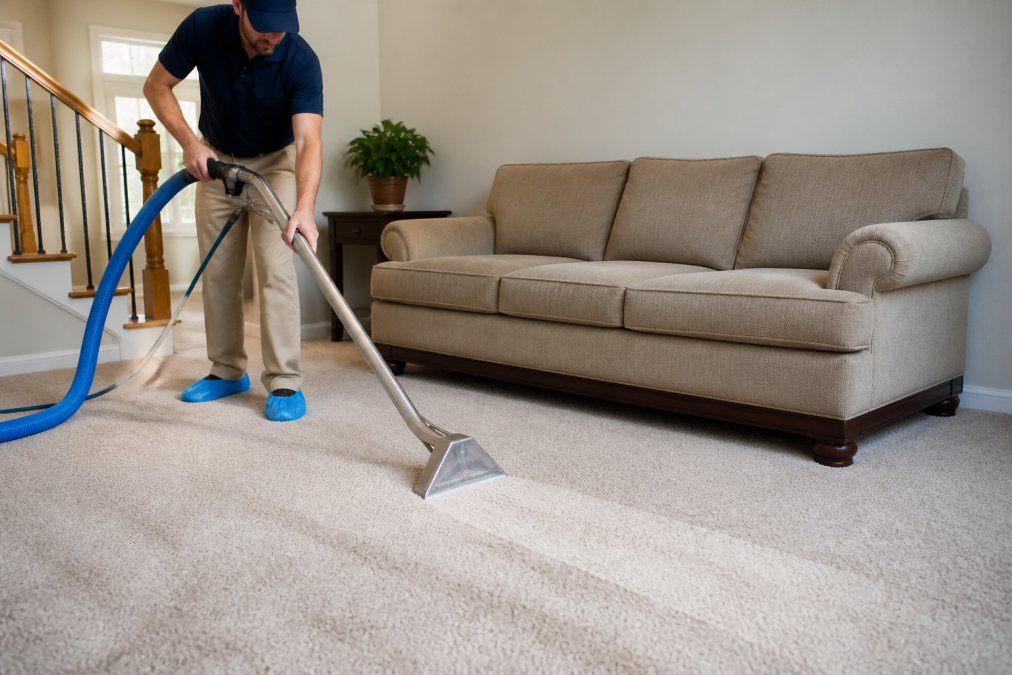
Hot water extraction, often called steam cleaning, injects heated water and cleaning solution into the carpet and immediately extracts it with a powerful vacuum. Dry cleaning methods use minimal moisture and chemical compounds instead. Hot water extraction is the method most manufacturers reference for warranty compliance because it removes deeper soil and residue, while dry cleaning dries faster but tends to lift less embedded dirt.
Carpet Fiber Considerations: Not Every Method Works on Every Carpet
Carpet fiber determines which method is safe. Wool and other natural fibers can shrink or brown under too much heat and moisture, so they need lower-temperature extraction and controlled drying. Synthetic fibers like nylon and polyester handle hot water extraction well. Before booking, tell the provider exactly what your carpet is made of, or ask them to identify it during a pre-inspection walk-through.
Equipment and Product Safety: Truck-Mounted vs. Portable Extractors
Truck-mounted equipment generates stronger suction and heat than portable extractors, which means deeper soil removal and shorter drying time. Portable units are useful for upper floors and tight spaces but typically leave carpet damp longer. Ask which equipment the company plans to use and how long drying takes; most truck-mounted jobs dry in four to six hours with proper airflow.
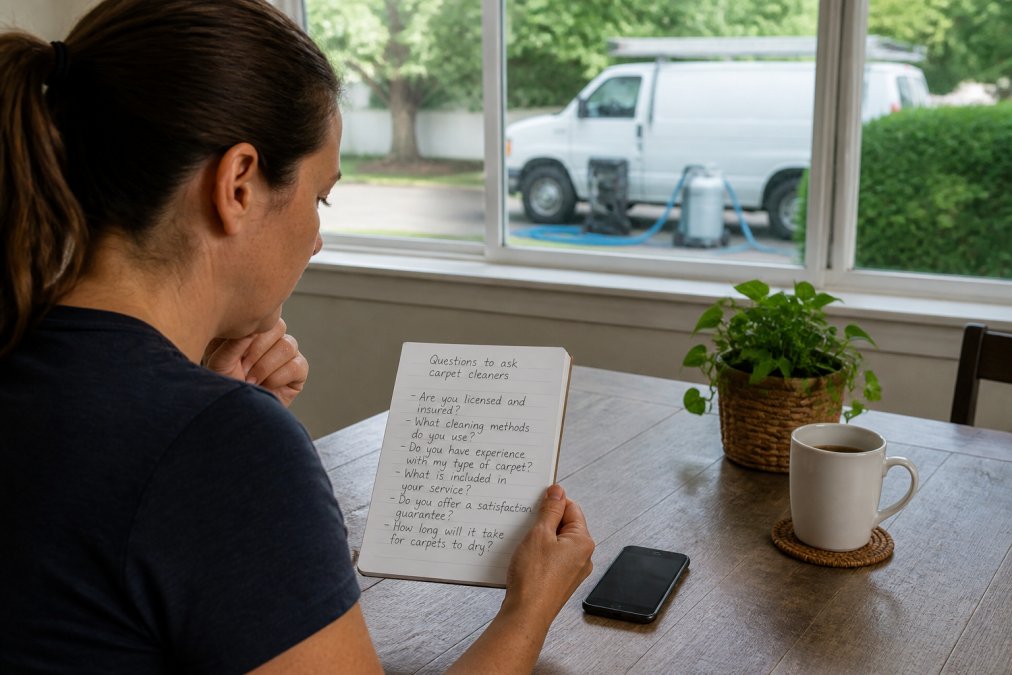
Questions to Ask Carpet Cleaners Before You Book
- Are you licensed and insured, and can you send proof before the appointment? A legitimate provider emails a certificate of insurance and, where required, a license number without hesitation. "We'll bring it the day of" is a soft refusal; you want documentation in hand before anyone enters your home.
- Which cleaning method will you use on my specific carpet fiber? The right answer names the fiber (nylon, polyester, olefin, wool) and the method (hot water extraction, low-moisture encapsulation, or a fiber-specific variation). A generic "steam cleaning" answer with no fiber discussion is a sign the technician plans one approach for every home.
- Is your estimate all-inclusive, or are there add-on fees? Ask specifically about fuel surcharges, furniture moving, spot treatment, deodorizing, and stain-protectant application. A written estimate that itemizes these is the only version worth comparing against another company's quote.
- What is your service guarantee if a stain returns? The answer should include a time window (commonly 7 to 14 days), what is covered (reappearing spots versus new stains), and whether the return visit is free. "100% satisfaction" without terms is marketing, not a guarantee.
- How long will the carpet take to dry, and what do you do to speed it up? Truck-mounted hot water extraction typically dries in four to six hours with air movers; portable units and low-moisture methods run longer or shorter respectively. A company that cannot give a range has not thought about your home's airflow or humidity.
- Do you run background checks on technicians? This matters most for solo homeowners and anyone hiring a company that uses subcontractors. A clear yes-or-no with a description of the screening process is better than a vague assurance.
- Are your cleaning solutions safe for kids and pets, and are they residue-free? Residue left behind acts like a magnet for new soil, so "residue-free" is the operative phrase. Ask for the product name and whether it carries a third-party certification rather than accepting "green" or "non-toxic" as a standalone claim.
- Who will actually be in my home, your employees or a subcontractor? Many franchises and lead-generation services dispatch independent contractors. That changes who is insured, who is accountable for damage, and who honors the guarantee.
- Can you provide the written contract and invoice template before the appointment? Reviewing the paperwork in advance is the single best defense against bait-and-switch pricing, because it locks in the scope, method, and total before a technician is standing in your living room.
Understanding the Cost of Whole House Carpet Cleaning
The cost of whole house carpet cleaning depends on room size, carpet type, the method used, and local market pricing, according to GorillaDesk's guide to carpet cleaning estimates. There is no single fair price, which is exactly why a written, itemized estimate matters more than a quoted number over the phone.
What Drives the Price Up or Down
Square footage is the biggest factor, but the way companies measure it varies. Some quote by the room, some by the square foot, and some by a combination. A "room" can mean anything from a 10x10 bedroom to a 20x20 living area, so a per-room quote is only comparable if both companies define the room the same way. Ask for the square footage they are pricing.
Beyond size, these factors move the number:
- Soil level. Heavily soiled carpet may require pre-treatment, agitation, or a second pass, each of which adds labor and time.
- Pet stains and odor. Urine reaches the backing and pad, so surface extraction alone will not remove it. Sub-surface treatment or pad replacement is a separate line item.
- Furniture moving. Some companies include light moving of chairs and small tables; pianos, beds, and electronics are usually excluded for liability reasons.
- Stairs, area rugs, and upholstery. These are almost always priced separately because they use different tools and techniques than open carpet.
- Stain protectant. A fluorochemical protector applied after cleaning is an upsell, not a requirement, and its durability depends on foot traffic and vacuuming habits.
- Access and parking. Upper floors, long hose runs, and restricted parking can add a trip or equipment charge.
Reading the Contract and Invoice Breakdown
This is where most homeowners lose money, and where most guides stop short. A professional service contract should list, at minimum:
- The service address and date of service
- Each room or area to be cleaned, with square footage or dimensions
- The cleaning method to be used, by area if methods differ
- Any pre-treatment, spot treatment, or deodorizing included in the base price
- Any add-on services and their individual prices
- The total price, with taxes and fees broken out
- The guarantee terms, including the time window and what triggers a free return visit
- The company's license number and insurance carrier, where applicable
How to Compare Two Quotes Fairly
Line up the quotes side by side and check four things: the square footage priced, the method named, the add-ons included, and the guarantee terms. Two quotes are only comparable when all four match. A higher quote that includes pre-treatment, furniture moving, and a 14-day guarantee may cost less in real terms than a lower quote that charges for each of those separately.
How to Spot Carpet Cleaning Scams Before They Cost You
Bait-and-switch pricing is the most common scam: a low advertised rate that balloons once the technician is inside your home. The Federal Trade Commission advises consumers to get estimates in writing and be wary of door-to-door offers that pressure an immediate decision, as outlined in FTC guidance on avoiding home service scams.
Bait-and-Switch Pricing and Hidden Fees
Red flags include quotes that seem far below local averages, no physical business address, cash-only payment demands, and technicians who claim your carpet needs an urgent "special treatment" not mentioned in the estimate. Legitimate companies put pricing in writing and let you review it before work begins.
Guarantees, Certifications, and What Happens After Cleaning
A service guarantee should be specific: how long it lasts, what it covers, and whether the company returns for free if a stain reappears. Vague promises like "100% satisfaction" mean little without terms. Ask for the guarantee in writing alongside the estimate.
Environmental and Health Certifications to Look For
Eco-friendly and non-toxic claims should be backed by third-party certifications, not just marketing language. Ask which cleaning solutions the company uses and whether they are residue-free and safe for children and pets. This matters most for households with allergy sufferers or toddlers who crawl on treated carpet.
Post-Cleaning Maintenance and Care
Professional cleaning lasts longer when you maintain it. Vacuum high-traffic areas twice weekly, blot spills immediately rather than rubbing, and schedule deep cleaning every 12 to 18 months. Keeping indoor humidity moderate and using doormats reduces how quickly soil returns to the carpet.
Frequently Asked Questions
How do I verify that a carpet cleaning company is insured and bonded?
Ask for a certificate of insurance and a copy of their surety bond before booking. A legitimate carpet cleaning company will provide these without hesitation. You can also call the insurance provider listed on the certificate to confirm the policy is active. If a company refuses or delays, treat that as a red flag and move on to another provider. Licensed and insured status protects you if a technician damages your carpet, walls, or furniture during the job.
What is the difference between steam cleaning and dry cleaning for carpets?
Steam cleaning, also called hot water extraction, injects heated water and cleaning solutions into the carpet, then extracts the dirty water with a powerful vacuum. It typically takes 4 to 12 hours to dry depending on humidity. Dry cleaning uses minimal moisture and specialized compounds, so carpets are ready to walk on almost immediately, but it may not reach deep-set soil the way hot water extraction does. Your carpet fiber and the level of soiling determine which method works best.
What are the red flags to avoid when hiring a carpet cleaner?
Watch for unusually low advertised prices that jump once the technician arrives, cash-only payment demands, no physical business address, no license or insurance documents, and high-pressure upsells for services you did not request. Bait-and-switch pricing and hidden fees are the most common carpet cleaning scams. Get a written estimate before work begins, confirm what is included, and never pay in full before the job is finished and you have inspected the results.
Should I choose a local independent cleaner or a national franchise?
Both have trade-offs. Independent cleaners often provide more flexible scheduling and personalized service. What matters most is verifying reviews, insurance, cleaning methods, and guarantees regardless of company size. The carpet cleaning industry includes 41,611 businesses, so you have plenty of options. Focus on the specific provider's track record in your area rather than the brand name alone.
What questions should I ask a carpet cleaning company before booking?
Ask about their cleaning method, how long carpets take to dry, whether they carry liability insurance and workers' compensation, what their service guarantee covers, and whether the quoted price includes pre-treatment, spot treatment, and furniture moving. Also ask if they use background-checked technicians and whether they charge extra for pet stain removal or heavy-traffic areas. Getting clear answers to these questions before you book helps you compare providers on substance rather than price alone.
How much does whole house carpet cleaning cost?
The cost of whole house carpet cleaning depends on square footage, carpet type, level of soiling, and the cleaning method used. Most providers charge per room or per square foot, and add-ons like pet odor treatment or upholstery cleaning increase the total. Request a free estimate with a written breakdown so you can compare quotes fairly. Be cautious of quotes that seem far below the local average, as they often lead to upsells or hidden fees once the technician is in your home.
How often should I have my carpets professionally cleaned?
Most manufacturers recommend professional deep cleaning every 12 to 18 months to maintain your warranty and extend carpet longevity. Households with pets, children, or allergy sufferers may benefit from cleaning every 6 to 12 months. Regular vacuuming and prompt spot treatment between professional visits help carpets stay cleaner longer. If you notice persistent odors, visible traffic lanes, or increased allergy symptoms, those are signs it is time to schedule a cleaning regardless of how long it has been.
Are professional cleaning products safe for children and pets?
Many professional carpet cleaning companies offer eco-friendly, non-toxic cleaning solutions that are safe for children and pets once the carpet is dry. Ask specifically about the products they use and whether they leave any residue. Hot water extraction with a thorough rinse leaves carpets residue-free, which is important because leftover soap attracts dirt and can irritate skin. If your technician confirms the carpet is dry, it is generally safe for your family to walk on it.
Choosing the right carpet cleaning company comes down to verified credentials, a clear method for your carpet fiber, and pricing you can see in writing before anyone starts work. At Sanctified Carpet & Upholstery Cleaning, we offer professional carpet cleaning and expert upholstery detailing with very reasonable prices and bundle deals for homes in the area. Send a message today to schedule your pre-inspection and get a written estimate.