 ultimate-guide
Extend Lifespan of Carpet and Upholstery: 2026 Guide
Table of Contents
- Why Carpet and Upholstery Lifespan Depends on Maintenance
- Daily and Weekly Habits That Extend Carpet Lifespan
- How to Remove Red Wine Stain From Carpet Naturally
- Professional Carpet Cleaning Frequency: What the Data Shows
- Best Practices for Upholstery Maintenance
- Material-Specific Care: Wool, Synthetic, and Blends
- When to Clean vs. Replace: A Decision Framework
- Conclusion
- Frequently Asked Questions
Last Updated: September 16, 2026
Why Carpet and Upholstery Lifespan Depends on Maintenance
Most homeowners replace carpet years before they need to. According to Home Carpet One's carpet lifespan benchmarks, average carpet lasts between 5 and 15 years, but that range is decided almost entirely by how it's maintained, not by how much it cost. This guide from Sanctified Carpet & Upholstery Cleaning breaks down the daily habits, cleaning schedules, and material-specific care that extend lifespan of carpet and upholstery toward the top of that range.
Daily and Weekly Habits That Extend Carpet Lifespan
The habits that matter most cost nothing: vacuum often, catch spills fast, and stop dirt at the door. Regular maintenance routines can extend carpet lifespan by 3 to 5 years, according to Carpetright's lifespan-by-material analysis, and most of that gain comes from consistency rather than effort.
Vacuuming Frequency and Entryway Matting
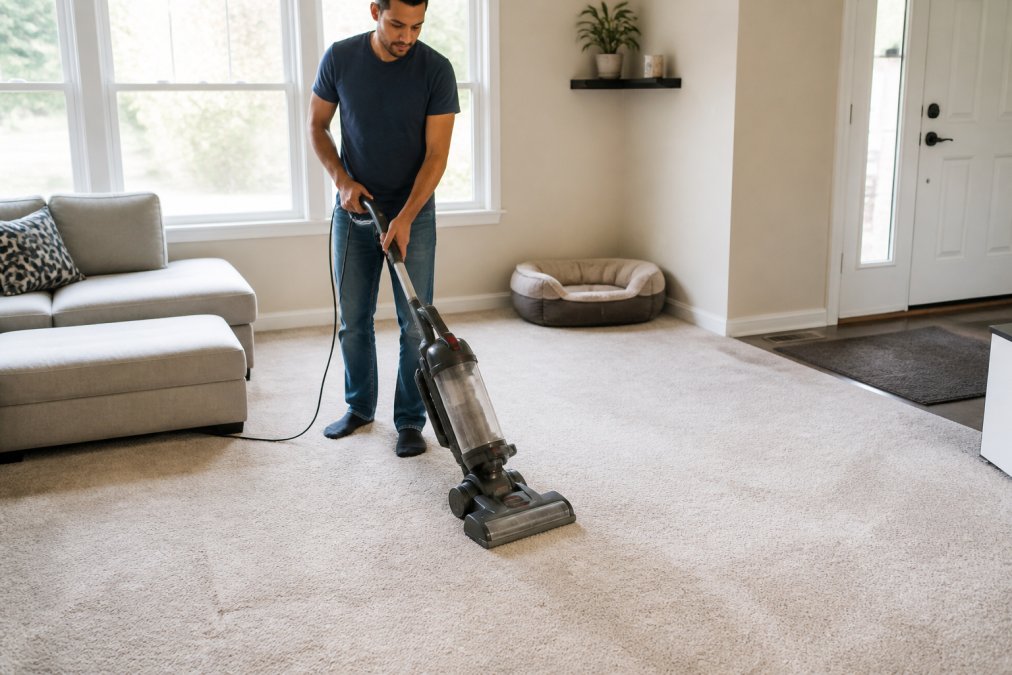
Vacuuming frequency should scale with traffic, not be treated as a once-a-week chore.
- High-traffic areas (living rooms, hallways, stairs): vacuum 3-4 times per week
- Low-traffic rooms (guest bedrooms): once per week is sufficient
- Homes with pets: add one pass per week to every room, since pet dander and hair compact into the pile
Shoes Off and Furniture Rotation
Removing shoes indoors is the cheapest preventative maintenance available. Outdoor shoes track in grit, oils, and moisture that work into carpet backing and accelerate fiber degradation.
How to Remove Red Wine Stain From Carpet Naturally
The fastest natural fix for a red wine stain is blotting with a diluted dish soap solution, then applying a vinegar-and-water rinse. Speed decides everything: wine that sits for more than a few minutes bonds with the dye sites in synthetic fibers. But the method that works on nylon can permanently damage wool, and a fresh-spill method won't touch a set-in stain.
Step-by-Step for Synthetic Carpet (Nylon, Polyester, Olefin)
Synthetics tolerate water-based cleaning and respond well to the acid rinse below, the routine for most wall-to-wall carpet sold in the last two decades.
- Blot immediately. Press a clean white cloth into the stain. Never rub, which pushes wine deeper into the pile. Work from the outside edge inward.
- Mix the solution. Combine one teaspoon of clear dish soap with one cup of cool water. Hot water sets protein-based stains and can shrink backing.
- Apply and blot. Dab the solution onto the stain, then blot with a dry cloth between applications. Repeat until the cloth lifts clean.
- Rinse with vinegar. Mix one part white vinegar with two parts water, apply, and blot again. The acid breaks down remaining pigment and neutralizes alkaline soap residue that would otherwise attract new soil.
- Rinse with cool water and weight the area. Lay white towels over the spot, place a heavy book on top, and let it sit for an hour. This pulls residual moisture out of the backing, where trapped water causes delamination and odor.
Why Wool and Natural Fibers Need a Different Method
Wool is naturally stain-resistant but sensitive to alkaline products and prolonged moisture. The vinegar rinse that rescues nylon can cause browning, shrinkage, and dye bleeding on wool. Skip the DIY routine on wool, sisal, jute, or any natural fiber and go straight to professional low-moisture treatment, technicians often see wool stains that would have lifted cleanly with a pH-balanced product become permanent after dish soap and vinegar.
The DIY vs. Professional Equipment Question
Most guides mention professional cleaning as a fallback but never explain why rental machines underperform. The difference isn't the solution, it's the machine.
- Rental and consumer extractors typically pull 1 to 2 gallons of water per minute at low lift, leaving the backing damp for 12 to 24 hours. That residual moisture is the leading cause of mold, delamination, and the musty smell that appears weeks after a DIY cleaning.
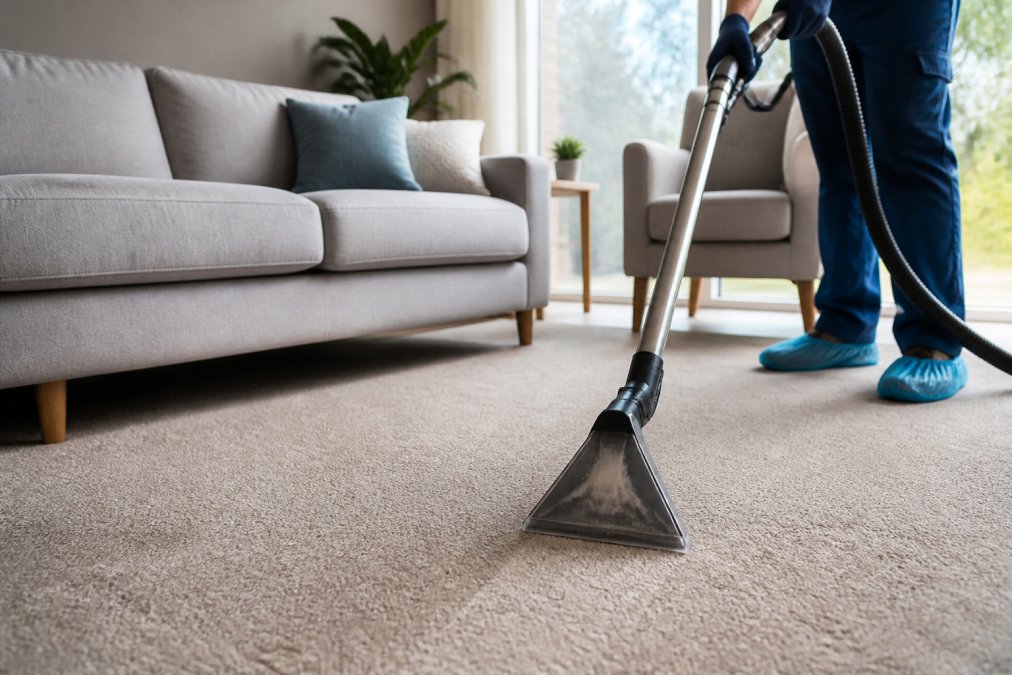
- Truck-mounted professional systems use heated water extraction at higher pressure and far stronger vacuum lift, pulling most moisture out in the same pass. Drying times drop to 4 to 6 hours, and deeper extraction removes soil a rental unit leaves behind.
- Portable spot cleaners are useful for fresh spills but push liquid deeper into the pile and padding if used on a large stain. They are a blotting aid, not a cleaning method.
Professional Carpet Cleaning Frequency: What the Data Shows
Professional carpet cleaning frequency should land between every 12 and 18 months for most households, and the payoff is measurable. Carpets cleaned on that schedule can last up to 50% longer, according to Kleen Carpet Cleaning's research on cleaning intervals, because deep cleaning removes the embedded soil that vacuuming can't reach.
Why Deep Cleaning Works: The Mechanism
Carpet fibers trap soil particles that act like sandpaper under every footstep. A vacuum removes the top layer of loose soil, but particles that have worked down to the base of the pile and into the backing require liquid extraction to lift. Once removed, the abrasive cycle stops until new soil accumulates, which is why the interval matters more than the method.
Cleaning Methods and Their Trade-Offs
Hot water extraction remains the standard professional method, and industry analysis identifies it alongside dry cleaning and regular vacuuming as the primary ways to restore appearance and extend functional lifespan (Verified Market Research on cleaning methods). Low-moisture cleaning has also gained ground as a way to avoid over-wetting, which can damage backing and promote mold.
| Method | How It Works | Best For | Trade-Off |
|---|---|---|---|
| Hot water extraction | Heated water and cleaning solution injected under pressure, then extracted with strong vacuum lift | Most synthetic carpets, heavy soil, allergy households | 4-6 hour dry time; over-wetting risk if the technician is inexperienced |
| Low-moisture encapsulation | Cleaning solution crystallizes around soil and is vacuumed away | Wool, natural fibers, quick turnaround, commercial spaces | Less deep soil removal than extraction |
| Dry cleaning compounds | Absorbent powder worked into the pile and vacuumed out | Delicate fabrics, spot maintenance between deep cleans | Surface-level only; not a substitute for extraction |
Recommended Intervals by Household
| Household Situation | Recommended Deep Cleaning Interval | Why |
|---|---|---|
| Adults only, no pets | Every 18 months | Low soil load, slow accumulation |
| Kids under 5 | Every 12 months | Spills, crumbs, high foot traffic |
| Pets in the home | Every 6-12 months | Dander, accidents, odor compounds |
| Allergy sufferers | Every 6 months | Dust and allergen removal |
| Rental turnover | Before each new tenant | HUD uses a 5-year damage-claim baseline |
The Indoor Air Quality Payoff
Most cleaning guides treat carpet lifespan as a cosmetic concern. It isn't. Carpet acts as a filter, trapping dust, dander, pollen, and dust mite allergen. A carpet cleaned on schedule keeps those particles locked in until extraction removes them; a carpet never deep cleaned becomes a reservoir that releases particles with every footstep, which is why allergy and asthma sufferers often notice symptoms worsen in rooms with older, neglected carpet.
Sustainability: Cleaning Beats Replacing
Extending the life of existing carpet by even three years keeps hundreds of pounds of material out of landfills and defers the carbon cost of manufacturing and installation. When carpet finally reaches the end of its life, most communities have a recycling program through a local waste authority or retailer take-back, and padding is often recyclable separately. Cleaning is the more sustainable choice whenever the fibers can still be saved.
Best Practices for Upholstery Maintenance
Upholstery care follows the same logic as carpet care, but the stakes are higher because furniture can't be replaced as easily. Start by knowing your fabric code before any liquid touches it.
- Check the cleaning code. W means water-based cleaners are safe. S means solvent-based only. WS allows either. X means vacuum only.
- Vacuum upholstery monthly. Use a brush attachment to lift dust from seams, crevices, and under cushions, where soil filtration concentrates.
- Rotate and flip cushions weekly. This prevents pile crushing and evens out wear patterns.
- Use pH-balanced cleaners. Harsh alkaline products strip protective finishes from upholstery fabric and dull color over time.
- Keep furniture out of direct sun. Sunlight exposure breaks down fibers and fades dye, and no cleaning method reverses it.
Material-Specific Care: Wool, Synthetic, and Blends
Wool, synthetic, and blended carpets need different care routines, and using the wrong one shortens lifespan. Wool carpets have an extended lifespan of 8 to 20 years, according to Peace Frog's material lifespan guide, but only when cleaned with pH-balanced products that won't strip natural lanolin.
When to Clean vs. Replace: A Decision Framework
Clean when the damage is in the fibers. Replace when the damage is in the backing, the padding, or the subfloor. That framework resolves most decisions in under a minute.
Use this matrix:
| Symptom | Clean First | Replace |
|---|---|---|
| Surface stains | Yes | No |
| Pet odor at depth | Yes, with extraction | Only if padding is saturated |
| Matting in traffic lanes | Yes, with pile lifting | If fibers are permanently crushed |
| Delamination (backing separates) | No | Yes |
| Visible mold or water damage | No | Yes |
| 10+ years old, repeated staining | Sometimes | Usually yes |
Conclusion
The real challenge with carpet and upholstery care isn't knowing what to do; it's keeping up with the schedule when life gets busy. Sanctified Carpet & Upholstery Cleaning serves homeowners in Toms River and Ocean County with professional carpet cleaning and expert upholstery detailing, backed by very reasonable prices and bundle deals that make routine deep cleaning easier to fit into a budget.
Frequently Asked Questions
Can carpeting last 40 years with the right care?
Standard residential carpet typically lasts 5 to 15 years, and wool can reach 20 years with excellent maintenance. Reaching 40 years is unrealistic for most homes because fiber degradation, pile crushing, and backing breakdown happen regardless of cleaning. Commercial-grade carpet in low-traffic spaces can reach 30 years, but residential carpet rarely does. Focus on maximizing your carpet's expected lifespan through consistent care rather than chasing an outlier number.
Does vacuuming frequency impact carpet longevity?
Yes. Vacuuming removes soil before it works into carpet fibers and causes abrasion. Daily vacuuming in high-traffic areas and weekly vacuuming in low-traffic rooms slows fiber degradation significantly. Vacuuming alone is not enough, though. Embedded soil and oils require periodic deep cleaning with hot water extraction or low-moisture methods. Facilities that combine frequent vacuuming with scheduled professional cleaning report carpet lifespans exceeding 12 to 15 years.
How often should you professionally clean upholstery to extend its life?
Most upholstery benefits from professional cleaning every 12 to 18 months, the same interval recommended for carpet. Homes with pets, children, or allergy sufferers may need cleaning every 6 to 12 months. Carpets cleaned on that 12-to-18-month schedule can last up to 50% longer than neglected ones. Always check your furniture's manufacturer tag for specific fabric care codes before scheduling service.
What are the signs that carpet needs to be replaced rather than cleaned?
Replace carpet when you see permanent pile crushing in walkways, delamination where the backing separates from the face fibers, or stains that return after professional cleaning because they have soaked into the pad. Musty odors that persist after drying also signal moisture damage in the padding or subfloor. If the carpet is past its expected lifespan and shows these signs, replacement is the better investment.
Is 20-year-old carpet unhealthy to keep?
Old carpet can trap decades of dust, allergens, and soil that routine cleaning cannot fully remove. If the carpet has been professionally cleaned every 12 to 18 months and dried properly, it may still be sanitary. However, 20-year-old carpet is well past the 5-to-15-year residential average, and its backing and padding may be degrading. Have it inspected, and consider replacement if odors or allergens persist.
What is the best way to rejuvenate old carpet?
Start with a professional deep cleaning using hot water extraction to pull embedded soil from the fibers and backing. Follow with low-moisture spot treatment for stubborn stains. Rotate furniture to relieve pile crushing, and place entryway mats to reduce new soil tracked in. If the carpet still looks flat after cleaning and grooming, the fibers may be permanently crushed and replacement is the practical next step.