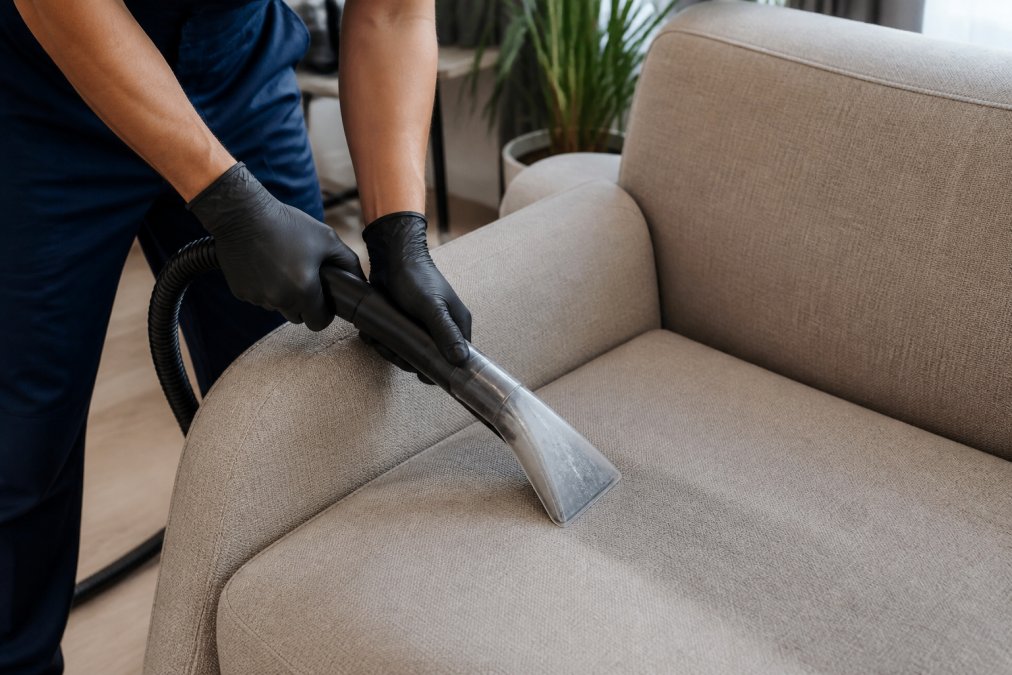
 how-to
Deep Cleaning Upholstery for Home Guests: A 2026 Guide
Table of Contents
- Deep Cleaning Upholstery Before Guests Arrive: Where to Start
- Upholstery Cleaning Codes Explained: W, S, SW, and X
- How Often Should You Deep Clean Upholstery?
- Safe Methods for Upholstery Cleaning for Sensitive Skin
- Matching Your Cleaning Method to the Fabric
- DIY Deep Cleaning Steps for a Guest-Ready Sofa
- When to Call a Professional Upholstery Cleaner
- Frequently Asked Questions
Last Updated: September 10, 2026
Deep Cleaning Upholstery Before Guests Arrive: Where to Start
Deep cleaning upholstery for home guests is the process of removing embedded soil, oils, and allergens from sofas, chairs, and cushions before visitors arrive, using methods matched to each fabric's care code. The global carpet and upholstery cleaning services market is projected to reach USD 69.98 billion in 2026, according to Market Data Forecast's industry projection, which tells you how much weight homeowners now place on professional-grade furniture care. Below, we break down the timeline, the cleaning codes, and the exact steps that get furniture guest-ready without damaging it.
The 2026 Deep Cleaning Timeline for Hosts
Start 10 to 14 days out. That buffer lets cushions dry fully, gives you time to spot-treat stubborn stains twice, and leaves room to call a professional if a fabric turns out to be code S or X. Work in this order:
- Day 14: Vacuum everything, including under cushions and along seams.
- Day 10: Spot-test and treat visible stains.
- Day 7: Deep clean with the method your fabric code allows.
- Day 3: Inspect, deodorize, and fluff cushions.
- Day 1: Final vacuum and quick lint pass.
A Quick Pre-Guest Inspection Checklist
- Check every cushion for the manufacturer's cleaning code tag
- Run a colorfastness test on a hidden area
- Vacuum seams, crevices, and under-cushion surfaces
- Note pet odor, urine marks, or dark rings
- Photograph stains before treating them
- Confirm drying time before guests arrive
Upholstery Cleaning Codes Explained: W, S, SW, and X
Upholstery cleaning codes are single-letter labels, usually sewn under a cushion or stapled to the decking, that tell you which cleaning method a fabric tolerates. Assigned by the fabric mill and adopted by the furniture maker, the code is the most reliable signal you have before any liquid touches the sofa, ignoring it is the fastest way to ruin furniture. The letter dictates your tools, dwell time, and drying plan. Here is what each code means in practice.
| Code | Meaning | Safe Method | Tools That Work | Avoid |
|---|---|---|---|---|
| W | Water-based cleaners only | Mild dish soap or upholstery shampoo diluted in warm water | Spray bottle, soft brush, microfiber cloths, handheld extractor | Solvent-based spot removers, dry-cleaning fluid |
| S | Solvent-based cleaners only | Water-free dry-cleaning solvent | Clean white cloths, solvent applied to the cloth (not the fabric), soft brush | Water, steam, foam shampoo, any wet extractor |
| SW | Water or solvent | Either method, your choice | Whichever you prefer, but keep moisture minimal | Over-wetting, saturating the foam core |
| X | Vacuum only | None, dry soil removal only | Upholstery attachment, crevice tool, soft brush | All liquids, all solvents, all steam |
What Each Code Means for Your Guest-Prep Plan
Code W. Water-based cleaning is permitted, so the standard DIY approach works: dilute a few drops of mild dish soap in warm water, apply sparingly with a microfiber cloth, and extract with a handheld unit or a clean damp cloth. The risk is the water left behind, foam that stays damp for more than about 24 hours is where odor and mold begin.
Code S. This is the code that ends DIY projects. Water-based cleaner on a code S fabric can cause permanent rings, shrinkage, and dye bleed, and no cleaning method reverses it. Use a water-free solvent applied to a white cloth, not poured onto the fabric, worked in small sections and allowed to flash off. Solvents are flammable and give off fumes, so ventilate the room and keep the area clear of ignition sources. If the furniture is large or heavily soiled, call a professional.
Code SW. Either water or solvent is acceptable, but the code does not mean "use both at once." Pick one method, finish the piece, and let it dry before switching. Over-wetting is the most common way people damage SW furniture: tolerance for water gets mistaken for tolerance for saturation.
Code X. Vacuum only, no liquid cleaner, no solvent, no steam, no foam. Some X fabrics are rayon, viscose, or a blend that loses strength when wet; others carry a finish water would strip. Your entire guest-prep routine for X furniture is dry soil removal: vacuum the seams, crevices, and under-cushion surfaces, then brush the pile back into place. Beyond that, call a professional who can assess the fiber first.
How to Find Your Furniture's Cleaning Code
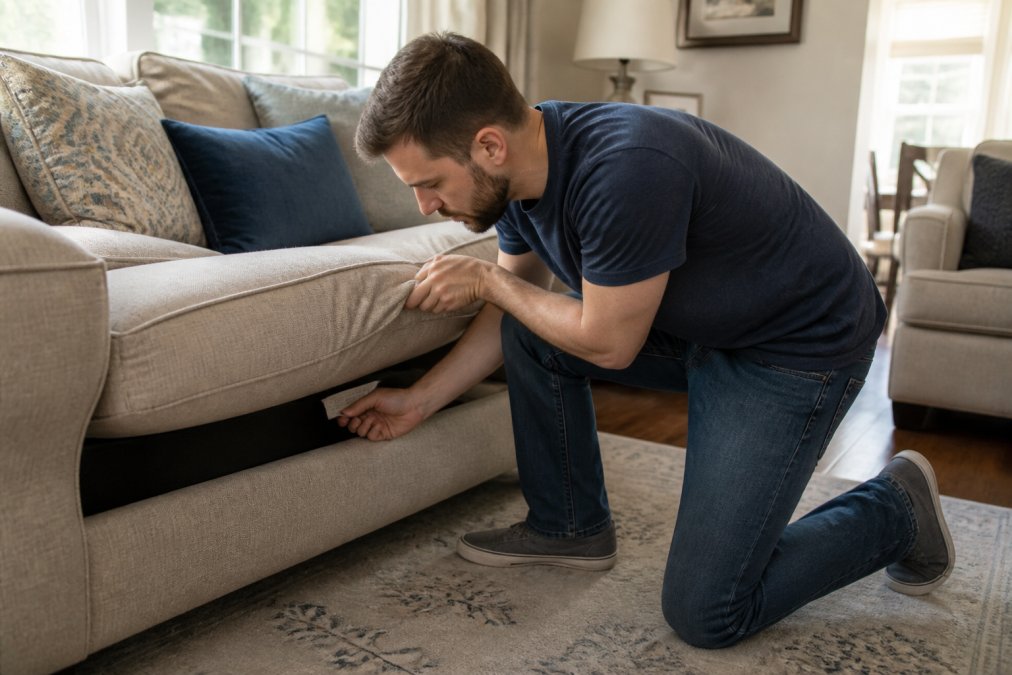
Look under the seat cushions first, then along the back frame and beneath the base. Tags are often stapled to the decking or tucked into a seam, and on some pieces the code is printed on a small white tag sewn into the cushion cover. Check every cushion, a sofa can carry different codes on the seat versus the back. If the tag is missing, treat the fabric as code S until a professional confirms otherwise. That precaution prevents the most expensive mistake in upholstery care: water on a solvent-only textile.
How Often Should You Deep Clean Upholstery?
Most upholstered furniture should be professionally cleaned every 12 to 24 months, according to Pioneer SLO's upholstery maintenance guidance. Households with pets, young children, or allergy sufferers should sit at the shorter end of that range. Bissell's upholstery care guidelines recommend deep cleaning high-traffic furniture roughly every two months, which is a useful benchmark for the sofa everyone actually sits on.
Here is the practical version: vacuum weekly, spot-treat immediately, and deep clean on a schedule tied to use, not to the calendar. A formal living room nobody enters can go two years. The family couch with two dogs cannot.
Safe Methods for Upholstery Cleaning for Sensitive Skin
Upholstery cleaning for sensitive skin starts with residue, not fragrance. What irritates skin and airways is usually the soap left behind, not the cleaner itself. Rinse thoroughly, dry completely, and most reactions disappear.
For a low-irritant approach:
- Use a mild dish soap diluted in warm water, applied sparingly
- Rinse with a clean, barely damp microfiber cloth
- Skip added perfumes, dyes, and fabric softeners
- Ventilate the room during and after cleaning
- Let cushions dry fully before anyone sits down
If a household member has asthma or allergies, professional extraction is often the better call because truck-mounted equipment pulls far more moisture and residue out of the foam than a rented unit can.
Matching Your Cleaning Method to the Fabric
Method follows fiber. Velvet, linen, microfiber, and leather each fail in different ways, and a single generic approach damages at least one of them. The cleaning code tells you what is permitted; the fiber tells you how to apply it.
| Fabric | Water-Based Cleaner | Solvent Cleaner | Steam | Drying Notes |
|---|---|---|---|---|
| Velvet | No | Yes | No | Air dry away from direct heat; brush pile upright while damp |
| Linen | Yes | Yes | Low only | Dry flat or on the frame; never wring |
| Microfiber | Yes | Yes | Yes, below manufacturer limit | Air dry; heat can melt the weave |
| Cotton blend | Yes | Yes | Yes | Air dry; expect some shrinkage on first wash |
| Leather | Damp cloth only | Leather cleaner | No | Condition after cleaning; never saturate |
| Silk | No | Yes | No | Air dry flat; water causes water spots |
Velvet
Velvet is a pile fabric, a forest of short fibers standing upright. Water collapses that pile and leaves a flattened, shiny patch that does not recover. Vacuum with a brush attachment only, using low suction, and treat spots with a solvent cleaner applied to a cloth, working in the direction of the pile. If the pile does get crushed, steam from a distance, never direct contact, can sometimes lift it, but the safer move is to avoid wetting it at all.
Linen
Linen tolerates water-based cleaning, but it wrinkles and shrinks, so keep moisture minimal and dry flat rather than hanging. Do not wring or twist a linen cushion cover; the fibers are strong but the weave distorts. If the cover is removable and the care tag allows it, hand-wash in cool water with mild soap, then press with a warm iron on the reverse side while slightly damp.
Microfiber
Microfiber is the most forgiving common upholstery fabric. It handles water-based cleaners and steam, but as a synthetic weave, heat above the manufacturer's limit can melt or glaze the surface. Keep steam moving, never hold it in one spot, and check the care tag for a temperature ceiling. Microfiber also holds static and attracts lint, so a final pass with a damp cloth helps before guests arrive.
Leather
Leather is not a fabric and should not be treated like one. Wipe with a damp cloth using plain water or a dedicated leather cleaner, then apply a conditioner to keep the hide supple. Never saturate leather, and never use dish soap, which strips the finish. For aniline or unfinished leather, skip water entirely and use a leather-specific product.
Silk and Other Delicate Weaves
Silk, rayon, and viscose are the fabrics most likely to water-spot or lose strength when wet. Treat them as code S unless the tag says otherwise, and use a solvent cleaner applied to a cloth. If the piece is valuable or the stain is set, call a professional, a misstep on silk usually costs the whole cushion.
DataIntelo's upholstery cleaning market research notes that cleaning method selection is now a primary driver of service demand, largely because mismatched DIY methods cause visible damage.
DIY Deep Cleaning Steps for a Guest-Ready Sofa
- Vacuum thoroughly. Use the upholstery attachment on seams, crevices, and under cushions. This removes dry soil before any liquid touches the fabric.
- Spot-test first. Apply your cleaner to a hidden area, wait 10 minutes, and check for color change.
- Treat stains with blotting. Press a microfiber cloth into the stain. Never rub, which pushes soil deeper into the foam.
- Apply cleaner sparingly. Work in small sections with a soft upholstery brush.
- Rinse and extract. Wipe with a clean damp cloth or use a handheld extractor.
- Dry completely. Aim a fan at the furniture and leave cushions propped up. Damp foam is where odor and mold begin.
When to Call a Professional Upholstery Cleaner
Call a professional when the fabric is code S, when odor has soaked into the foam, or when the furniture has not been cleaned in over two years. Pet urine is the clearest case. It wicks into cushion foam and reappears as smell weeks later unless the source is treated at depth.
That is where diagnostic tools matter. UpFront Home Services' case study documented mapping urine deposits with a UV light and moisture probe before treatment, which located contamination standard cleaning would have missed. Professionals also carry extraction equipment that pulls far more moisture out, so furniture dries in hours rather than days.
For Toms River and Ocean County households, Sanctified Carpet & Upholstery Cleaning offers expert upholstery detailing and professional carpet cleaning at very reasonable prices, with bundle deals for multiple rooms or pieces. Pricing depends on fabric, soil level, and the number of items, so send a message for a current quote.
Guests arrive whether the sofa is ready or not. The gap between a rushed spot-clean and a genuine deep clean comes down to method, drying, and knowing when a fabric is out of your depth. Sanctified Carpet & Upholstery Cleaning handles expert upholstery detailing and professional carpet cleaning, with very reasonable prices and bundle deals that make doing the whole room at once affordable. Get started with Sanctified Carpet & Upholstery Cleaning and send a message to schedule your pre-guest cleaning.
Frequently Asked Questions
Can I use Dawn dish soap to clean upholstery?
Dawn can work on fabric coded W or SW, but it is not ideal for all upholstery. The degreasers that cut kitchen grease can strip dyes or leave residue that attracts dirt. If you use it, mix only a few drops in a cup of water, test on a hidden area first, and blot rather than scrub. For S-coded fabric, skip water-based soap entirely and use a solvent cleaner.
How do I know if my upholstery is safe for water-based cleaning?
Check the cleaning code on the furniture tag. W means water-based cleaners are safe. S means solvent-based only. SW means either works. X means vacuum only, no liquids. If the tag is missing, test a hidden spot with a few drops of water and a white cloth. If color transfers or the fabric puckers, treat it as S-coded.
How long does it take for upholstery to dry after deep cleaning?
Most fabric sofas dry in four to six hours with good airflow. Humidity, fabric thickness, and how much water you use all affect drying time. Run a fan or open windows, and avoid sitting on the cushions until they are fully dry. Trapped moisture can cause mildew and odor. Professional equipment often extracts more water and speeds up drying compared to rental units.
How often should I deep clean upholstery if I have pets and kids?
High-traffic furniture in homes with pets or young children benefits from deep cleaning every two to three months, according to maintenance guidelines. Standard households can go 12 to 24 months between professional cleanings. If you are hosting guests soon, a deep clean two to three weeks before their arrival gives the fabric time to dry and any odors to dissipate.