 ultimate-guide
Deep Cleaning Carpets for Allergy Relief: 2026 Guide
Table of Contents
- Why Your Carpet Traps Allergens and How Deep Cleaning Helps
- How to Remove Dust Mites from Carpet
- Steam Extraction vs Dry Cleaning: Which Method Works for Allergies
- Professional Carpet Cleaning vs DIY for Allergies
- The Cost of Whole House Carpet Cleaning
- How Often Should Allergy Sufferers Deep Clean Carpets?
- Choosing the Right Carpet Pad and Equipment for Allergy Relief
- Frequently Asked Questions
Last Updated: September 28, 2026
Why Your Carpet Traps Allergens and How Deep Cleaning Helps
Deep cleaning carpets for allergy relief works because extraction removes the microscopic particles that vacuuming alone leaves behind. Research from the National Center for Biotechnology Information study on flooring and allergens found that carpeted rooms hold significantly higher concentrations of house dust mite allergens than smooth flooring, because carpet fibers act as a reservoir rather than a barrier.
That reservoir effect cuts both ways. The Carpet and Rug Institute's guidance on carpet and indoor air quality notes that effectively cleaned carpets can trap allergens and prevent them from becoming airborne, which means fewer particles reach your breathing zone. At Sanctified Carpet & Upholstery Cleaning, we provide professional and personable cleaning services for residents in Toms River and Ocean County. The carpet that looks fine under normal light is often holding months of pet dander and dust mite matter.
Carpet Fibers, Pile Type, and Allergen Retention
Carpet pile type determines how stubbornly allergens cling to the fiber. Low-pile, tightly constructed carpets in wool or solution-dyed nylon trap fewer allergens and release them more easily during cleaning, according to Carpet Exchange's 2026 guidance on hypoallergenic carpet. High-pile and loosely twisted styles offer more surface area for dust mites and pet dander to settle into, and they hold onto it longer.
How to Remove Dust Mites from Carpet
Removing dust mites from carpet requires three things in sequence: agitation, HEPA filtration, and deep extraction. Skipping any one of them leaves a population behind.
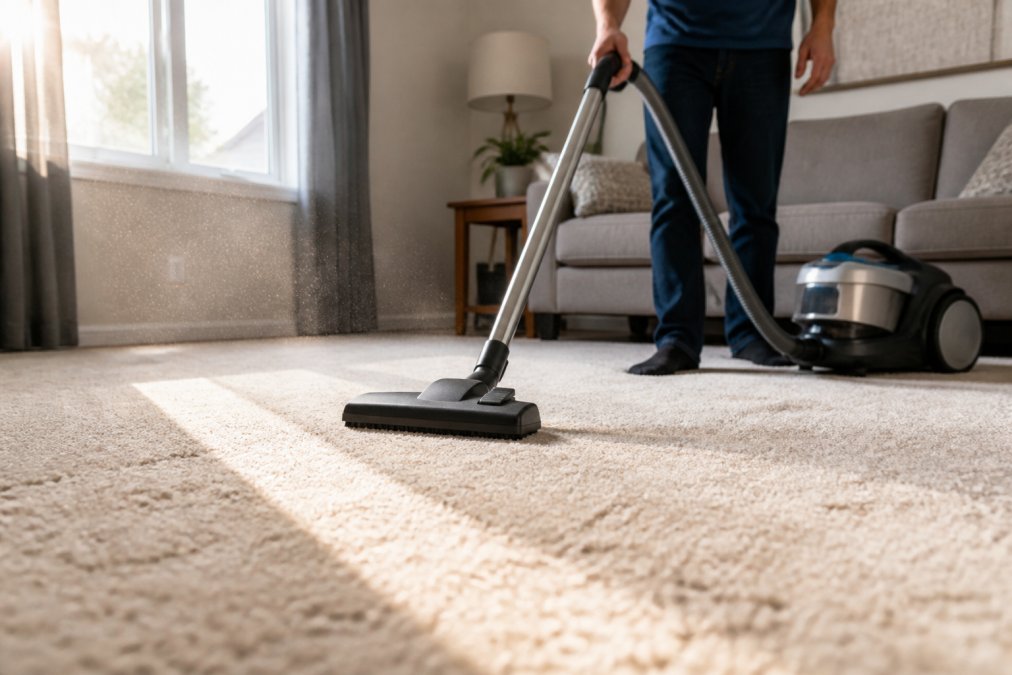
A practical weekly routine looks like this:
- Vacuum high-traffic areas twice weekly with a HEPA-filter machine
- Vacuum under furniture and along baseboards every other week
- Wash throw rugs and pet bedding weekly in hot water
- Schedule professional deep extraction every 6-12 months
- Replace HVAC filters on the manufacturer's schedule
Steam Extraction vs Dry Cleaning: Which Method Works for Allergies
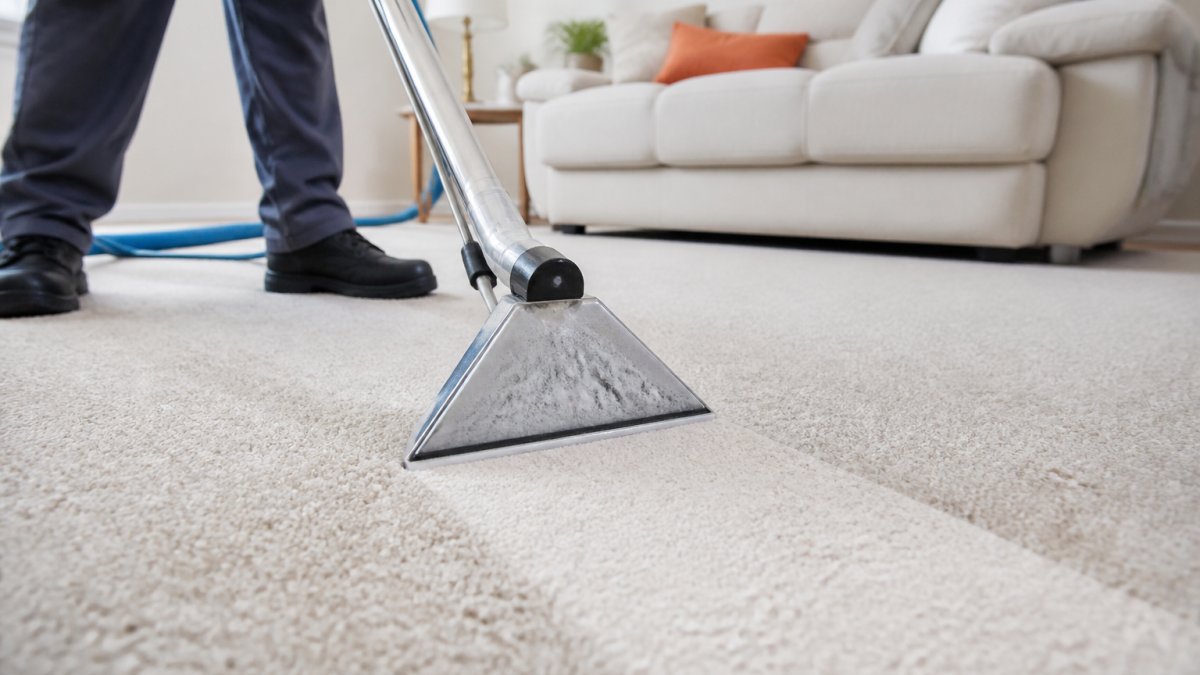
Steam extraction, also called hot-water extraction, is a common method for allergy relief in many homes. Dry cleaning methods also have a place, with moisture control often being a deciding factor.
| Method | Water Use | Drying Time | Best For |
|---|---|---|---|
| Steam extraction | High | 6-12 hours | Deep allergen removal, most homes |
| Dry encapsulation | Low | 1-3 hours | Humid homes, quick turnaround |
| Absorbent powder | Minimal | 30-60 minutes | Light maintenance, sensitive fibers |
| Anti-allergen treatment | None | Immediate | Post-cleaning protection layer |
The Role of Moisture in Mold and Mildew Growth
Moisture is where well-intentioned carpet cleaning goes wrong. Wet cleaning methods can increase mold and dust mite growth if carpets are not dried properly, according to AchooAllergy's 2025 review of cleaning methods.
Professional Carpet Cleaning vs DIY for Allergies
Professional carpet cleaning often utilizes equipment with higher water temperature, stronger suction power, and better drying control compared to typical DIY rental units. Rental machines may run cooler water and weaker extraction, potentially leaving more residue and moisture behind.
Where DIY falls short:
- Water temperature rarely reaches the level needed to neutralize allergens
- Suction power leaves more moisture in the pad
- Residue-free cleaning is difficult without proper rinsing
- No control over drying, which is the biggest risk factor
The Cost of Whole House Carpet Cleaning
The cost of whole house carpet cleaning depends on square footage, carpet condition, number of rooms, and whether upholstery is included. Pricing varies widely by provider, so the only reliable figure is a quote based on your actual space.
Three factors drive the number more than anything else:
- Total cleanable square footage, not house size, since closets and hard flooring do not count
- Soil level and pet damage, which can require pre-treatment or repeat passes
- Add-ons, such as upholstery detailing, stain removal, or anti-allergen treatment
How Often Should Allergy Sufferers Deep Clean Carpets?
Allergy sufferers should deep clean carpets every 6 to 12 months, with 3-6 month intervals for homes with pets or heavy allergen loads. The Carpet Workroom's 2024 maintenance guidelines recommends deep cleaning every 6-12 months to maintain carpet health and allergy relief. The Carpet and Rug Institute's Seal of Approval program guidance extends that to 12-18 months for standard indoor air quality maintenance.
| Household Type | Deep Clean Frequency | Weekly Vacuuming |
|---|---|---|
| No pets, no allergies | Every 12-18 months | Once |
| Mild allergies | Every 6-12 months | Once to twice |
| Pets or children under 5 | Every 3-6 months | Twice |
| Asthma or severe allergies | Every 3 months | Twice, HEPA only |
Choosing the Right Carpet Pad and Equipment for Allergy Relief
Carpet pad selection matters as much as the carpet itself, and most buyers never think about it. The pad is the hidden reservoir: it sits below the fiber you vacuum and above the subfloor, and it is where fine dust mite matter, pet dander, and mold spores accumulate when surface cleaning does not reach them. A pad that holds moisture or traps fine particles works against every other allergy measure in the house.
How Pad Construction Changes Allergen Behavior
Pad density and cell structure determine whether allergens sink in or stay reachable. A dense, low-permeability pad blocks particles from migrating into the subfloor and makes extraction more effective, because the cleaning head can pull from a firmer surface. Open-cell foam pads hold moisture longer after cleaning and allow fine particles to work deeper with each pass, which is the opposite of what an allergy-conscious home needs.
A few practical rules follow from that:
- Match pad thickness to carpet type. Too-thick pad under a low-pile carpet lets the carpet flex and trap grit; too-thin pad under a plush carpet reduces cushioning and can void warranties.
- Choose a pad with a moisture barrier if you live in a humid climate or have had water issues. The barrier keeps subfloor moisture from wicking up into the carpet.
- Avoid rebond pad with visible crumb structure in allergy-focused rooms. The open cells collect fine dust and are hard to dry completely after cleaning.
- Replace pad, not just carpet, when you replace flooring. Old pad carries the allergen load of the previous carpet, and installing new carpet over it reintroduces the problem.
Fiber Science: Why Synthetic and Natural Carpets Behave Differently
Most guides treat all carpet the same. They should not. Solution-dyed nylon and polyester have smooth, non-porous fibers that release particles more readily during extraction, which is why they tend to respond well to hot-water cleaning. Wool and other natural fibers are more porous and can hold moisture and fine allergen matter longer, so they need more careful drying and sometimes gentler cleaning chemistry.
Equipment Choices That Match the Fiber and Pad
Equipment choices follow the same logic. Look for:
- HEPA filtration on any vacuum you use weekly
- Sealed systems that do not exhaust fine particulate matter back into the room
- Powered heads designed for deep-cleaning carpet rather than bare floors
- Adjustable suction and brush height so you can match a delicate wool pile or a dense nylon loop
- Moisture meters to confirm drying before furniture goes back
If you are replacing carpet, the Asthma and Allergy Foundation of America suggests avoiding wall-to-wall carpet entirely in favor of hard flooring or washable throw rugs when a household member has significant allergies. That is worth weighing honestly before you invest in new carpet. If you keep carpet, the combination that works best for allergy relief is a low-pile, tightly constructed synthetic carpet over a dense pad with a moisture barrier, cleaned with a sealed HEPA system and dried with airflow and dehumidification.
Frequently Asked Questions
Does carpet cleaning actually help with allergies?
Yes, when done correctly. Hot-water extraction cleaning removes up to 97% of allergens from carpets, according to USA Clean Master (2024). The Carpet and Rug Institute notes that effectively cleaned carpets trap allergens and prevent them from becoming airborne. However, the American College of Allergy, Asthma & Immunology cautions that relief may not be immediate because cleaning can temporarily stir up particles. For best results, schedule cleaning when you can ventilate the room and stay away for a few hours afterward.
How often should allergy sufferers deep clean their carpets?
Most guidelines suggest every 6 to 12 months for general maintenance, according to Carpet Workroom (2024). For households with allergy sufferers, Bissell (2025) recommends deep cleaning every three to six months to reduce dust and pet dander buildup. The Carpet and Rug Institute recommends every 12 to 18 months for standard indoor air quality. If you have pets, children, or severe allergies, lean toward the more frequent end of that range. Weekly HEPA vacuuming between deep cleans keeps allergen levels down.
Can dust mites survive professional carpet cleaning?
Most dust mites do not survive the high temperatures of steam extraction, which typically exceeds 130°F. However, the National Center for Biotechnology Information (2018) found that carpets act as a reservoir for dust mite allergens, and these particles can remain even after cleaning if the process is incomplete. Professional equipment with strong suction removes more allergen matter than consumer machines. To keep dust mites from returning, maintain low indoor humidity and vacuum with a HEPA filter at least once a week.
Is professional carpet cleaning worth it compared to renting a machine?
Professional cleaning uses truck-mounted steam extraction with suction power that rental units cannot match. It also includes pre-treatment and post-cleaning drying protocols that reduce moisture-related mold risk. DIY rental machines cost less upfront but often leave carpets damp for hours, which can encourage mildew growth. For allergy sufferers, the deeper extraction and faster drying of professional service typically deliver better results. Pricing depends on square footage and condition, so request a quote for your specific home.