 listicle
Best Upholstery Cleaning for Pet Stains: 2026 Guide
Table of Contents
- Best Upholstery Cleaning for Pet Stains: What Actually Works
- Quick Comparison: Top Upholstery Cleaning Options for Pet Messes
- How We Evaluated Upholstery Cleaners for Pet Stains
- Best Enzyme Cleaner for Pet Urine on Furniture
- Top Portable Spot Cleaners for Immediate Pet Stain Treatment
- When to Choose Professional Upholstery Cleaning for Pet Odors
- Understanding Upholstery Cleaning Cost for Pet Stains
- Step-by-Step Guide to Removing Pet Stains from Upholstery
- Frequently Asked Questions
Last Updated: September 8, 2026
Best Upholstery Cleaning for Pet Stains: What Actually Works
Pet stains on upholstery are a different problem than carpet stains. Upholstery fabric sits directly over foam padding, so liquids soak deeper, dry slower, and leave odor-causing bacteria embedded in layers you cannot see. The best upholstery cleaning for pet stains combines the right enzyme chemistry with the correct extraction method.
The global carpet and upholstery cleaning services market was valued at USD 61.43 billion in 2025 and is projected to grow at a compound annual growth rate of 5.5% through 2026, according to Stellar Market Research industry analysis. That growth tracks with what we see daily: more households own pets, and more of those pets have accidents on furniture. The good news is that modern enzyme-based cleaners and extraction machines handle these messes effectively when used correctly. Below, we break down the top options for 2026, what to use for fresh versus dried stains, and when professional upholstery cleaning for pet odors is worth the investment.
Quick Picks:
- Best Overall Approach: Professional upholstery cleaning for deep-set pet odors and fabric safety
- Best Enzyme Cleaner for Pet Urine on Furniture: A targeted enzymatic spray for spot treatment
- Best Portable Spot Cleaner: Bissell Little Green Machine for immediate DIY response
- Best Budget Option: DIY enzyme spray for fresh accidents caught early
Quick Comparison: Top Upholstery Cleaning Options for Pet Messes
| Option | Best For | Method | Drying Time | Cost Level |
|---|---|---|---|---|
| Enzyme spot spray | Fresh accidents, small marks | Enzymatic breakdown | 1-2 hours | Low |
| Portable spot cleaner | Daily pet messes, spot treatment | Extraction with suction | 4-8 hours | Medium |
| Professional cleaning | Deep odors, large areas, delicate fabric | Hot water extraction | 6-12 hours | Varies by scope |
| Steam cleaning | Sanitizing, bacteria removal | High-temperature steam | 6-12 hours | Medium-high |
Choosing between these options depends on how fresh the stain is, what fabric you are dealing with, and whether odor has already soaked into the padding. Enzymatic cleaners are increasingly recommended for breaking down organic pet waste at the molecular level, as noted in Good Housekeeping's 2026 upholstery cleaner testing. Portable machines handle the physical extraction, while professional services bring industrial suction and fabric-safe techniques that home units cannot match.
How We Evaluated Upholstery Cleaners for Pet Stains
Our evaluation draws from 2026 lab-based testing and industry reporting rather than anecdotal claims. Consumer Reports' 2026 carpet cleaner testing confirmed that top-performing machines effectively remove tough pet-related stains from upholstery fabrics through extraction methods. We weighed four criteria: stain-lifting power on pet messes, odor neutralization, fabric safety, and ease of use.
In 2026 lab-based testing, the Bissell Little Green Machine was identified as the "Best Overall" upholstery cleaner, specifically noted for its ability to use enzymes to break down pet, food, and other deep-set stains (Good Housekeeping). For pet owners, the Bissell ProHeat 2X Revolution Pet Pro Plus also ranked as a top overall carpet and upholstery cleaner, using multiple rows of scrubbing brushes to address pet-specific messes (Forbes pet carpet cleaner rankings).
Best Enzyme Cleaner for Pet Urine on Furniture
The best enzyme cleaner for pet urine on furniture contains live bacterial cultures designed to digest uric acid crystals, the source of recurring pet odor. Unlike chemical cleaners that mask smells, enzymatic formulas break down the waste so the odor does not return when the fabric gets damp again.
Professional recommendations for 2026 emphasize using spot removers that specifically target and break down bacteria at the source to prevent permanent discoloration on upholstery (EXTERNAL_LINK: Stanley Steemer [upholstery cleaning guide | stanleysteemer.com]). When applying an enzyme cleaner, saturate the affected area thoroughly but avoid soaking through to the padding. Let the solution dwell for 10-15 minutes, then blot with a clean cloth. Do not scrub, as that pushes the stain deeper into the fibers.
Top Portable Spot Cleaners for Immediate Pet Stain Treatment
For pet owners who want to respond to accidents the moment they happen, portable extraction machines are the most practical DIY tool. The Bissell Little Green Machine stands out as the best overall upholstery cleaner in 2026 testing because it combines enzyme application with suction power to lift both the stain and the cleaning solution out of the fabric (Good Housekeeping). High market demand for portable units like the Bissell Little Green and Hoover CleanSlate XL reflects their effectiveness for spot-treating pet accidents, according to The Spruce's 2026 cleaning tool coverage.
These machines work best on fresh messes, but they do not have the suction power or water temperature of commercial equipment.
When to Choose Professional Upholstery Cleaning for Pet Odors
Professional upholstery cleaning for pet odors becomes necessary when the smell persists after DIY treatment or when the stain has soaked into the foam padding. Urine that reaches the cushion core cannot be extracted with a portable machine, and the bacteria will continue to produce odor every time the cushion is compressed.
A professional service brings commercial extraction equipment, fabric-safe cleaning agents, and the experience to assess whether a cushion needs deep extraction or replacement. For households with multiple pets, scheduling professional upholstery cleaning every 6-12 months prevents odors from becoming embedded.
Understanding Upholstery Cleaning Cost for Pet Stains
Upholstery cleaning cost for pet stains depends on the number of pieces, the type of fabric, the severity of the soiling, and whether odor removal requires specialized treatment. Professional services typically price by the piece or by the hour, with additional charges for heavy pet odor treatment or fabric protection.
Pricing for professional upholstery cleaning services depends on several factors.
| Service | Typical Price Range | Notes |
|---|---|---|
| Single sofa (standard fabric) | $100 - $250 | Price varies by size and fabric type |
| Loveseat | $80 - $200 | Often bundled with sofa at a discount |
| Armchair or accent chair | $60 - $150 | |
| Cushion replacement (per cushion) | $50 - $150 | Needed when urine has soaked into the foam core |
| Pet urine treatment add-on | $50 - $150 per piece | Includes enzyme pre-treatment and odor neutralization |
| Fabric protection application | $50 - $100 per piece | Adds a protective barrier against future stains |
Urban areas run 20-30% higher, while rural markets may be 10-15% lower. The key variable is whether the provider includes pet-specific treatment in that quote or adds it as a surcharge.
A professional cleaning that includes enzyme pre-treatment, hot water extraction, and odor neutralization can be more economical than a "quick clean" that only surface-cleans the fabric and leaves uric acid crystals in the padding.
For DIY comparison, here is what home treatment options may cost:
- Enzyme spray (32 oz bottle): These typically treat roughly 10-15 fresh accidents on a spot level.
- Portable spot cleaner (e.g., Bissell Little Green): These have an upfront cost, and consumables run per refill.
- Rental machine (from grocery or hardware store): These are typically rented per day, plus the cost of cleaning solution. Rental machines are designed for carpets, not upholstery, and their aggressive brushes can damage delicate furniture fabrics.
- Professional cleaning: This includes equipment, labor, and expertise.
A mid-range sofa can be a significant investment. If pet urine penetrates the foam padding and the odor cannot be removed, that sofa is effectively ruined. Professional cleaning periodically is a fraction of replacement cost.
Contact us through our website for current pricing and a tailored quote.
Step-by-Step Guide to Removing Pet Stains from Upholstery
Act fast, use the right chemistry, and extract thoroughly. Here is how to handle a fresh pet accident on upholstery:
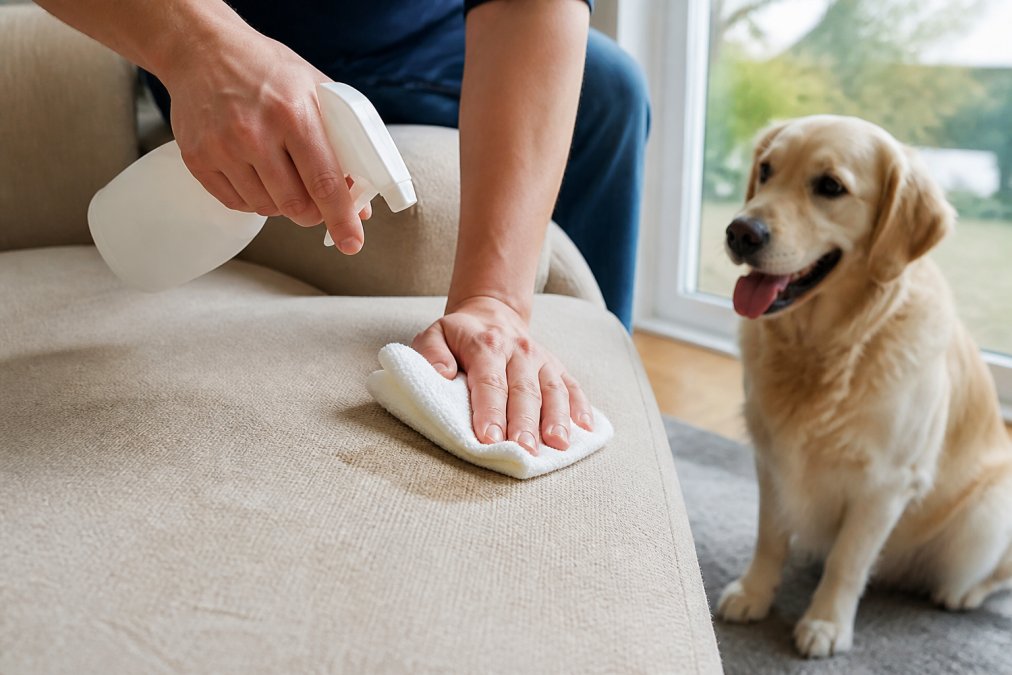
- Blot, do not rub. Use paper towels or a clean white cloth to absorb as much liquid as possible. Press down firmly and lift. Rubbing pushes the urine deeper into the fabric and can damage upholstery fibers.
- Test for colorfastness. Apply your enzyme cleaner to an inconspicuous area first, such as the underside of a cushion. Wait five minutes and check for color bleeding or fabric damage.
- Apply the enzyme cleaner. Saturate the stained area with a pet-safe enzymatic formula. Do not drown the fabric, but ensure the solution penetrates the fibers where the bacteria live.
- Let it dwell. Allow the enzyme cleaner to sit for 10-15 minutes. This is when the bacteria digest the uric acid crystals. Rushing this step leaves odor behind.
- Extract the solution. Use a portable spot cleaner or blot with clean cloths to remove the cleaning solution and dissolved waste. Extraction is what separates a clean result from a wet spot that dries into a crust.
- Dry thoroughly. Speed up drying with fans or open windows. Upholstery that stays damp for more than 24 hours risks mold growth and recurring odor.
- Evaluate the result. If the stain or odor persists after drying, the urine has likely reached the padding. Professional upholstery cleaning for pet odors is the next step.
Fabric-Specific Adjustments: What Works on Velvet, Microfiber, and More
The fabric weave, fiber type, and backing material determine how much moisture you can safely apply and how aggressively you can extract. Here is what changes based on what your furniture is made of:
Microfiber (polyester blends): The most forgiving upholstery fabric for pet stains. It is tightly woven and resists liquid penetration, giving you more time to blot. Use a 50/50 water and white vinegar solution for fresh urine, then follow with an enzyme cleaner. Dry with a fan; microfiber dries in 2-4 hours.
Cotton and cotton blends: Absorbent and prone to wicking, meaning the stain spreads outward. Blot from the outside edge toward the center. Use less liquid than you think you need, cotton holds moisture against the padding and can shrink if over-wetted.
Velvet (including polyester velvet): The nap, the direction the fibers lie, is everything. Rubbing against the nap crushes the fibers permanently. Blot only, in the direction of the nap, using a minimal amount of enzyme cleaner labeled safe for velvet. After cleaning, brush gently with a dry soft brush to restore the nap.
Silk and silk-blends: Never apply water-based cleaners to silk upholstery. Water causes permanent water rings and fiber shrinkage. For pet accidents on silk, blot dry immediately, then use a solvent-based cleaner (dry-cleaning fluid) on a clean cloth. Silk upholstery with pet stains should always be handled by a professional specializing in delicate fabrics.
Leather and faux leather: Pet urine does not soak into leather the way it does into fabric, but it can damage the finish and cause cracking. Wipe immediately with a damp cloth, then use a leather-safe cleaner. Enzyme cleaners formulated for fabric can strip leather's protective coating.
Acrylic and olefin (outdoor fabrics): These synthetic fibers resist moisture and stains well. You can use stronger enzyme concentrations and more aggressive extraction. These fabrics are the easiest to clean at home.
Visual Demonstration: What the Process Looks Like on a Real Stain
Minute 0: The stain is wet, roughly 4 inches in diameter. The urine has not yet penetrated the tight weave. You have approximately 10-15 minutes before the liquid reaches the foam padding.
Minute 2: You blot with paper towels, pressing firmly. The paper towels absorb about 70% of the liquid. The stain is now damp, not wet.
Minute 5: You apply the enzyme cleaner. On microfiber, the solution beads on the surface rather than soaking in immediately. You gently work it in with your fingertips (not a brush) to help it reach the fibers.
Minute 20: After the 15-minute dwell time, the enzyme has broken down the uric acid. You extract with a portable spot cleaner. The water pulled back up is slightly discolored, that is the dissolved waste.
Hour 4: After fan drying, the area is completely dry. No visible stain. No odor. The microfiber nap is undisturbed because you did not scrub.
For dried or old stains, rehydrate the area with warm water first to dissolve the crystallized uric acid, then apply the enzyme cleaner and follow the same steps. Old stains may require multiple enzyme applications over several days before the odor fully disappears.
Catch accidents quickly, treat them with the right enzyme chemistry, and schedule professional deep cleaning periodically to maintain fabric health.
Frequently Asked Questions
What is the best upholstery cleaner for removing pet stains?
The best upholstery cleaning for pet stains often combines an enzymatic cleaner with a portable extraction machine. In 2026 lab tests, the Bissell Little Green Machine was rated best overall for upholstery because it uses enzymes to break down pet, food, and deep-set stains. For immediate spot treatment, pair a quality enzymatic spray with a portable spot cleaner to lift the stain and remove odor at the source.
How to get pet stains out of fabric couch?
Start by blotting the fresh stain with a dry paper towel to absorb excess moisture. Apply an enzymatic cleaner designed for pet urine, ensuring the fabric is saturated but not soaked. Let it sit for the time specified on the label so the enzymes can break down the bacteria. Then, use a portable spot cleaner to extract the solution. Always test on a hidden area first to confirm colorfastness.
Can professional upholstery cleaning remove deep-set pet odors?
Yes, professional upholstery cleaning for pet odors can remove deep-set smells that DIY methods miss. Professionals use industrial-grade extraction equipment and specialized spot removers that break down bacteria at the source, preventing permanent discoloration and lingering odors. This approach is recommended after immediate spot treatment to ensure fabric integrity and thorough cleaning, especially for older or set-in stains.
Is it safe to use enzyme cleaners on all upholstery fabrics?
Enzyme cleaners are generally safe for most synthetic fibers like polyester and nylon, which are common in modern furniture. However, natural fibers such as silk, wool, or delicate antique fabrics require extra caution. Always check the manufacturer's care tag and test the cleaner on a hidden area to verify colorfastness before applying it to the stain. When in doubt, consult a professional upholstery cleaning service.