 listicle
Best Carpet Cleaning Methods for Families
Table of Contents
- Hot Water Extraction: The Most Thorough Carpet Cleaning Method
- Steam Cleaning vs. Dry Cleaning: Which Works Better for Families
- How to Remove Red Wine Stain from Carpet Naturally
- Safe Carpet Cleaning Solutions for Pets and Children
- Professional Carpet Cleaning Frequency for Busy Households
- DIY vs. Professional Carpet Cleaning: Cost and Effectiveness
- Maintaining Your Carpet Between Deep Cleans
- Frequently Asked Questions
Last Updated: September 4, 2026
Families with young children and pets live on their carpets, which means spills, tracked-in dirt, and allergy triggers are a constant reality. A survey of 67,100 customers by EXTERNAL_LINK: Angi's customer feedback on [carpet cleaning methods | angi.com] found that steam cleaning and shampooing are the most popular approaches, but choosing the right one depends on your household's specific needs. This guide from Sanctified Carpet & Upholstery Cleaning breaks down the best carpet cleaning methods for families, helping you balance deep sanitation, drying time, and safety for kids and pets.
The stakes go beyond appearances. Professional hot water extraction can remove up to 96.5% of dirt, soiling, and allergens according to Stanley Steemer's performance metrics, which directly impacts indoor air quality for allergy sufferers. Below, we'll compare the leading techniques, explain which ones are safe for your children and animals, and give you a practical maintenance schedule that keeps your carpets fresh between professional visits.
TL;DR:
- Hot water extraction is the most thorough method for deep cleaning and allergen removal
- Steam cleaning outperforms dry cleaning for households with pets and active kids
- Natural solutions like vinegar and baking soda handle fresh stains safely
- Professional cleaning every 6-12 months extends carpet life significantly for busy families
- Routine vacuuming and immediate spot treatment are the cheapest "methods" you can use
Hot Water Extraction: The Most Thorough Carpet Cleaning Method
Hot water extraction is the industry standard for a reason. This method injects heated cleaning solution deep into the carpet pile, then immediately extracts it along with dissolved dirt, bacteria, and allergens. Most major carpet manufacturers recommend this process to maintain carpet health and appearance, as noted by Zerorez's analysis of carpet cleaning standards.
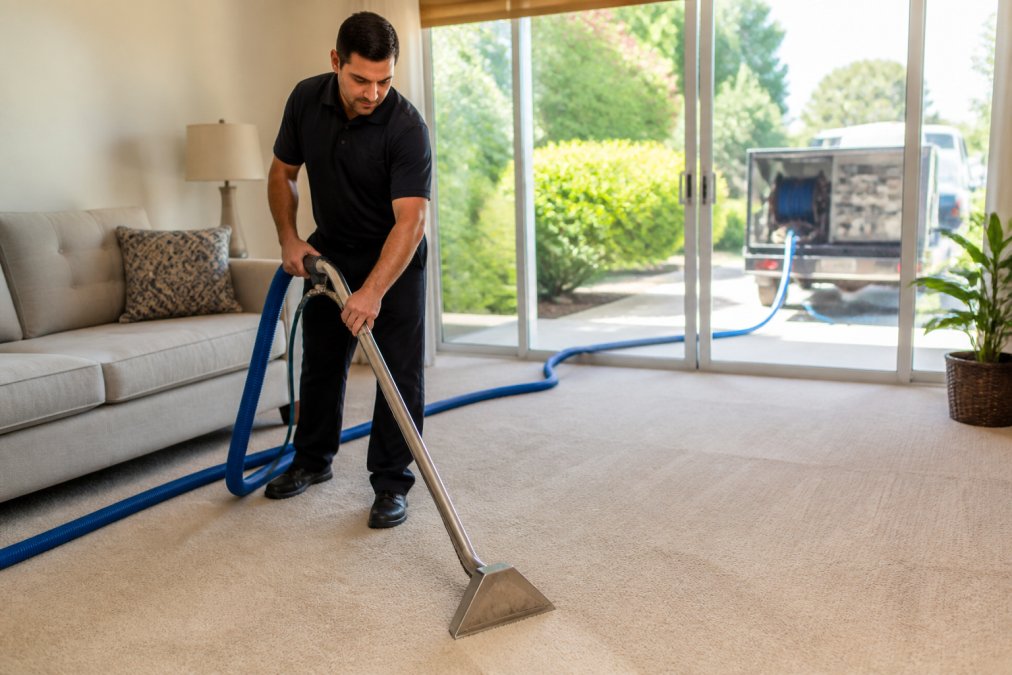
For families, the key advantage is residue-free results. Unlike methods that leave sticky soap behind, hot water extraction rinses the carpet thoroughly, which means less resoiling and fewer trapped particles that trigger allergies. The tradeoff is drying time. Expect 4 to 6 hours before the carpet is fully dry, longer in humid conditions. Running fans and opening windows speeds this up considerably.
Steam Cleaning vs. Dry Cleaning: Which Works Better for Families
When comparing carpet cleaning methods, steam cleaning consistently wins for households with children and pets. Professional consensus identifies dry cleaning as the least effective method compared to hot water extraction, according to Thumbtack's professional cleaning analysis. Dry cleaning relies on chemicals that encapsulate dirt, which are then vacuumed away, but it leaves residue in the carpet pile and doesn't address deep-set bacteria or odors.
Steam cleaning, which is another name for hot water extraction, penetrates the carpet fibers and flushes out what dry methods miss. It also handles pet accidents more effectively by neutralizing odor-causing bacteria at the source.
| Method | Penetration Depth | Residue Left Behind | Drying Time | Best For |
|---|---|---|---|---|
| Hot Water Extraction | Deep | Minimal | 4-6 hours | Deep cleans, allergens, pet odors |
| Dry Cleaning | Surface | Moderate | 1-2 hours | Quick touch-ups, light traffic |
| Shampooing | Moderate | High | 6-12 hours | Heavy soil, budget cleaning |
| Encapsulation | Moderate | Low | 1-3 hours | Maintenance between deep cleans |
How to Remove Red Wine Stain from Carpet Naturally
One of the best carpet cleaning methods for families is knowing how to handle fresh stains without harsh chemicals. Red wine is a classic panic moment, but a natural approach works remarkably well. The key is acting immediately before the wine sets into the fibers.
- Blot, don't rub. Press a clean white cloth or paper towel firmly onto the stain to absorb as much liquid as possible.
- Apply distilled vinegar. Mix one part distilled vinegar with two parts cool water. Apply the solution to the stain and let it sit for 5 minutes.
- Blot again. The vinegar breaks down the wine's pigments. Continue blotting until no more color transfers to your cloth.
- Sprinkle baking soda. Cover the area with a generous layer of baking soda, which absorbs remaining moisture and odor.
- Vacuum after drying. Once the baking soda is completely dry, usually within a few hours, vacuum it up. The stain should be gone.
For older, set-in wine stains, this DIY approach may not be enough. The Good Housekeeping Institute's carpet cleaner testing found that even top-rated home machines struggle with old stains, which is where professional intervention becomes necessary.
Safe Carpet Cleaning Solutions for Pets and Children
Safety is the top concern for parents and pet owners when choosing carpet cleaning methods. Many commercial cleaning products contain fragrances, dyes, and solvents that can irritate sensitive skin and respiratory systems. For households with toddlers who crawl and pets who lick the floor, residue-free and pH-balanced solutions are essential.
Safe carpet cleaning solutions for pets and children start with simple ingredients you already own. Distilled vinegar neutralizes odors without toxic fumes. Baking soda deodorizes naturally. Hydrogen peroxide diluted with water handles protein-based stains like blood or milk, but test it first since it can lighten some carpet colors.
When professional cleaning is needed, ask your provider about the products they use. At Sanctified Carpet & Upholstery Cleaning, we prioritize methods that leave carpets fresh without harsh chemical buildup, so your family can get back to normal life quickly. Our approach focuses on thorough extraction rather than heavy detergent application, which means less residue for little hands and paws to encounter.
Professional Carpet Cleaning Frequency for Busy Households
How often should you schedule professional carpet cleaning? The answer depends on your household's traffic and who lives in it. The Carpet and Rug Institute recommends periodic professional intervention to maintain carpet performance and appearance, as documented on The Carpet and Rug Institute's recommendations.
For busy families with children and pets, a professional deep clean every 6 to 12 months is the sweet spot. This frequency removes the embedded dirt and allergens that regular vacuuming misses. If anyone in your home has allergies or asthma, lean toward the 6-month end of that range. Households with multiple pets may need professional cleaning every 3 to 4 months, particularly if animals have accidents indoors.
| Household Type | Professional Cleaning Frequency | Vacuuming Frequency |
|---|---|---|
| Single person, no pets | Every 12-18 months | 1-2 times per week |
| Couple, no pets | Every 12 months | 1-2 times per week |
| Family with children | Every 6-12 months | 2-3 times per week |
| Family with pets | Every 3-6 months | 3-4 times per week |
| Allergy or asthma sufferers | Every 3-6 months | 3-4 times per week |
DIY vs. Professional Carpet Cleaning: Cost and Effectiveness
The rental machine at the grocery store costs far less than a professional service, but the results are not comparable. Consumer Reports lab-tested carpet cleaners from brands like Bissell, Hoover, and Shark to evaluate stain removal and ease of operation. Their findings, along with testing from the Good Housekeeping Institute, show that home machines have improved significantly, but they still can't match the extraction power of professional equipment.
Home machines like the Bissell Revolution HydroSteam earned top marks for removing both old and new stains in expert testing. The Hoover SmartWash Pet Automatic Carpet Cleaner was recognized as the best value option for residential maintenance. These tools handle spot cleaning and maintenance well. The limitation is water temperature and suction power. Professional truck-mounted units heat water to higher temperatures and extract more moisture, which means faster drying and deeper cleaning.
For families weighing the cost-benefit, consider this: DIY machines cost between $150 and $300 upfront or $30 to $50 per rental session. Professional cleaning costs more per visit but delivers superior results and saves your time. The real question is whether you're doing maintenance or addressing deep-set problems. Maintenance can be DIY. Pet odors, allergy flare-ups, and high-traffic areas need professional attention.
Sanctified Carpet & Upholstery Cleaning offers bundle deals that make professional service more accessible for budget-conscious families in Ocean County. When you compare the cost of repeated rentals plus your own labor, professional cleaning often comes out ahead in both results and convenience.
Maintaining Your Carpet Between Deep Cleans
The best carpet cleaning methods for families include a daily routine that prevents dirt from embedding in the first place. Professional cleaning every 6 to 12 months is essential, but what you do between those visits determines how long your carpet looks and performs well.
Vacuum strategically. High-traffic areas like hallways, entryways, and living room paths need vacuuming 3 to 4 times per week. Less-used areas can go once a week. Use a vacuum with a HEPA filter to capture allergens rather than recirculating them.
Treat spots immediately. The longer a stain sits, the harder it is to remove. Keep a spray bottle of diluted vinegar and a box of baking soda in a cabinet near your main living area so you can respond to spills within minutes.
Use entry mats. Place absorbent mats at every exterior door. This single habit reduces the dirt tracked onto your carpets by a significant margin. Wash the mats monthly to keep them effective.
Rotate furniture. Heavy sofas and tables compress carpet fibers over time. Moving furniture slightly every few months lets the pile recover and prevents permanent matting.
Deodorize naturally. Sprinkle baking soda over carpets, let it sit for 15 minutes, then vacuum thoroughly. This neutralizes odors without introducing synthetic fragrances that can irritate sensitive noses.
Keeping carpets clean in a busy household is an ongoing challenge, but the right approach makes it manageable. Hot water extraction remains the gold standard for deep cleaning, while natural spot treatments handle daily messes safely around children and pets. Professional cleaning every 6 to 12 months protects your carpet investment and your family's indoor air quality.
At Sanctified Carpet & Upholstery Cleaning, we specialize in professional carpet cleaning and expert upholstery detailing for families throughout Toms River and Ocean County. Our team combines thorough hot water extraction with a personable, budget-friendly approach, and our bundle deals make refreshing your entire home more affordable. Send a message to schedule your cleaning and see the difference professional care makes.
Frequently Asked Questions
What is the most effective carpet cleaning method for families with pets?
Hot water extraction removes up to 96.5% of dirt, allergens, and pet odors, making it a thorough carpet cleaning method. This professional-grade approach works by injecting heated water into carpet fibers and immediately extracting it, pulling out embedded pet hair, dander, and urine residue that DIY methods miss. For households with multiple pets, professional hot water extraction combined with regular vacuuming every 3-5 days offers good results for maintaining indoor air quality and eliminating persistent odors.
How often should families deep clean their carpets professionally?
Families with children and pets should schedule professional carpet cleaning every 6-12 months, depending on traffic and household size. High-traffic areas, like entryways, living rooms, and hallways, benefit from cleaning every 6 months, while less-used bedrooms can go 12 months between professional services. Regular vacuuming between professional cleanings (3-5 times weekly in high-traffic areas) extends carpet life and reduces the buildup of allergens and stains that accumulate faster in active households.
Are natural cleaning solutions safe for carpets with young children and pets?
Yes, natural cleaning solutions like baking soda and distilled vinegar are safe alternatives for families with young children and pets. Baking soda absorbs odors and can be vacuumed up after sitting for 15-30 minutes, while a vinegar-water solution (1 part white vinegar to 3 parts water) works for spot treatments without leaving toxic residue. These methods avoid harsh chemicals and are pet-safe, though they may not match the deep-cleaning power of professional hot water extraction for heavily soiled carpets or stubborn stains.
Will professional carpet cleaning remove pet urine smell permanently?
Professional hot water extraction can remove up to 96.5% of pet urine odors by flushing out urine salts and bacteria trapped deep in carpet fibers and padding. However, if urine has saturated the padding underneath, some odor may return unless the padding is replaced. To prevent this, address accidents immediately with natural solutions or enzyme-based treatments, and schedule professional cleaning every 6-12 months. Combining professional cleaning with proper spot treatment and regular maintenance gives families a good chance of addressing pet odors long-term.
This article was written using GrandRanker
Frequently Asked Questions
What is the most effective carpet cleaning method for families with pets?
Hot water extraction removes up to 96.5% of dirt, allergens, and pet odors, making it a thorough carpet cleaning method. This professional-grade approach works by injecting heated water into carpet fibers and immediately extracting it, pulling out embedded pet hair, dander, and urine residue that DIY methods miss. For households with multiple pets, professional hot water extraction combined with regular vacuuming every 3-5 days offers good results for maintaining indoor air quality and eliminating persistent odors.
How often should families deep clean their carpets professionally?
Families with children and pets should schedule professional carpet cleaning every 6-12 months, depending on traffic and household size. High-traffic areas—like entryways, living rooms, and hallways—benefit from cleaning every 6 months, while less-used bedrooms can go 12 months between professional services. Regular vacuuming between professional cleanings (3-5 times weekly in high-traffic areas) extends carpet life and reduces the buildup of allergens and stains that accumulate faster in active households.
Are natural cleaning solutions safe for carpets with young children and pets?
Yes, natural cleaning solutions like baking soda and distilled vinegar are safe alternatives for families with young children and pets. Baking soda absorbs odors and can be vacuumed up after sitting for 15-30 minutes, while a vinegar-water solution (1 part white vinegar to 3 parts water) works for spot treatments without leaving toxic residue. These methods avoid harsh chemicals and are pet-safe, though they may not match the deep-cleaning power of professional hot water extraction for heavily soiled carpets or stubborn stains.
Will professional carpet cleaning remove pet urine smell permanently?
Professional hot water extraction can remove up to 96.5% of pet urine odors by flushing out urine salts and bacteria trapped deep in carpet fibers and padding. However, if urine has saturated the padding underneath, some odor may return unless the padding is replaced. To prevent this, address accidents immediately with natural solutions or enzyme-based treatments, and schedule professional cleaning every 6-12 months. Combining professional cleaning with proper spot treatment and regular maintenance gives families a good chance of addressing pet odors long-term.