 listicle
6 Benefits of Professional Upholstery Cleaning Services
Table of Contents
- Why Professional Upholstery Cleaning Matters for Your Home
- 1. Removes Allergens and Improves Indoor Air Quality
- 2. Extends the Lifespan of Your Furniture
- 3. Eliminates Stubborn Stains and Embedded Odors
- 4. Restores Fabric Appearance and Color
- 5. Upholstery Cleaning for Sensitive Skin and Allergy Sufferers
- 6. How Often to Clean Upholstered Furniture
- Professional Methods vs. DIY: What Actually Works
- Frequently Asked Questions
Last Updated: September 5, 2026
Why Professional Upholstery Cleaning Matters for Your Home
Your sofa holds more than memories. Every sit-down traps dust, dead skin cells, pet dander, and pollen deep within the fabric fibers, where regular vacuuming simply cannot reach. High-quality upholstery cleaning can reduce common household allergens by up to 90 percent, according to Guardian Carpet's findings on residential cleaning benefits. That single statistic explains why the benefits of professional upholstery cleaning services extend far beyond surface-level appearance.
At Sanctified Carpet & Upholstery Cleaning, we have seen how embedded soil and allergens accumulate in furniture that looks perfectly fine from across the room. Professional upholstery cleaning is the process of using hot water extraction and specialized equipment to remove deep-set dirt, bacteria, and allergens from fabric furniture. The United States carpet and upholstery cleaning industry is now valued at $6.9 billion in 2026, according to IBISWorld's industry analysis, reflecting how many households recognize that professional care protects their largest furniture investments.
Below, we break down the six concrete ways professional upholstery cleaning improves your home, your health, and your furniture's longevity, plus how often you should schedule it.
1. Removes Allergens and Improves Indoor Air Quality
Professional upholstery cleaning is one of the most effective ways to improve the air you breathe inside your home. Sofas and armchairs act as filters, capturing airborne particles every time air moves past them.
Over time, those captured particles become embedded soil that re-releases into the air whenever someone sits down or a fan blows across the surface. Professional equipment extracts this debris rather than simply pushing it deeper into the cushion. The result is measurable: the same Guardian Carpet analysis found allergen reductions of up to 90 percent after high-quality cleaning.
For families with pets, this matters even more. Pet dander and proteins in pet saliva and urine accumulate in upholstery and trigger reactions year-round. Professional cleaning removes these irritants at the source rather than masking them with fragrances.
2. Extends the Lifespan of Your Furniture
The global carpet and upholstery cleaning services market is projected to grow at a compound annual growth rate of 5.5 percent from 2026 through 2032, according to Stellar Market Research's market projection. That growth is driven largely by consumers who understand that professional maintenance protects high-value furniture assets.
Grit and sand act like sandpaper on fabric fibers. Every time you sit down, those abrasive particles grind against the weave, causing premature wear, fraying, and thinning. Professional cleaning removes this embedded soil before it can damage the fabric's structural integrity.
A sofa is often the second-most-expensive item in a home after a bed. Spending a modest amount on periodic professional upholstery cleaning can add years of usable life to that investment, preserving the fibers' strength and resilience.
3. Eliminates Stubborn Stains and Embedded Odors
DIY spot treatments frequently fail because they only address the surface of a stain. Spills penetrate deep into upholstery padding, and if not extracted properly, they leave residue that attracts more dirt and creates a breeding ground for bacteria and odors.
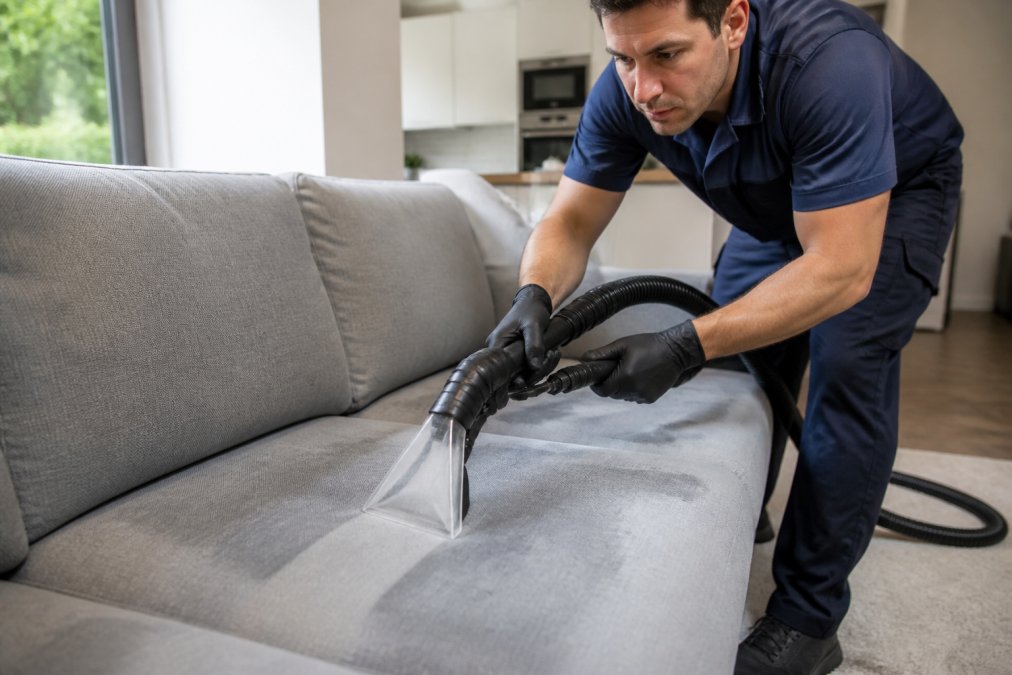
Professional upholstery cleaning uses hot water extraction, often called steam cleaning, which forces cleaning solution deep into the fabric and then extracts it along with the dissolved stain and odor-causing compounds. This process handles everything from coffee spills to pet accidents, neutralizes odors at their source, and removes the sticky residue that makes furniture feel dirty again within weeks.
The global market for these services reached an estimated USD 69.98 billion in 2026, according to Market Data Forecast's global market estimate, as households increasingly turn to professionals for stain extraction and upholstery sanitization that over-the-counter products cannot match.
4. Restores Fabric Appearance and Color
Dull, flat-looking upholstery is rarely a sign that the color has faded. More often, a thin film of body oils, dust, and environmental grime coats every fiber, muting the fabric's original vibrancy.
Professional cleaning strips away this film, revealing the true color and texture beneath, often eliminating the perceived need for replacement. This is especially valuable for homeowners preparing for guests or events who want their living space to feel renewed without the expense of new furniture.
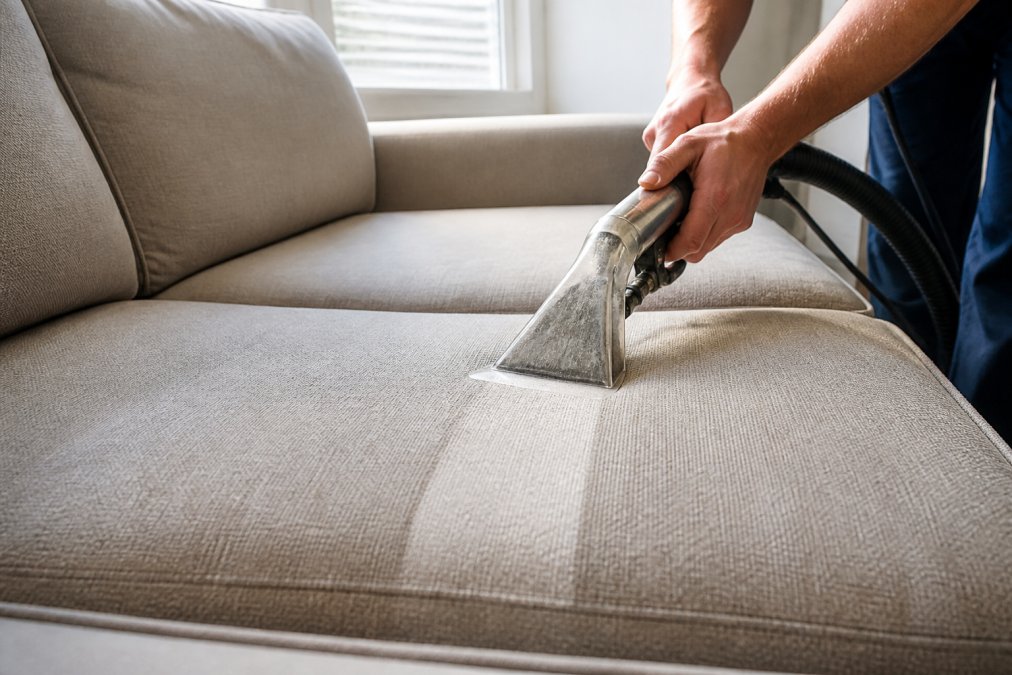
Restoring the fabric's appearance also protects its integrity. When dirt and oils remain, they break down fibers over time, leading to cracking, thinning, and permanent discoloration. Professional cleaning interrupts that degradation process, keeping both the look and structure of your furniture intact.
5. Upholstery Cleaning for Sensitive Skin and Allergy Sufferers
Upholstery cleaning for sensitive skin goes beyond comfort; for many households it is a health necessity. Dust mites, which thrive in fabric furniture, are one of the most common triggers for allergies and asthma symptoms.
When dust mite populations build up in a sofa, their waste particles become airborne every time someone sits down, causing chronic congestion, sneezing, and irritated eyes for allergy sufferers. Professional cleaning reduces these populations dramatically, and the high-temperature extraction process also sanitizes the fabric, reducing bacteria and mold spores that can aggravate respiratory conditions.
Families with young children benefit too. Toddlers spend significant time on the floor and on furniture, putting their hands on upholstered surfaces and then into their mouths. Professional cleaning removes the accumulated dust, allergens, and bacteria that a child's developing immune system does not need exposure to.
6. How Often to Clean Upholstered Furniture
How often to clean upholstered furniture depends on how the furniture is used, not on a fixed calendar date. A general rule is every 12 to 18 months for lightly used furniture in homes without pets. Households with children, pets, or allergy sufferers should schedule professional cleaning every 6 to 12 months.
High-traffic pieces, such as the family room sofa, need more frequent attention than formal living room furniture that rarely gets used. The same logic applies to fabric type: lighter colors show soil sooner and may need more frequent cleaning to prevent stains from setting permanently.
| Furniture Usage | Recommended Cleaning Frequency | Primary Reason |
|---|---|---|
| Light use, no pets | Every 12-18 months | Remove dust and allergens |
| Daily use, no pets | Every 9-12 months | Prevent embedded soil buildup |
| Pets or children present | Every 6-9 months | Control dander, stains, and odors |
| Allergy or asthma sufferers | Every 6 months | Reduce allergen triggers |
But frequency is only half the equation. Fabric type determines both how often and how aggressively you can clean. Most articles stop at the frequency table, leaving homeowners to guess whether their velvet sofa can handle the same treatment as their microfiber recliner. It cannot.
Synthetic fibers (polyester, nylon, olefin, microfiber) are the most forgiving. These fibers are durable, stain-resistant, and can typically handle hot water extraction with professional-grade cleaning agents. Microfiber, in particular, is a tightly woven synthetic that resists water penetration, so professional cleaners often use a dry solvent or low-moisture method to prevent over-wetting. For synthetic upholstery, the 6-to-12-month schedule is appropriate for most households.
Natural plant fibers (cotton, linen) are more absorbent and prone to shrinking or wrinkling when over-wet. Cotton upholstery can tolerate hot water extraction, but drying time is critical. Linen can stretch and lose its shape when wet, so many professional cleaners recommend dry cleaning or low-moisture methods only. If you have linen furniture, plan on professional cleaning every 12 to 18 months at most, and address spills immediately with blotting, never rubbing, to prevent the fiber from absorbing the stain deeply.
Silk and rayon are the most delicate upholstery fabrics. Silk is a protein fiber that can be permanently damaged by water, which causes water spots and fiber shrinkage. Rayon, despite being a manufactured fiber, also weakens significantly when wet. Professional cleaners universally recommend dry cleaning or solvent-based cleaning for silk and rayon upholstery. These fabrics should be professionally cleaned only every 18 to 24 months, and only by a technician who specifically asks about fabric content before proceeding. If a cleaning company quotes you a standard hot water extraction price without asking about your fabric type, that is a warning sign.
Velvet requires its own set of rules. Whether made from cotton, silk, or synthetic fibers, the pile can be crushed or distorted by aggressive cleaning. Professional cleaners use low-moisture methods and specialized tools to clean velvet without flattening the pile. After cleaning, velvet needs to be brushed or vacuumed in the direction of the pile to restore its texture. Velvet upholstery in a high-traffic home should be cleaned every 9 to 12 months, but always with a method appropriate for the fiber content beneath the pile.
Spot cleaning between professional visits helps, but it cannot replace periodic deep extraction. Consider professional cleaning as preventative maintenance: a small recurring cost that protects a much larger furniture investment. When you do schedule, make sure the provider asks about your fabric type, if they do not, find one who does.
Professional Methods vs. DIY: What Actually Works
Rental machines from grocery stores seem like a bargain until you use one. The gap between consumer rental units and professional equipment is not a marketing story; it is a matter of measurable engineering specifications.
Water temperature is the first major difference. Most rental units heat water to roughly 150°F at best, but the water often cools significantly by the time it reaches the wand. Professional truck-mounted systems maintain water temperatures between 200°F and 230°F at the point of injection. That higher temperature is what breaks down the bonds between oily soils and fabric fibers. Without sufficient heat, the cleaning solution cannot emulsify the body oils and sebum that accumulate in upholstery, leaving a sticky residue that attracts new dirt within days.
Suction power is the second difference. Rental machines typically deliver around 100 to 150 inches of water lift. Professional units commonly achieve 300 to 500 inches of water lift. The amount of water and cleaning solution left behind after a cleaning pass is directly tied to suction. Rental machines leave upholstery damp for 12 to 24 hours, sometimes longer. Professional extraction leaves fabrics dry to the touch in 2 to 4 hours. Excess moisture creates a humid environment where mold spores and dust mite populations can rebound quickly. A common pattern in homes that use rental machines is a musty odor developing a week after cleaning, a direct result of inadequate moisture extraction.
The third difference is the chemistry. Consumer cleaning agents sold at grocery stores are formulated to be safe for a wide range of unknown fabrics, which means they are often diluted and mild. Professional-grade cleaning solutions are formulated for specific fabric types and soil loads. More importantly, professional companies have access to pH-balanced solutions that are safe for pets and children when used correctly. Many over-the-counter upholstery cleaners contain optical brighteners, fragrances, and solvents that leave residues, which can be irritating to sensitive skin and are particularly concerning for households with crawling infants who put their hands on fabric surfaces and then into their mouths.
The toxicity question is one that most articles skip entirely. The EPA regulates cleaning products under FIFRA when they make antimicrobial claims, but many general-purpose upholstery cleaners are not regulated as pesticides and are not required to disclose full ingredient lists on consumer labels. This regulatory gap means a "green" label does not guarantee safety. Professional companies using third-party certified green products, such as Green Seal or EPA Safer Choice, offer transparency that DIY products often lack.
For minor surface spots, DIY spot cleaning is adequate: use mild dish soap diluted in water, blot, never rub, and rinse with a clean damp cloth. But for deep cleaning, allergen removal, and odor neutralization, professional equipment delivers results consumer machines cannot replicate. Factoring in rental costs, cleaning solution, hours of labor, and the risk of excess moisture damaging fabric or promoting mold, professional cleaning is the safer and more practical choice for most households.
Sanctified Carpet & Upholstery Cleaning uses professional-grade, pet-safe cleaning agents and high-temperature, high-suction extraction equipment. We offer bundle deals for homes needing both carpet and upholstery attention, and we are happy to walk through our cleaning chemistry with you before any work begins.
Frequently Asked Questions
Is it worth getting a sofa professionally cleaned?
Yes. Professional upholstery cleaning removes embedded dirt, dust mites, and allergens that regular vacuuming misses. High-quality cleaning can reduce common household allergens by up to 90 percent. It also extends the lifespan of your sofa by preventing fabric fibers from breaking down due to trapped grit. For families with children or pets, professional cleaning every 12 to 18 months protects both your furniture investment and your household's indoor air quality.
Does professional upholstery cleaning remove allergens?
Professional upholstery cleaning removes allergens effectively. Technicians use hot water extraction or steam cleaning methods that penetrate deep into fabric fibers to flush out dust mites, pet dander, and pollen. Studies show this process can reduce common household allergens by up to 90 percent. This makes professional cleaning especially valuable for allergy sufferers and families with sensitive skin, since it eliminates irritants that regular surface cleaning cannot reach.
How often should you have upholstery professionally cleaned?
Most manufacturers and cleaning professionals recommend professional upholstery cleaning every 12 to 18 months for average households. Homes with children, pets, or allergy sufferers may need annual cleanings to control allergens and odors. High-traffic furniture like family room sofas may require more frequent attention. Between professional visits, vacuum upholstery weekly and treat spills immediately to maintain fabric condition and extend the time between deep cleanings.
What is the difference between professional upholstery cleaning and DIY rental machines?
Professional upholstery cleaning uses truck-mounted or commercial-grade equipment that operates at higher water temperatures and stronger extraction power than rental machines. This means better removal of embedded soil, allergens, and cleaning solution residue. Professionals also understand fabric-specific requirements and adjust their methods to prevent damage, shrinkage, or color bleeding. DIY machines often leave excess moisture that leads to longer drying times and potential mold growth, while professional equipment extracts more water for faster drying.