 blog
blog
7 Ways to Remove Tough Carpet Stains
Table of Contents
- Blotting: The First Step to Remove Carpet Stains
- How to Remove Red Wine Stain from Carpet Naturally
- Enzyme-Based Cleaners for Organic Stains
- Hydrogen Peroxide and Baking Soda Method
- Carpet Stain Removal Tools and Equipment
- When to Call Professional Carpet Cleaning Services
- Common Mistakes That Make Stains Worse
- Frequently Asked Questions
Last Updated: September 26, 2026
Blotting: The First Step to Remove Carpet Stains
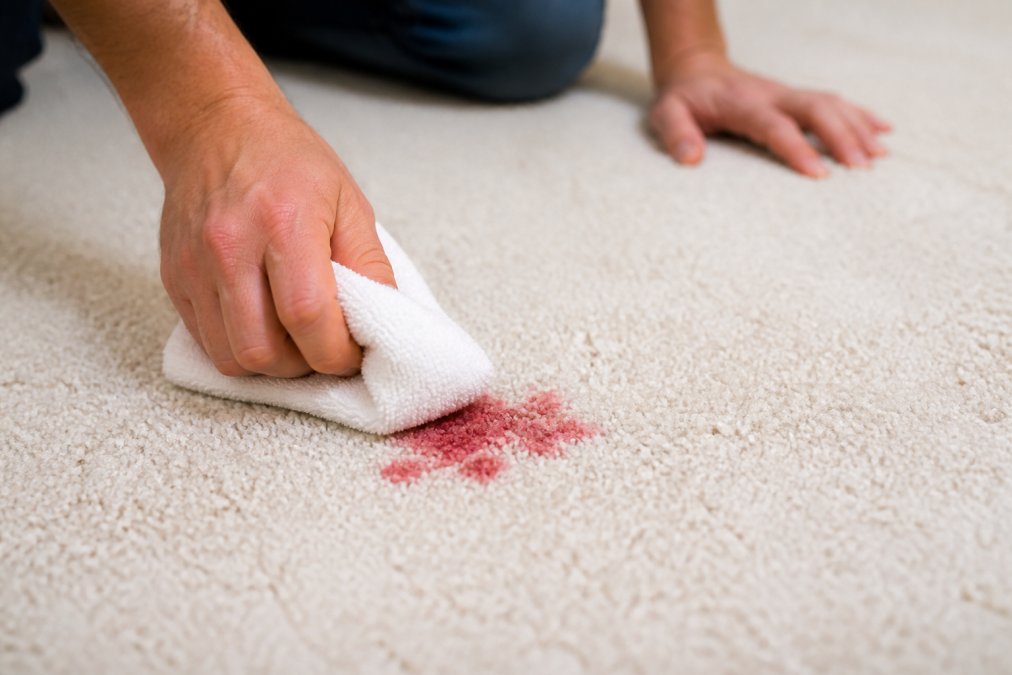
Blotting is the foundation of stain removal, and it's the first of 7 ways to remove tough carpet stains. Blotting lifts spills out of carpet fibers, while rubbing pushes them deeper into the pile and backing.
Here's the critical difference: rubbing can damage carpet fibers and force the stain deeper into the backing, making it nearly impossible to remove later. EXTERNAL_LINK: [Professional carpet cleaning standards | ajax.com] confirm that blotting is the recommended technique to lift spills effectively.
Use a clean white cloth or paper towel. Press firmly onto the stain, working from the outer edges toward the center to prevent spreading. Repeat with fresh cloth sections until the spill stops transferring.
For fresh stains, this simple step often removes 50-70% of the problem before you even apply a cleaning solution.
How to Remove Red Wine Stain from Carpet Naturally
Red wine stains are tough because they contain tannins that bond to carpet fibers. Natural solutions work well when you act quickly to break that bond.
Blot the spill thoroughly, then mix one part white vinegar to two parts water. Spray onto the stain and let sit 5-10 minutes. The acidity neutralizes tannins. Blot again with a clean cloth, repeating until the stain lightens.
If the stain persists, try this two-step approach:
- Sprinkle baking soda directly on the damp stain
- Let it sit for 30 minutes to absorb remaining wine
- Vacuum thoroughly
- Spray with the vinegar solution again and blot
For older stains, repeat the vinegar-and-water method over several hours; patience works better than aggressive scrubbing.
Enzyme-Based Cleaners for Organic Stains
Enzyme-based cleaners break down organic matter, proteins, fats, and sugars at the molecular level, making them ideal for pet accidents, food spills, and bodily fluids.
Professional cleaning methods increasingly rely on enzyme-based products because they target organic stains more effectively than traditional surfactants alone. The enzymes literally digest the stain rather than just lifting it off the surface.
How enzymes work:
- Enzymes identify and attach to specific organic compounds
- They break these compounds into smaller, water-soluble pieces
- These pieces rinse away easily with water or extraction
- The carpet fiber is left clean without residual buildup
For pet urine, enzyme cleaners eliminate odor at the source by destroying urine compounds, rather than just masking the smell.
When using enzyme-based cleaners:
- Apply to the stain and let it sit for the time specified on the label (usually 15-30 minutes)
- Do not let it dry completely, enzymes need moisture to work
- Blot or extract after the dwell time
- Rinse with clean water to remove all residue
Good Housekeeping's professional-grade recommendations consistently highlight enzyme-based products like Bissell Professional Stain & Odor Remover and Folex Instant Carpet Spot Remover as top performers for both fresh and set-in stains.
Hydrogen Peroxide and Baking Soda Method
The hydrogen peroxide and baking soda combination is a powerful, low-cost approach to tough stains. This method works well on light-colored carpets and is particularly effective on blood, wine, and stubborn organic stains.
Hydrogen peroxide breaks down stain compounds while baking soda absorbs moisture and odors. Together they create a paste that penetrates fibers gently.
Here's the step-by-step process:
- Blot the fresh stain thoroughly with a white cloth
- Mix three parts baking soda with one part hydrogen peroxide (3% solution, the standard drugstore kind)
- Stir until you get a thick paste
- Apply the paste directly to the stain
- Let it sit for 5-10 minutes, you'll see it foam slightly as the peroxide works
- Gently work the paste into the carpet with a soft brush or cloth
- Let it dry completely (1-2 hours)
- Vacuum up the dried residue
- Blot with a damp cloth to remove any remaining paste
This method works best on light carpets. Test on a hidden area first, as hydrogen peroxide can bleach darker fibers.
Carpet Stain Removal Tools and Equipment
Identify the stain type before selecting tools or methods; applying the wrong solution causes most removal failures.
Stain Identification Guide
Organic stains (protein-based: blood, urine, vomit, food, bodily fluids)
- Appearance: Often brown, yellow, or reddish; may have a musty or ammonia-like odor
- Touch test: Sticky or slightly crusty when dry
- Best tool: Enzyme-based cleaner (breaks down protein chains)
- Why it matters: Hot water and alkaline cleaners can set these stains permanently
Tannin stains (plant-based: red wine, tea, coffee, fruit juice, grass)
- Appearance: Red, brown, orange, or yellow discoloration; often spreads in a ring pattern
- Touch test: Usually not sticky; may feel slightly stiff if dried
- Best tool: Acidic solution (white vinegar, hydrogen peroxide) or specialized tannin remover
- Why it matters: These bond to fibers through oxidation; alkaline solutions can worsen them
Oil and grease stains (synthetic: butter, cooking oil, makeup, ink, tar)
- Appearance: Dark, oily-looking spot; may repel water
- Touch test: Greasy or slick to the touch; water beads on the surface
- Best tool: Solvent-based cleaner or dry-cleaning compound (water alone won't work)
- Why it matters: Water-based solutions push oil deeper; you need a solvent to dissolve it
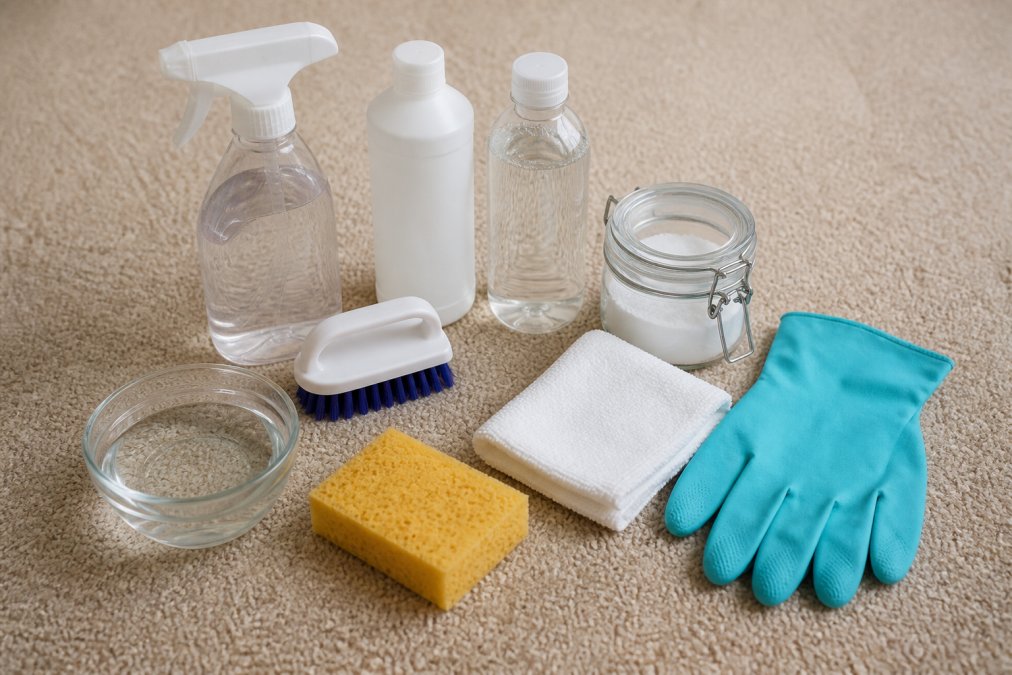
Essential tools for DIY stain removal:
- White cloths or microfiber towels: Absorb more liquid than paper towels and don't transfer dye
- Spray bottle: Allows even, controlled application of cleaning solutions without oversaturation
- Soft-bristled brush: Gently works solution into fibers; use only for enzyme or paste treatments, never for initial blotting
- Extraction equipment: A wet-vac or carpet cleaning machine removes deep-set moisture and residue
- Damp cloth: For final rinse and residue removal
When to Call Professional Carpet Cleaning Services
Some stains and carpet types require professional handling. Knowing when to call experts saves money and prevents costly mistakes.
Fiber-Specific Safety: Know Your Carpet Before You Treat It
Call a professional when:
- The carpet is expensive or delicate (wool, silk, natural blends, antique, or designer carpet): Professional cleaners carry insurance and know how to handle specialty fibers without damage
- The stain covers a large area (more than a few square feet): Extraction equipment and professional technique prevent over-saturation and ensure even treatment
- The stain has set for more than a few weeks: Set-in stains require industrial-grade solvents and equipment; DIY methods rarely penetrate deep enough
- DIY methods have failed after 2-3 attempts: Repeated treatment can damage fibers; a professional can assess whether the stain is permanent or requires specialized equipment
- The stain involves pet urine that has soaked into the backing: Urine compounds migrate into the subfloor; surface cleaning won't eliminate odor or prevent resoaking
- You need to remove odor: Professional extraction ensures all odor-causing compounds are removed
- Your carpet has never been professionally cleaned: Embedded dirt and allergens accumulate over years; professional deep cleaning restores appearance and extends lifespan
What professionals bring that DIY cannot:
- Industrial-grade extraction equipment that removes moisture far more effectively than rental machines
- Knowledge of how different fibers, dyes, and backings respond to specific cleaning methods
- Ability to identify stain type and apply targeted solutions without guessing
- Insurance and accountability if something goes wrong
- Access to professional-grade solvents and enzymes not available to consumers
- Experience recognizing when a stain is permanent versus treatable
Common Mistakes That Make Stains Worse
Understanding what NOT to do is just as important as knowing the right techniques. These mistakes can transform a manageable stain into a permanent problem.
Frequently Asked Questions
What's the best way to remove carpet stains before they set in?
Act immediately by blotting the stain with a clean, damp cloth, never rub. Rubbing pushes the stain deeper into the carpet fibers and backing. Blot from the outside edges toward the center to contain the spill. For fresh stains, this single step often prevents permanent damage. After blotting, apply your chosen cleaning solution and repeat the blotting process until the stain lifts.
Can you really remove red wine stains from carpet naturally?
Yes. White vinegar mixed with water (1:1 ratio) works well on fresh red wine stains. Apply the solution, let it sit for 5-10 minutes, then blot thoroughly. For stubborn stains, baking soda sprinkled on the damp area absorbs residual liquid and odor. Salt can also be applied immediately to a fresh spill to prevent the stain from setting. These natural methods work best on newer stains; older stains may require professional carpet cleaning services.
How do you know if a cleaning solution is safe for your carpet?
Always perform a spot test on a hidden area first, like inside a closet or under furniture. Apply a small amount of your chosen cleaning solution, wait 10 minutes, then blot with a white cloth. Check for discoloration or bleaching of the carpet fibers. This simple test prevents damage to visible areas and confirms the solution won't harm your specific carpet type, whether it's synthetic, natural fibers, or berber.
When should you hire professional carpet cleaning services instead of DIY?
Professional help is worth considering for old, set-in stains (more than a few days old), large affected areas, pet accidents with odor issues, or delicate carpet fibers like wool. Professionals use extraction equipment and enzyme-based cleaners that penetrate deeper than household methods. If DIY attempts haven't worked after 2-3 tries, or if the stain covers more than a few square feet, professional carpet cleaning services deliver better results and protect your carpet investment.