 blog
blog
7 Best Eco-Friendly Carpet Cleaning Solutions for Allergies
Table of Contents
- Why Eco-Friendly Carpet Cleaning Matters for Allergy Sufferers
- 1. Enzyme-Based Carpet Shampoos: Targeted Allergen Removal
- 2. Plant-Based Concentrates: Hypoallergenic and Residue-Free
- 3. Castile Soap and White Vinegar Solutions: DIY Natural Cleaning
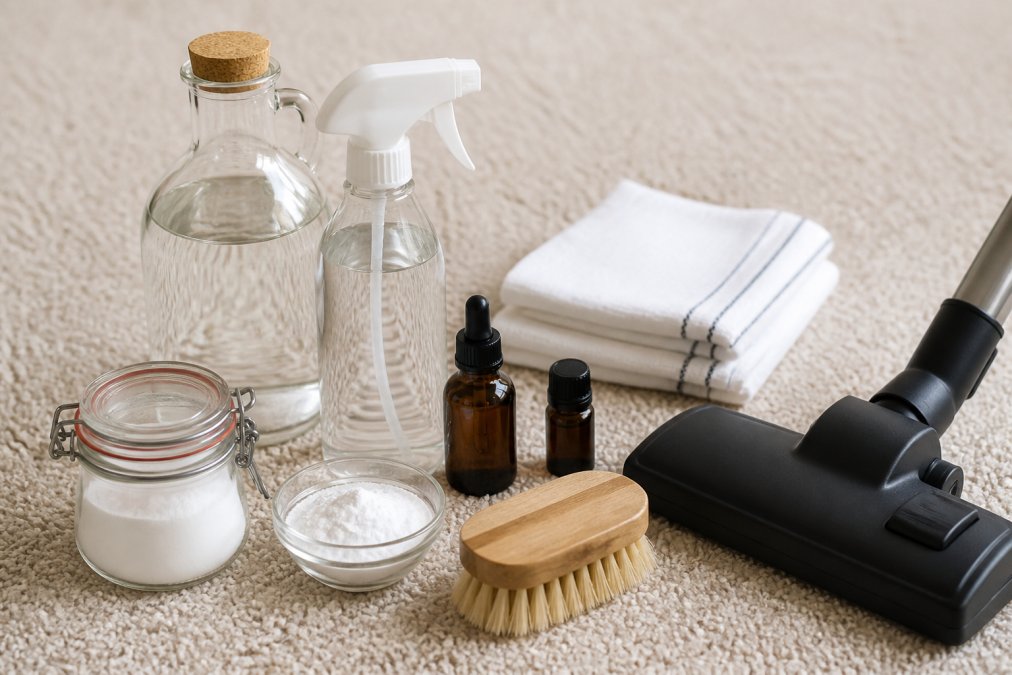
- 4. Baking Soda and Essential Oils: Deodorizing Without Synthetic Fragrances
- 5. Hydrogen Peroxide for Organic Stains: Safe Stain Removal
- How to Remove Red Wine Stain from Carpet Naturally
- Best Practices for Carpet Maintenance to Reduce Allergens
- When to Call a Professional for Allergy Sufferers
- Frequently Asked Questions
Last Updated: September 13, 2026
Why Eco-Friendly Carpet Cleaning Matters for Allergy Sufferers
The global carpet cleaning products market is projected to grow from USD 1.84 billion in 2025 to USD 2.89 billion by 2035, a 4.62% compound annual growth rate, according to Spherical Insights market analysis. That growth reflects a real shift: households are rethinking what they put into their carpets. For allergy sufferers, that shift isn't optional. Carpets trap dust mites, pet dander, and pollen, then release them with every footstep. Standard commercial cleaners can add synthetic fragrances, phthalates, and harsh surfactants to the mix, which is why so many people with chemical sensitivity find that "clean" carpet makes them sneeze more, not less.
This guide covers the seven best options, what each one actually removes, and where DIY falls short.
1. Enzyme-Based Carpet Shampoos: Targeted Allergen Removal
Enzyme-based shampoos are the top pick for allergy-prone homes because they digest the proteins in pet dander, urine, and dust mite waste rather than just lifting surface dirt. Industry guidance for 2026 recommends prioritizing enzyme-based and plant-based cleaners specifically because they fight allergens without degrading indoor air quality, according to ABCs Carpet Cleaning allergy guidance.
Pros: Breaks down organic allergens at the molecular level; residue-free when rinsed properly; safe for most synthetic and wool fibers. Cons: Needs dwell time of 10-15 minutes to work; ineffective on inorganic soil like clay or sand without a pre-vacuum.
A common mistake is applying enzyme cleaner and immediately scrubbing. The enzymes need contact time. Let them sit.
2. Plant-Based Concentrates: Hypoallergenic and Residue-Free
Plant-based concentrates are hypoallergenic formulas built from coconut, corn, and soy derivatives instead of petroleum surfactants. They're typically pH-neutral, biodegradable, and free of synthetic fragrances, which matters if anyone in the house has chemical sensitivity.
Pros: Low VOC; safe around kids and pets; a little goes far since you dilute at home. Cons: Cost per bottle is higher than conventional shampoo; some formulas struggle with heavy grease or old set-in stains.
For households managing respiratory health, plant-based concentrates are the safest everyday choice.
3. Castile Soap and White Vinegar Solutions: DIY Natural Cleaning
Castile soap and white vinegar is the most reliable DIY combination for routine carpet refresh. Mix one quarter cup of castile soap with one cup of white vinegar in a quart of warm water, apply with a clean cloth, then blot dry.
Pros: Cheap, readily available, and effective on light soil and mild odors. Cons: Vinegar's acidity can dull some wool dyes over repeated use; the solution leaves residue if you over-apply.
A 2022 study in NCBI research on household cleaning products examined associations between household cleaning product use, including green and homemade options, and asthma prevalence. The takeaway: "natural" doesn't automatically mean non-irritating, so test on a hidden patch first.
4. Baking Soda and Essential Oils: Deodorizing Without Synthetic Fragrances
Baking soda and essential oils handle deodorizing without the synthetic fragrances that trigger reactions in sensitive people. But "deodorizing" and "allergen removal" are not the same job, and most guides blur them together. Baking soda is sodium bicarbonate, a mild alkaline salt that neutralizes acidic odor molecules (pet urine, vomit, sour milk) by converting them into odorless salts. It does not kill dust mites, denature pet dander proteins, or remove pollen, it only addresses the smell those allergens leave behind. Treat it as a finishing step, not a cleaning step.
How to apply it correctly:
- Vacuum the carpet first. Baking soda sprinkled onto a dirty carpet just coats the soil.
- Sprinkle a thin, even layer, roughly one cup per 10 square feet. Piles waste product and clog vacuum filters.
- Let it sit 15-30 minutes. Longer does not improve odor neutralization; it only increases the chance of moisture clumping.
- Vacuum with a HEPA-filter machine. A standard vacuum will exhaust fine baking soda dust back into the room, which is the opposite of what an allergy sufferer wants.
Essential oils, the part most guides get wrong:
Essential oils are volatile organic compounds. That is literally what "VOC" means, and low-VOC does not mean zero-VOC. Strong oils like eucalyptus, tea tree, and peppermint contain terpenes and phenols that are documented respiratory irritants for people with asthma or fragrance sensitivity, according to Love Your Rug on DIY cleaner cautions. If someone in the home reacts to perfume, they can react to diffused lavender too. Stick to a single drop of lavender or chamomile per cup of baking soda, mix it in a sealed jar first so the oil disperses, and never apply oils directly to carpet fiber, citrus and tea tree oils can strip color and leave an oily residue that attracts new soil.
Pros: Neutralizes acidic odors rather than masking them; inexpensive; safe on most synthetic and wool fibers when used dry. Cons: Does not remove allergens, only odor; fine dust can aggravate asthma if vacuum filtration is poor; essential oils are themselves VOCs and potential irritants.
Also: do not add baking soda to a vinegar solution and then pour it into a carpet cleaning machine. The fizzing reaction is carbon dioxide escaping, it does nothing for the carpet, and the leftover sodium acetate residue can leave a sticky film that re-attracts soil and can clog machine spray jets.
Allergen-specific note: If the goal is dust mite reduction, baking soda is the wrong tool. Dust mite allergens are proteins in mite feces, and they require either heat (steam above 130°F) or a detergent that breaks the protein bond. Baking soda does neither. Use it for odor, use steam or an enzyme cleaner for the mites themselves.
5. Hydrogen Peroxide for Organic Stains: Safe Stain Removal
Hydrogen peroxide is the go-to for organic stains like blood, wine, and pet accidents because it oxidizes the pigment instead of bleaching the fiber. Use a 3% solution, dab, and let it bubble for five minutes before blotting.
Pros: Breaks down organic stains other cleaners can't touch; colorfast on most synthetic carpets. Cons: Can lighten wool and some natural dyes; never use on dark-colored upholstery without a spot test.
How to Remove Red Wine Stain from Carpet Naturally
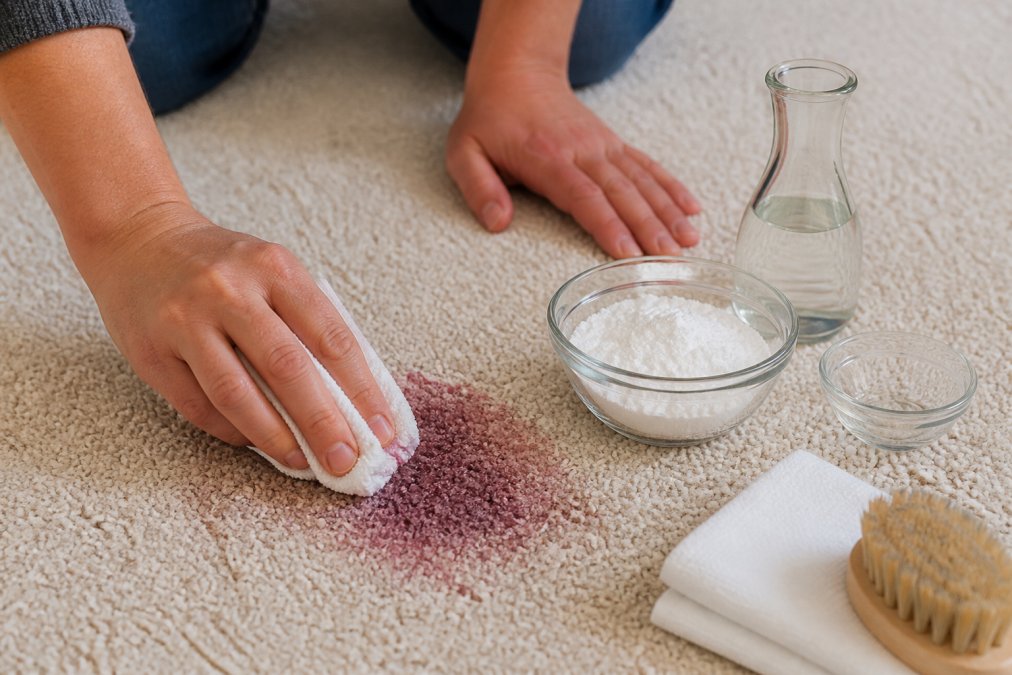
To remove a red wine stain from carpet naturally, blot immediately with a clean white cloth, apply a baking soda and vinegar paste, let it sit 10 minutes, then rinse with cool water and blot dry. Speed matters more than the recipe. The longer wine sits, the more it binds to the fiber.
Here's the sequence that works:
- Blot, don't rub, to lift liquid without spreading the stain
- Mix two tablespoons baking soda with one tablespoon white vinegar into a paste
- Apply gently with a soft cloth and let it sit 10 minutes
- Rinse with cool water and blot until dry
- Repeat once if any pink remains, then vacuum
For old, set-in wine stains, DIY methods often can't fully lift the pigment. That's when professional extraction becomes the practical answer.
Best Practices for Carpet Maintenance to Reduce Allergens
Most maintenance advice treats "allergies" as one problem. It is not. Dust mites, pet dander, and pollen behave differently in carpet, and the cleaning method that removes one can be mediocre at another. Here is how to match the method to the allergen.
Dust mites. These live in the carpet pad and fiber, feed on shed skin cells, and thrive when indoor humidity stays above 50%. Their allergenic trigger is a protein in their feces. The two things that actually reduce them are heat and dryness: steam cleaning that reaches 130°F or higher kills mites on contact, and keeping indoor relative humidity between 30-50% slows reproduction between cleanings. A dehumidifier in a humid climate does more for mite control than any spray-on product.
Pet dander. Dander is a protein (Can f 1 in dogs, Fel d 1 in cats) that sticks to fiber and becomes airborne when disturbed. It is not alive, so "killing" it is meaningless, it has to be physically removed. That means a vacuum with a sealed HEPA system and a pre-motor filter, run slowly over high-traffic zones twice weekly, plus periodic hot water extraction. Enzyme-based shampoos help because they break the protein bond, but only if the residue is fully rinsed out. Leftover shampoo film traps new dander.
Pollen. Pollen is coarse and mostly sits on the surface, so it is the easiest to remove, but it also re-enters every time a door opens. A weekly HEPA vacuum plus a walk-off mat at each entry does more than deep cleaning alone. Avoid wet cleaning pollen into the pad; dry removal first, then extract if needed.
Machine compatibility, the part most guides skip. DIY solutions can damage carpet cleaning machines. Vinegar is acidic and can degrade pump seals and rubber gaskets over time. Baking soda leaves sodium acetate residue that clogs spray jets. Castile soap foams, and foam in a recovery tank can trip the float shutoff and leave dirty water in the carpet. If you own an extractor, check the manufacturer's approved chemistry list before pouring anything homemade into the tank. Most consumer machines are warrantied only for the brand's own low-foam, pH-neutral solution.
A maintenance cadence that actually maps to allergens:
- Vacuum high-traffic zones twice weekly with a sealed HEPA vacuum, this is the single highest-impact habit for dander and pollen
- Steam clean or professionally extract every 6-12 months; every 3-4 months in homes with pets or a dust-mite-sensitive occupant
- Address spills within 24 hours to prevent mold and mildew, which are separate allergens from mites and dander
- Keep indoor humidity between 30-50% with a hygrometer, not a guess
- Choose fragrance-free, low-VOC products, "natural" fragrance is still fragrance
- Replace or professionally clean the carpet pad every 8-10 years; pads hold allergen load that surface cleaning cannot reach
The Environmental Working Group's Guide to Healthy Cleaning rates products on transparency and health standards, and it is the fastest way to screen a carpet shampoo before you buy. Hot water extraction and steam cleaning remain the most effective methods for removing embedded dirt and allergens and improving indoor air quality, per Ecomena on eco-friendly cleaning methods.
When to Call a Professional for Allergy Sufferers
Professional carpet cleaning for allergy sufferers is worth it when DIY methods stop delivering results. If you've steamed, spot-treated, and vacuumed, and the sneezing continues, the allergens are likely deep in the pad, where consumer equipment can't reach.
Sanctified Carpet & Upholstery Cleaning provides professional carpet cleaning and expert upholstery detailing for homes across Toms River and Ocean County. Our approach focuses on thorough extraction that leaves carpets clean and dry, with bundle deals and reasonable pricing for households watching their budget.
The challenge with eco-friendly carpet cleaning is that the best solution depends on what you're fighting: dust mites, pet dander, or old stains that keep coming back. DIY recipes handle the light work, but deep allergen removal usually needs professional equipment. Sanctified Carpet & Upholstery Cleaning offers professional carpet cleaning, expert upholstery detailing, and bundle deals designed for budget-conscious homeowners. Send a message to schedule your cleaning and breathe easier in your own home.
Frequently Asked Questions
What is the best carpet cleaner for people with allergies?
The best carpet cleaner for allergies is one that is hypoallergenic, fragrance-free, and residue-free. Enzyme-based shampoos and plant-based concentrates are top choices because they break down allergens like pet dander and dust mites without leaving harsh chemicals. Look for products certified by the Environmental Working Group (EWG) for safety. Always test a small area first to ensure colorfastness and fiber safety.
Are eco-friendly carpet cleaners effective against dust mites?
Yes, many eco-friendly carpet cleaners are effective against dust mites, especially those used with hot water extraction or steam cleaning. High temperatures kill dust mites and bacteria, while natural surfactants lift allergens from carpet fibers. For best results, combine eco-friendly solutions with a thorough extraction method and maintain low indoor humidity to prevent mite regrowth.
How often should carpets be cleaned to reduce indoor allergens?
For allergy sufferers, carpets should be cleaned every 3 to 6 months using a deep cleaning method like hot water extraction. Regular vacuuming with a HEPA filter helps between cleanings. If you have pets or high pollen seasons, increase frequency. Professional carpet cleaning for allergy sufferers can ensure thorough allergen removal and improve indoor air quality.
What ingredients should I avoid in carpet cleaners if I have allergies?
Avoid synthetic fragrances, phthalates, and harsh surfactants that can irritate respiratory health. Also steer clear of volatile organic compounds (VOCs) and optical brighteners. Choose products labeled non-toxic, biodegradable, and pH-neutral. The EWG's Guide to Healthy Cleaning can help you identify safer options. Always ventilate the area during and after cleaning.